Residential Design
Fulfilling the vision of the client was the focus of these highlighted landscapes.
Working directly with clients led to the creation of these concepts, which went through several iterations to come to its final form as shown.
Hanover Street
An aging concrete retaining wall, recently failed, created the need for a thoughtful landscape architectural response, one that addressed safety while staying within budget and avoiding unnecessary complexity. Access for construction equipment was limited, adding another layer of constraint to the project.
Through an iterative design process, which featured talks with engineering subcontractors and the clients themselves, several options were explored before arriving at the final solution.
The built outcome balances structural integrity with site practicality, resolving the challenges of the original wall and creating a stable, enduring landscape feature.
Pictures provided help to show the existing condition of the wall, which contrasts to the new walls constructed.
Year | 2023-2025
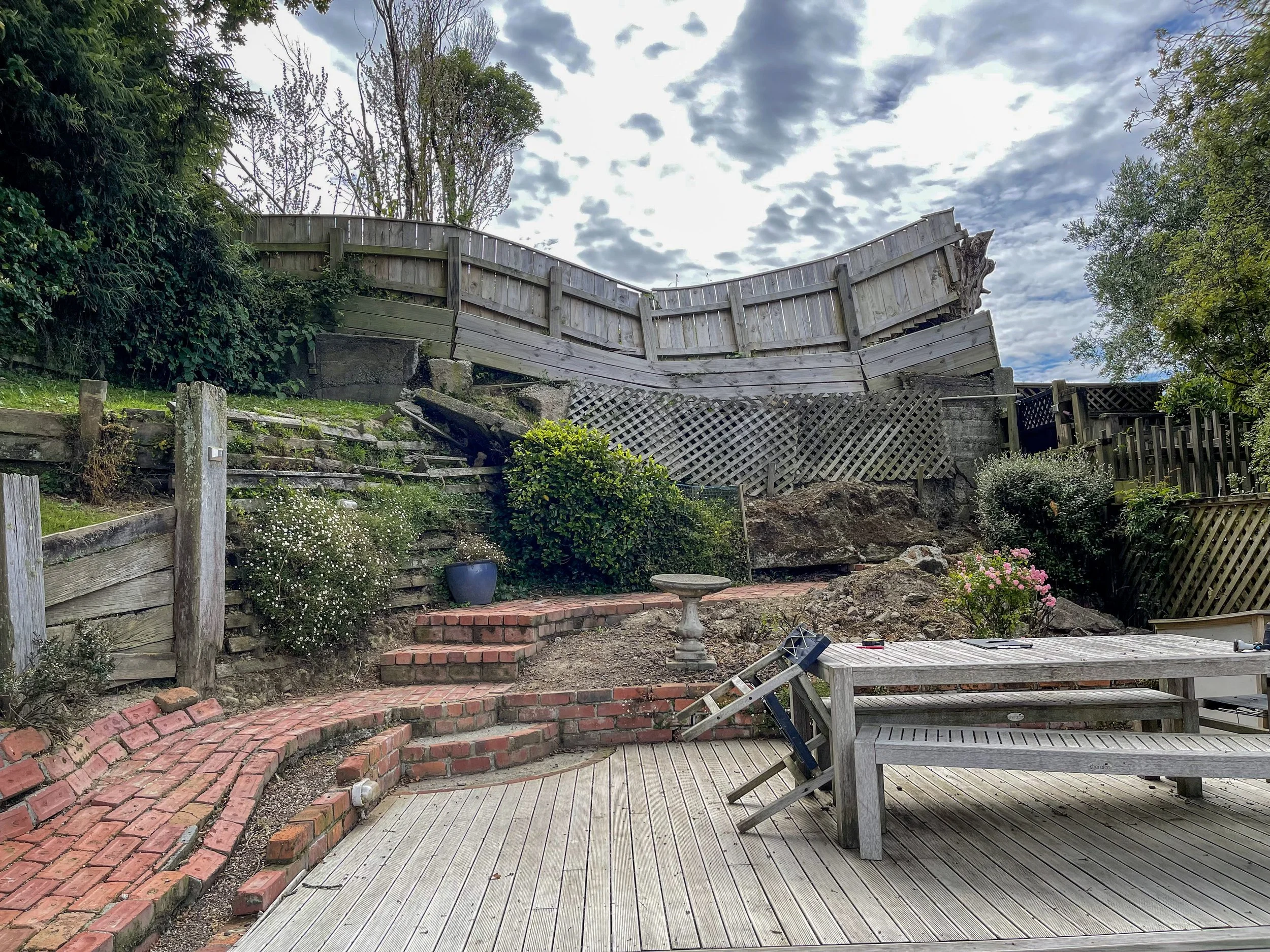
Showing the heavily damaged retaining walls that were the primary focus for the design works.
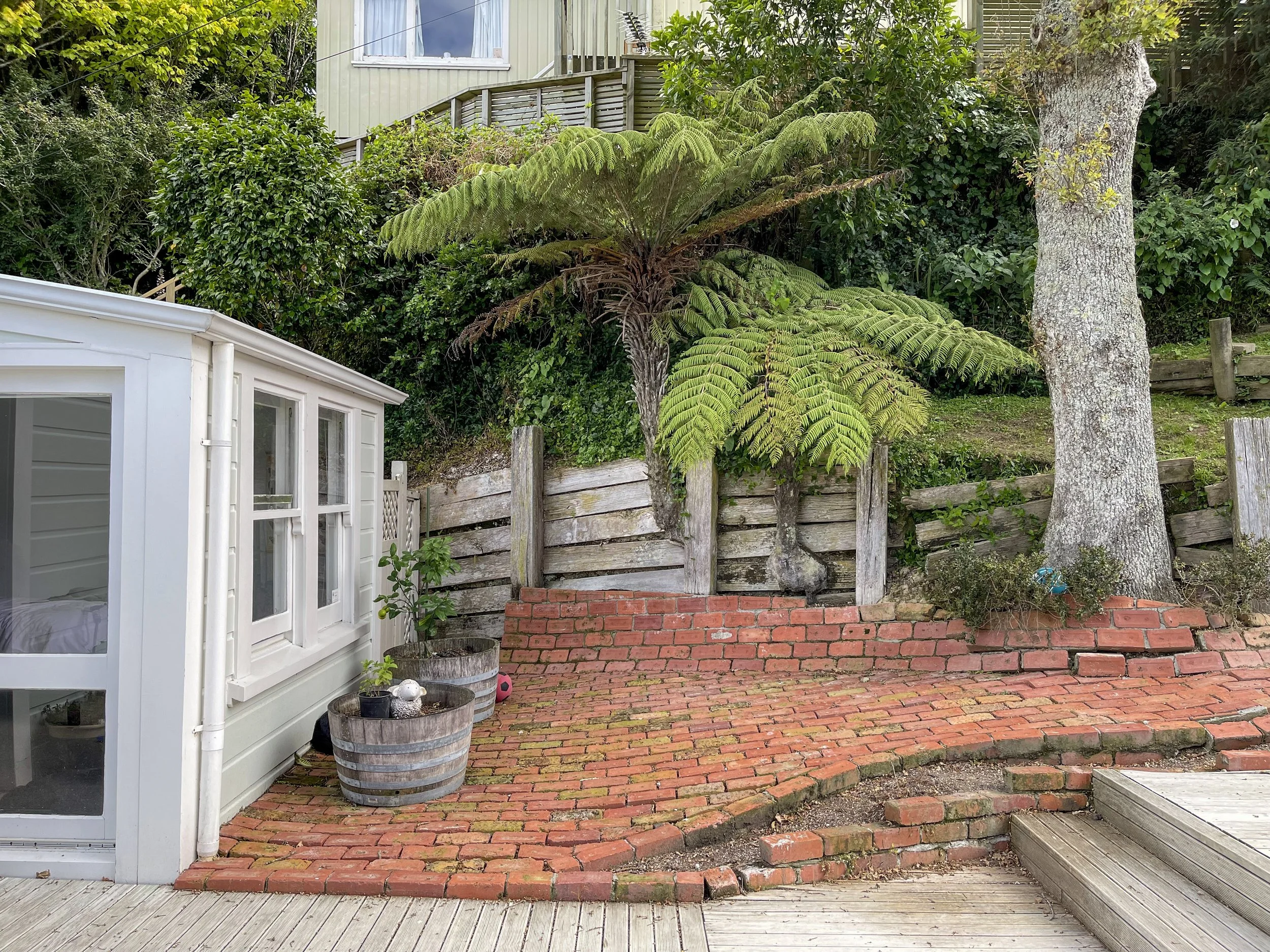
Highlighting the previous age of the brick - a very outdated path style that formed into the retaining walls.
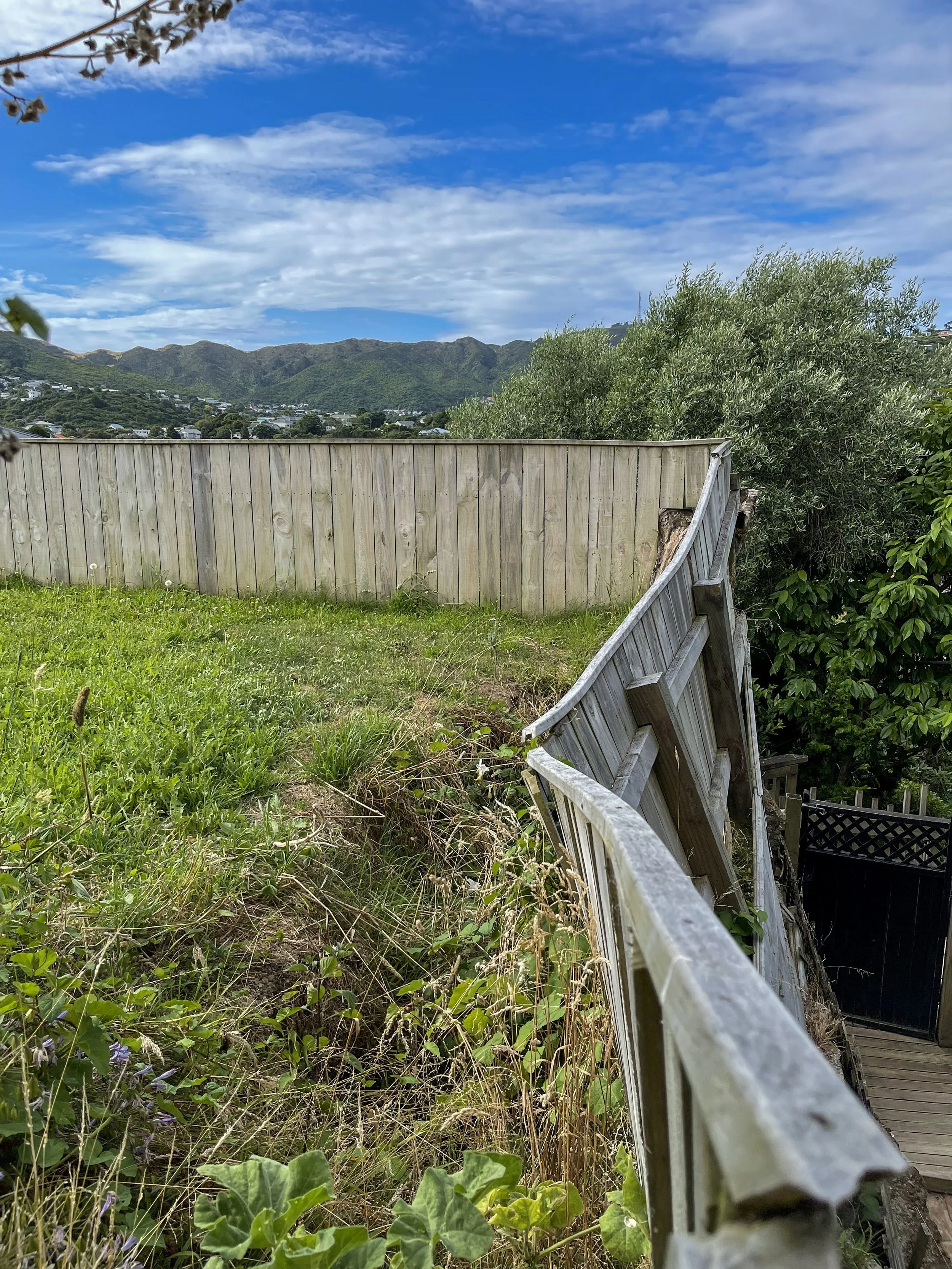
The falling out of the soil from behind the retaining wall showed how serious of an issue this was.
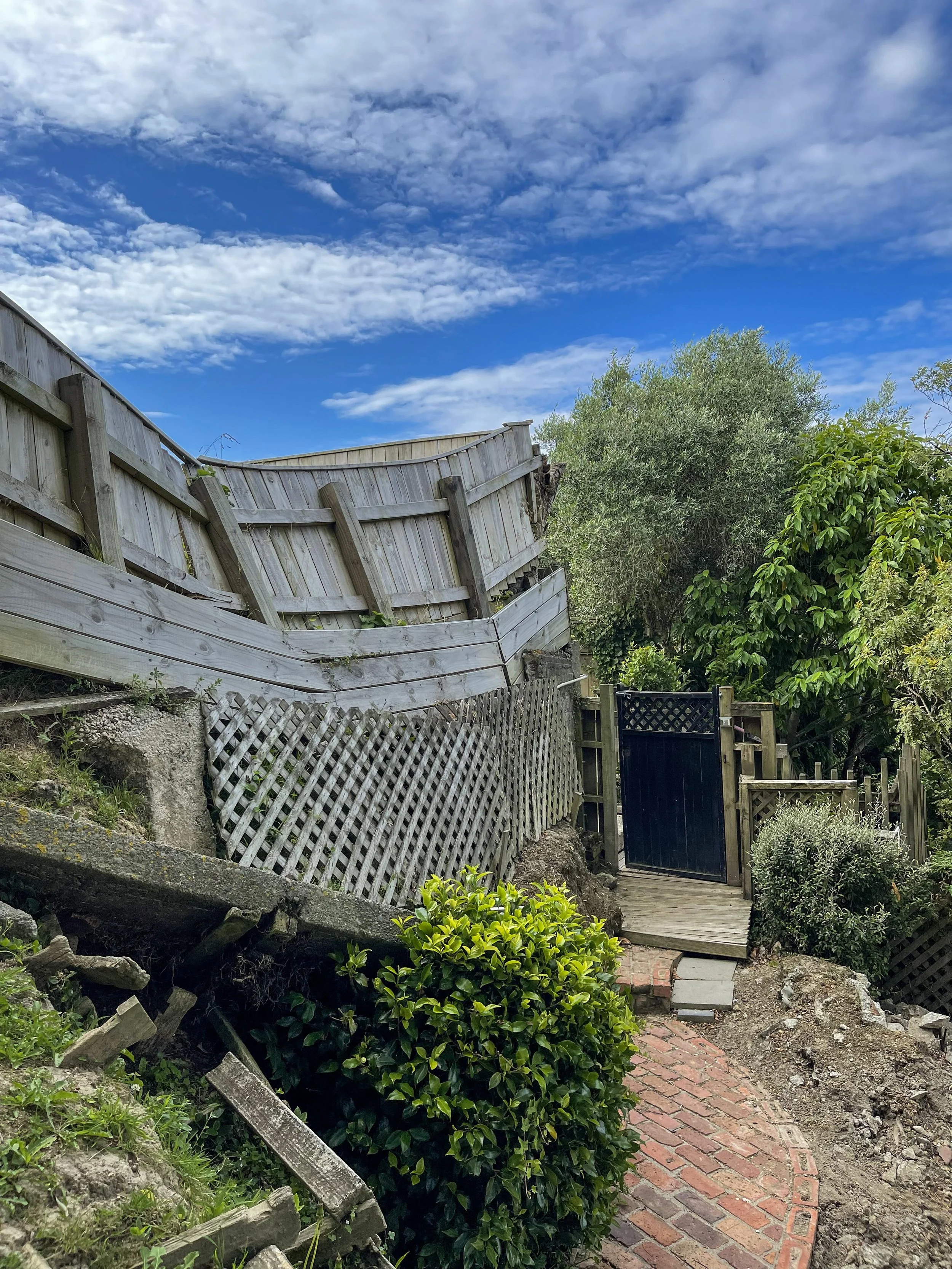
Another angle, highlighting the fallen out concrete pieces of retaining wall from the main structure.
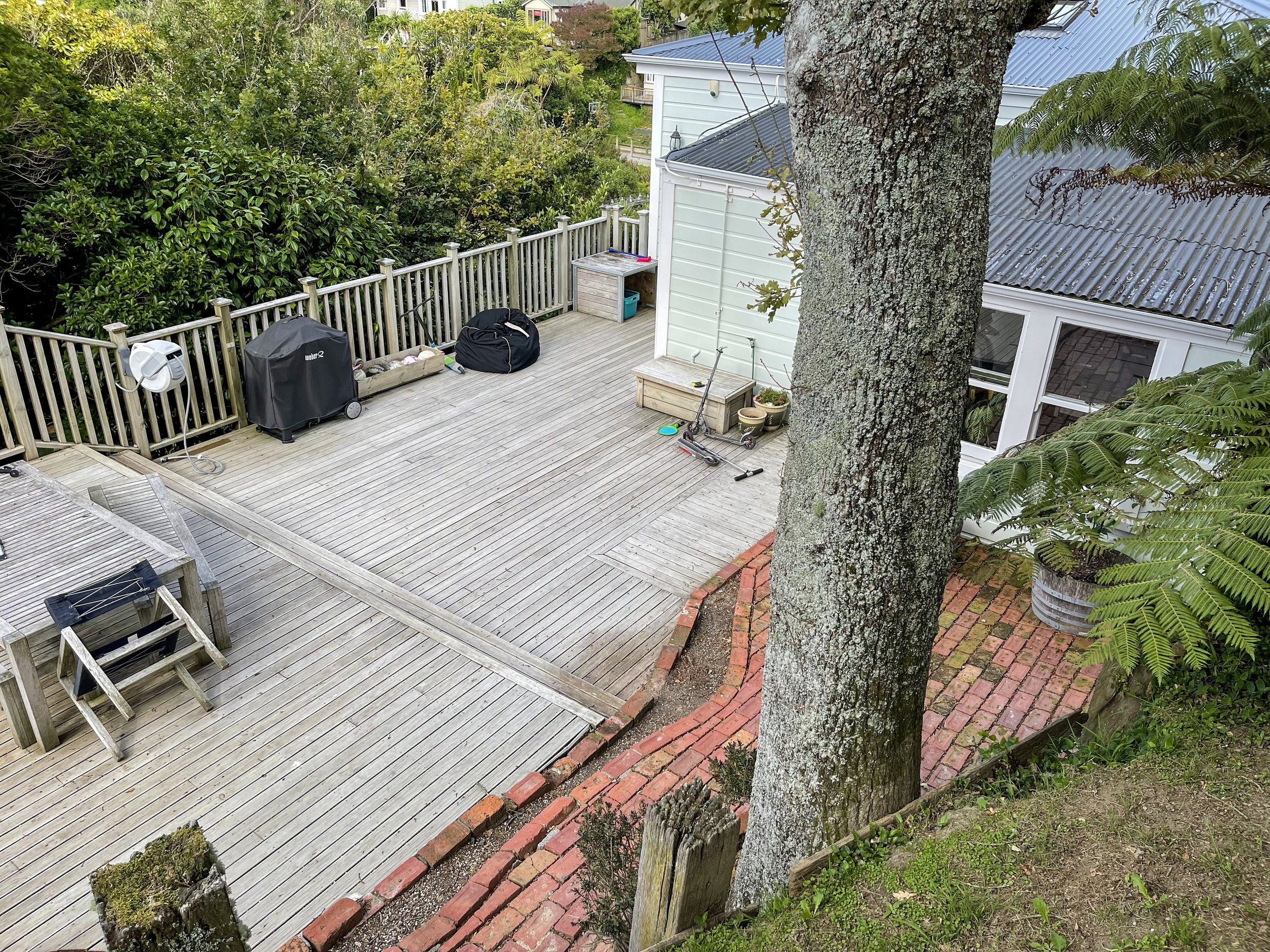
An overview of the site, boasting a large tree, random brick work, and aged decking.
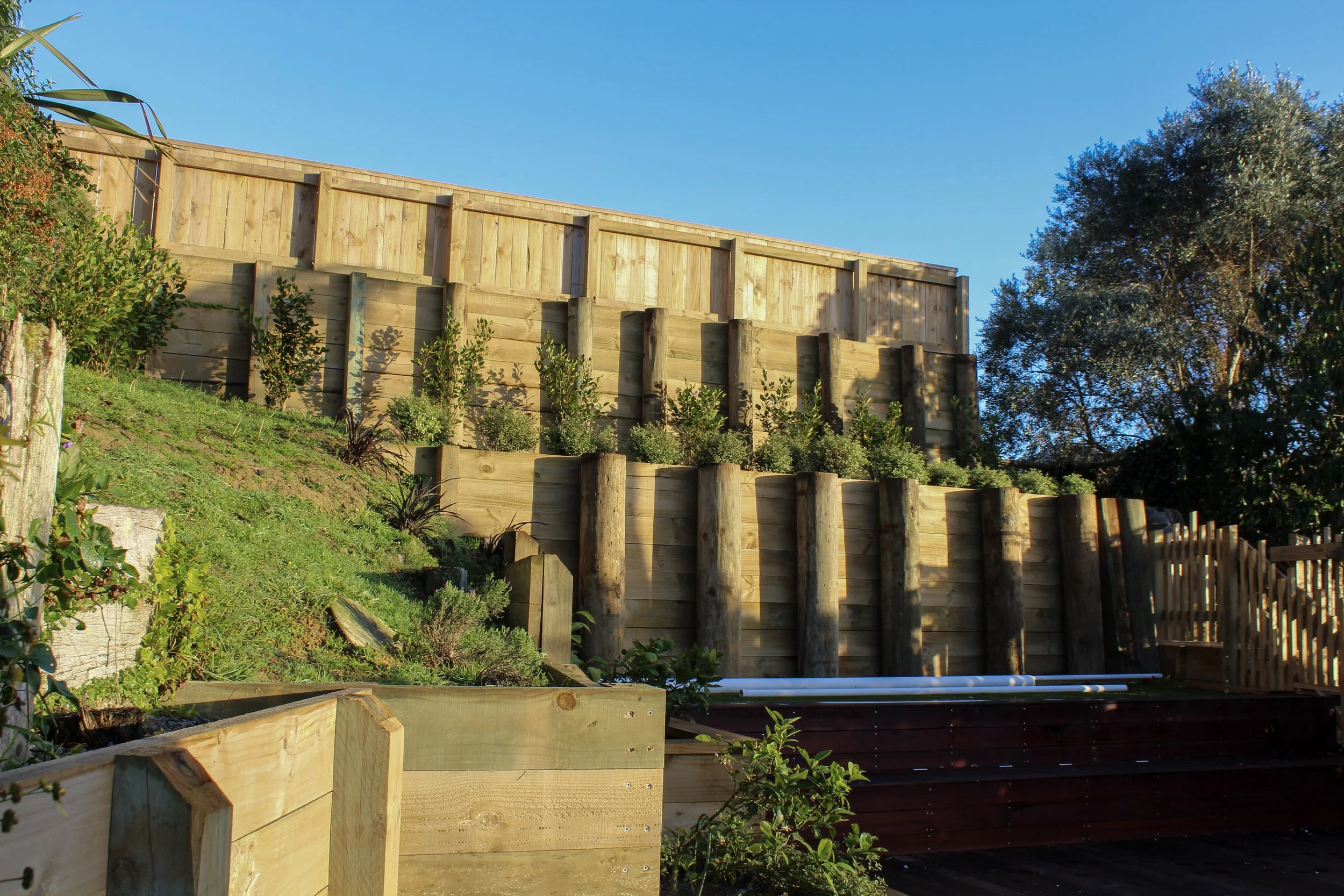
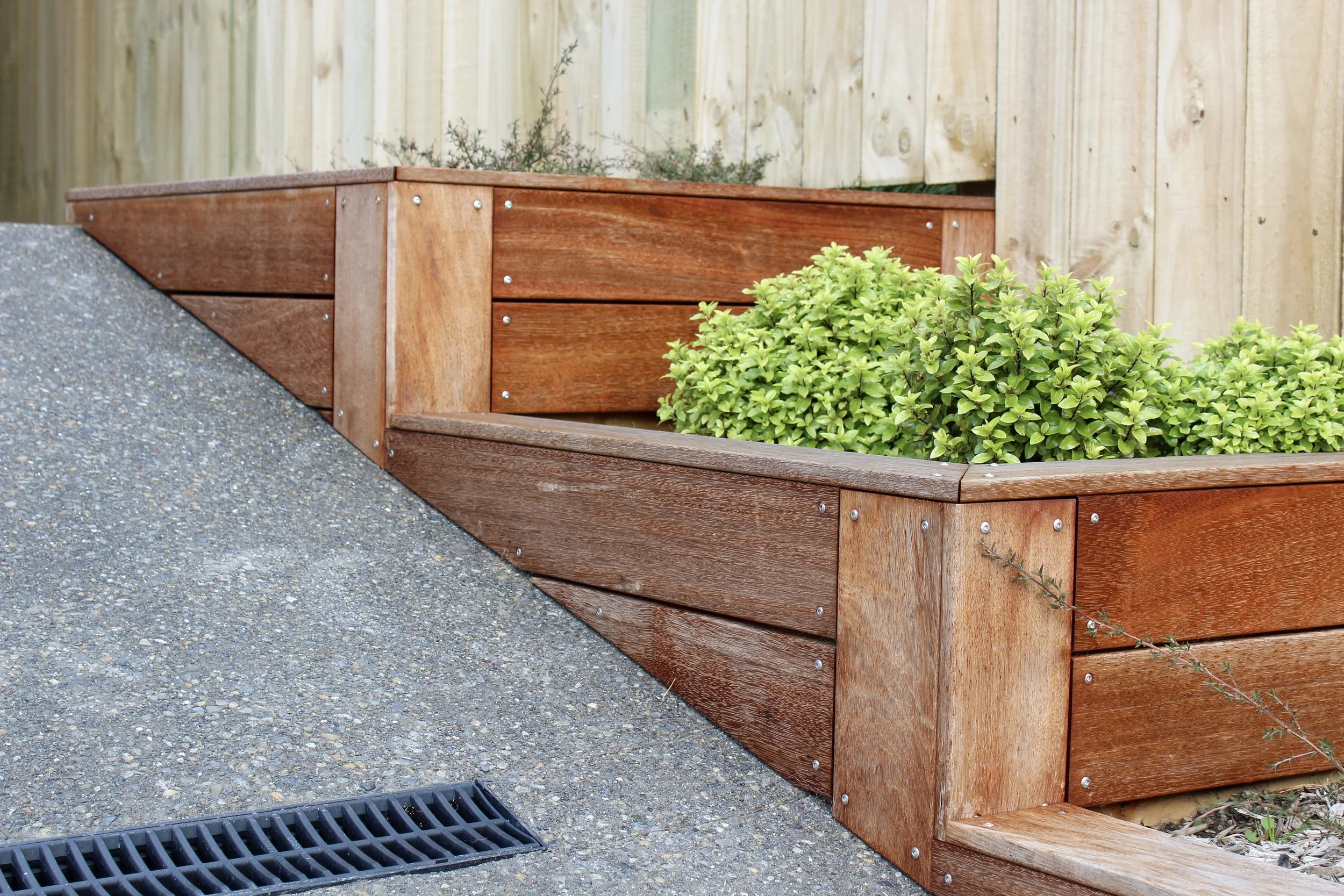
New terraced retaining walls, designed and constructed to last.
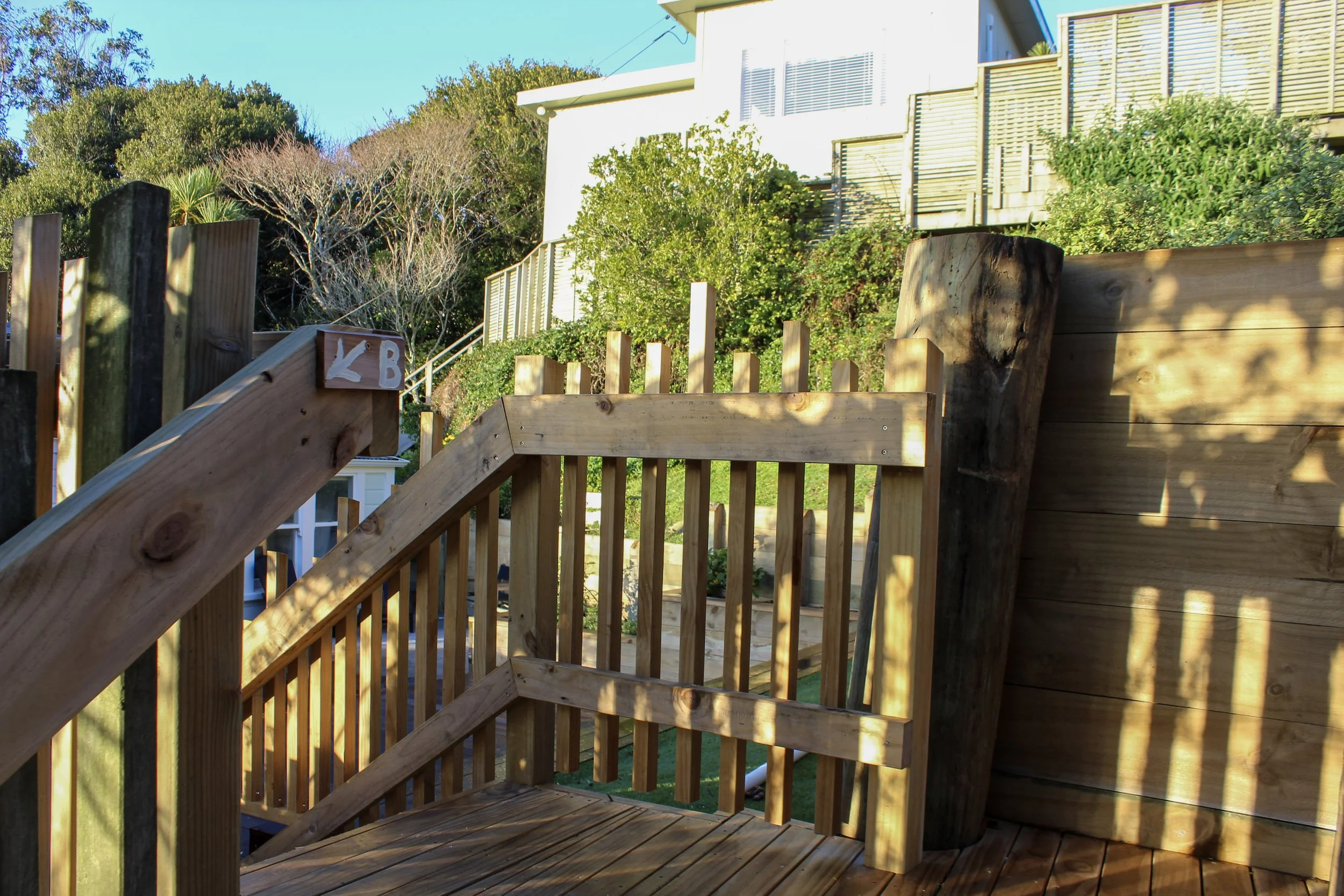
New entry to the property making it safer and easier access to the front door, while tying in with the existing aesthetic of the neighbouring property.
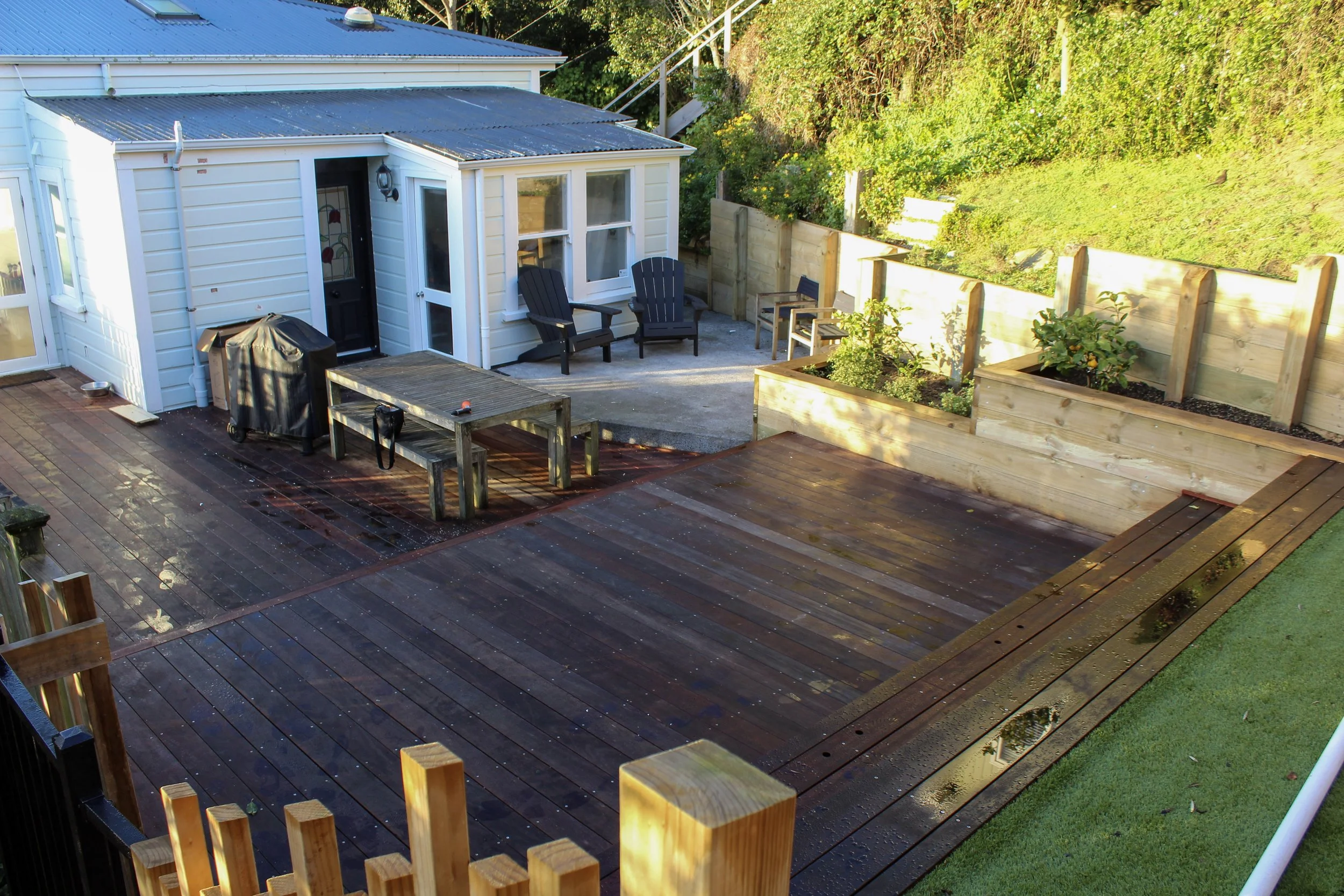
A new top decking to freshen up the space alongside the new layout and walls.
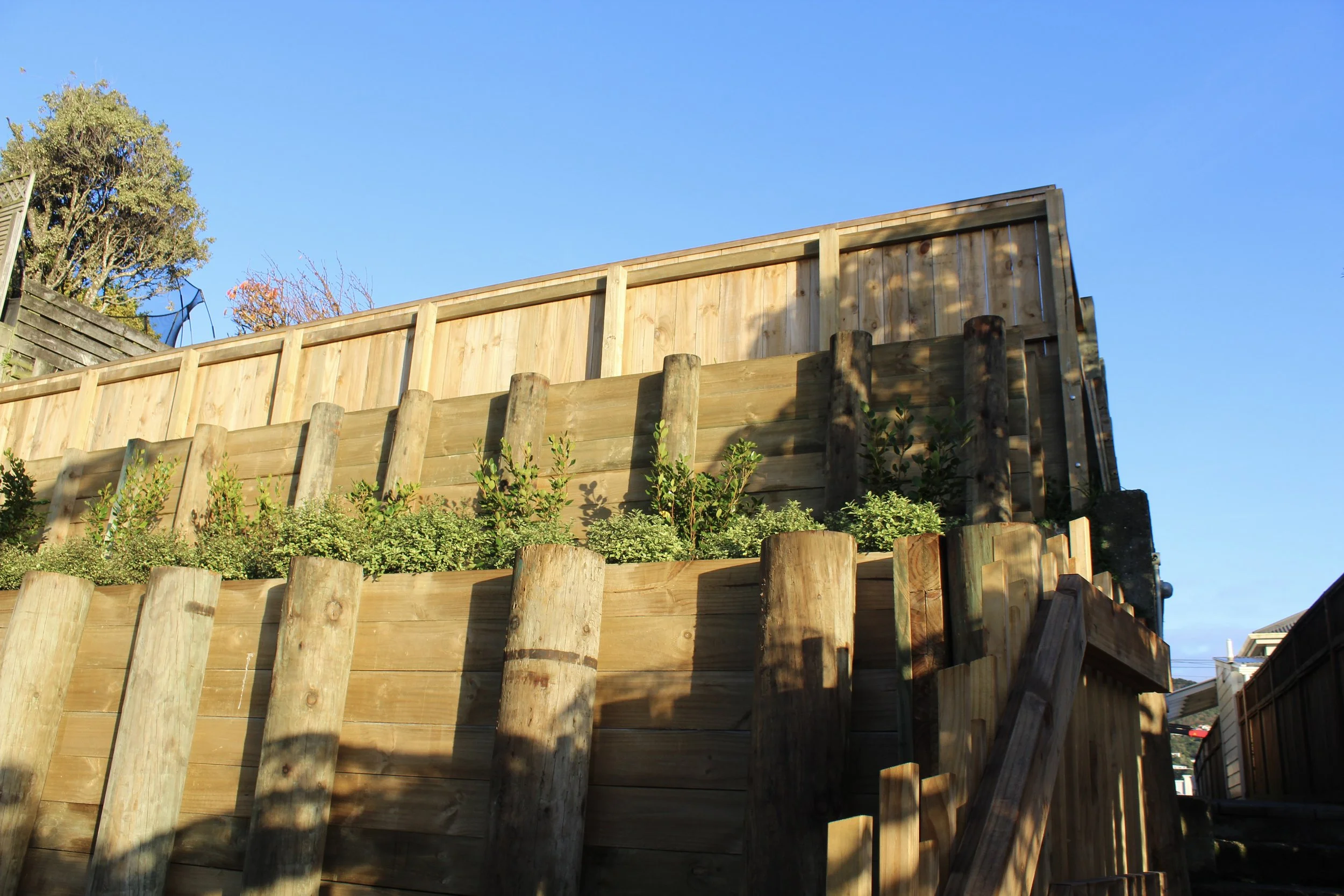
Upwards view of the retaining walls, highlighting the greenery in between to slowly hide the walls from view.
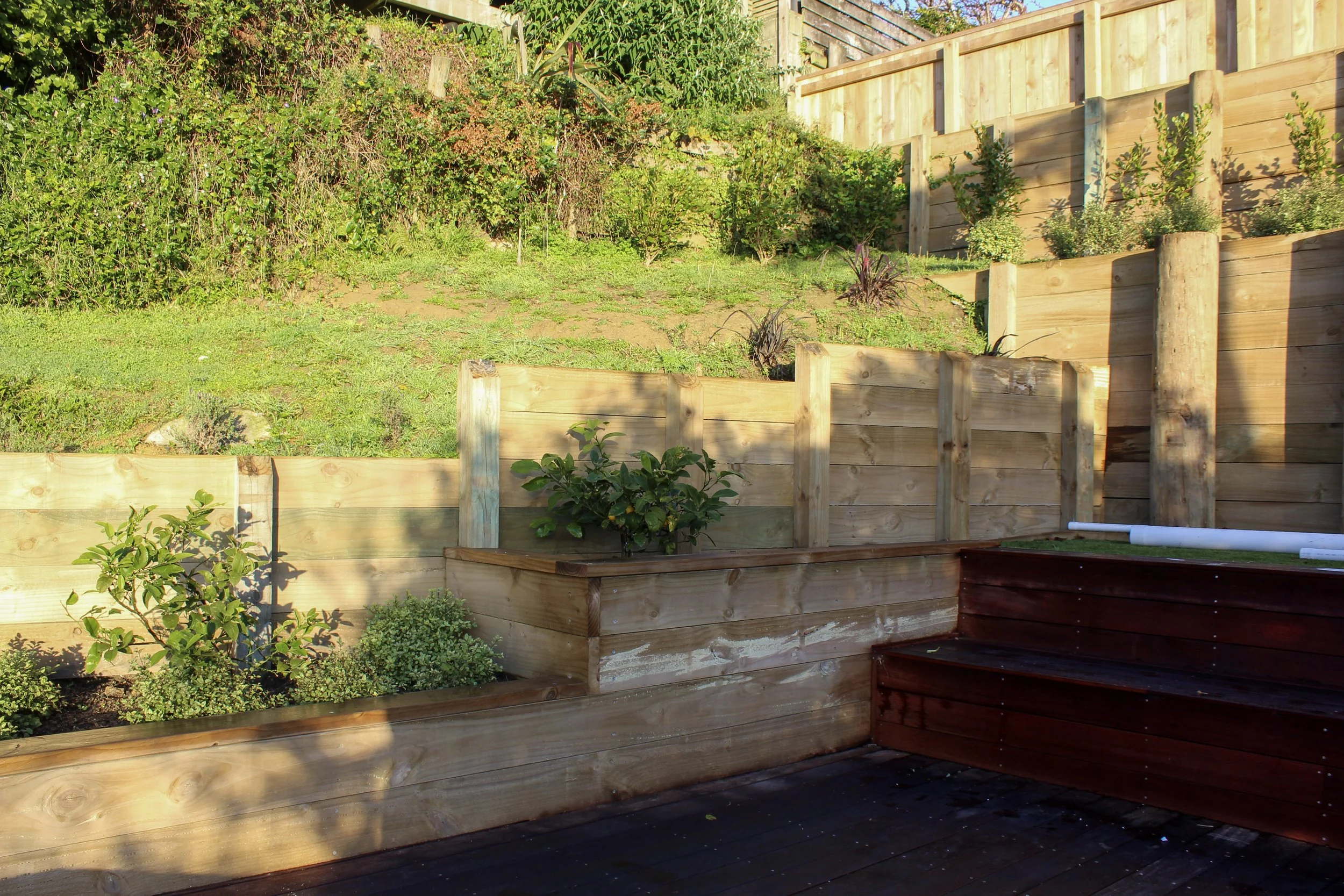
Step-down planter beds to increase the greenery within the space, or potential usability of the area.
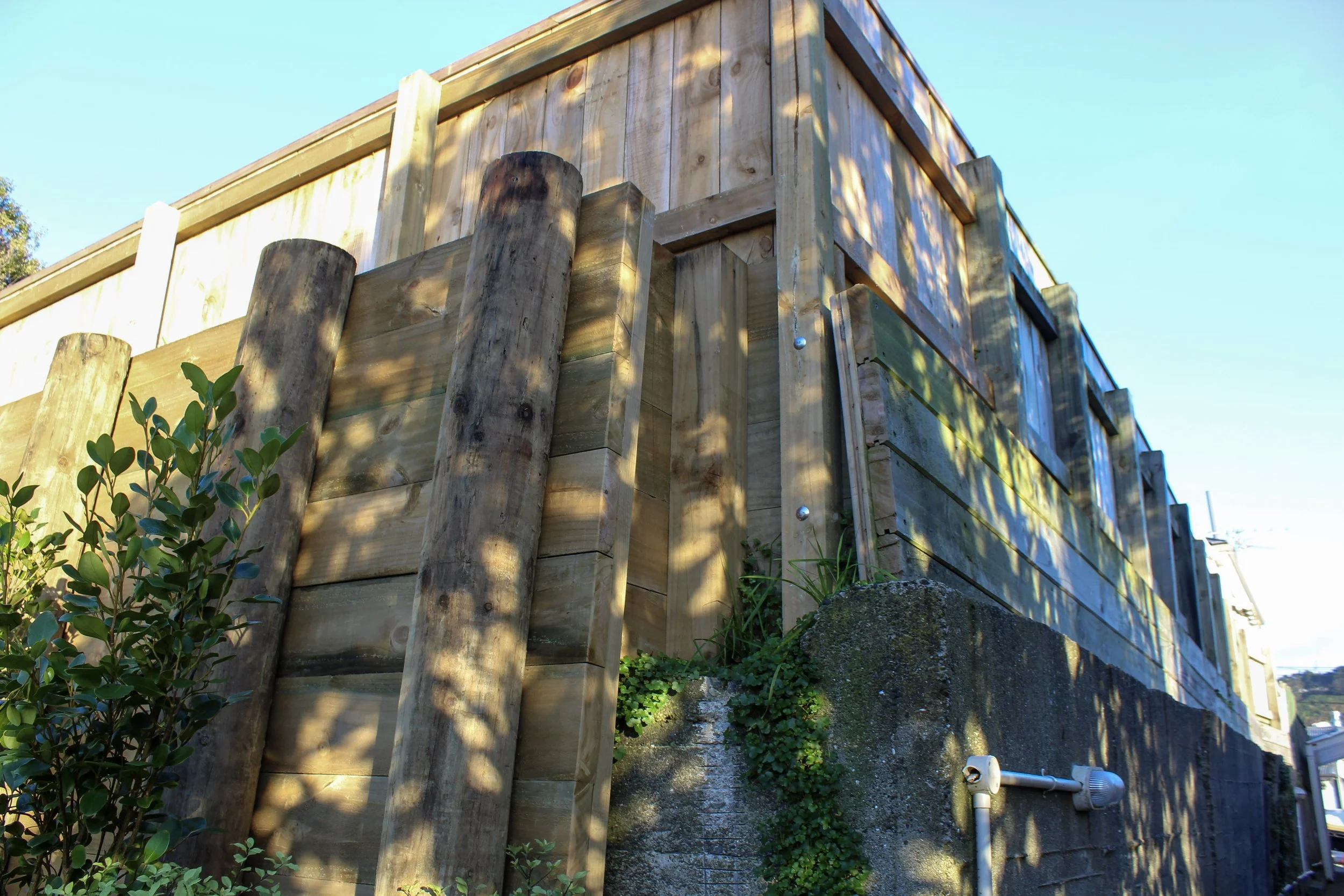
The new timber retaining walls tying in with the existing concrete wall, constructed separately to avoid bearing more weight on it.
Moana Road
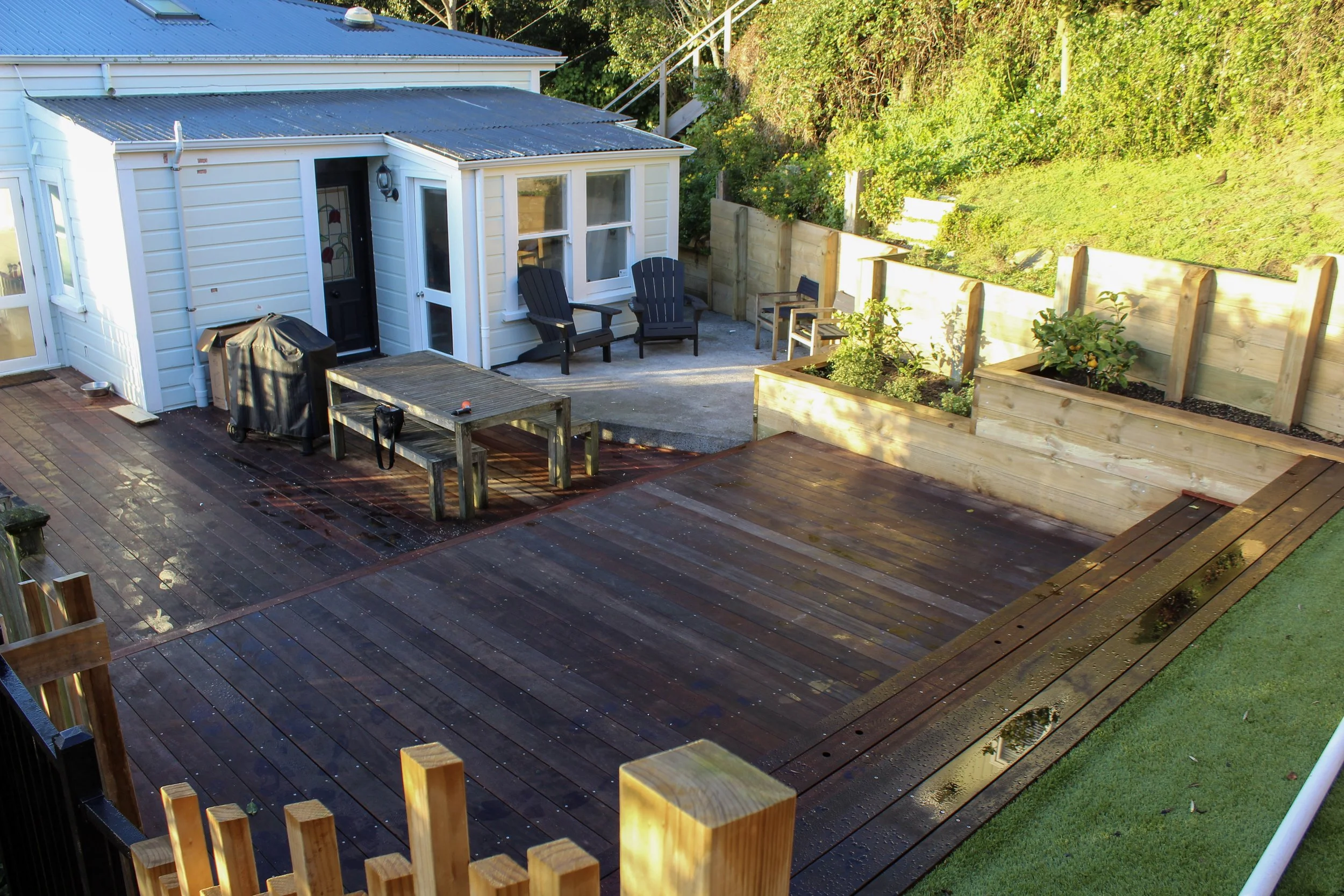
To help reduce costs, the dated rock retaining walls were kept, and the design solution focused on extending decking directly from the house, building around the walls to create a generous and cohesive platform above and below.
This approach maximised the sunniest part of the property and enhanced the sense of privacy, opening the area up to a range of uses. Space was created for outdoor dining, and new planting introduced greenery visible from the home’s bedrooms, adding both vibrancy and personality to break up the timber-heavy backyard space.
Year | 2022-2023
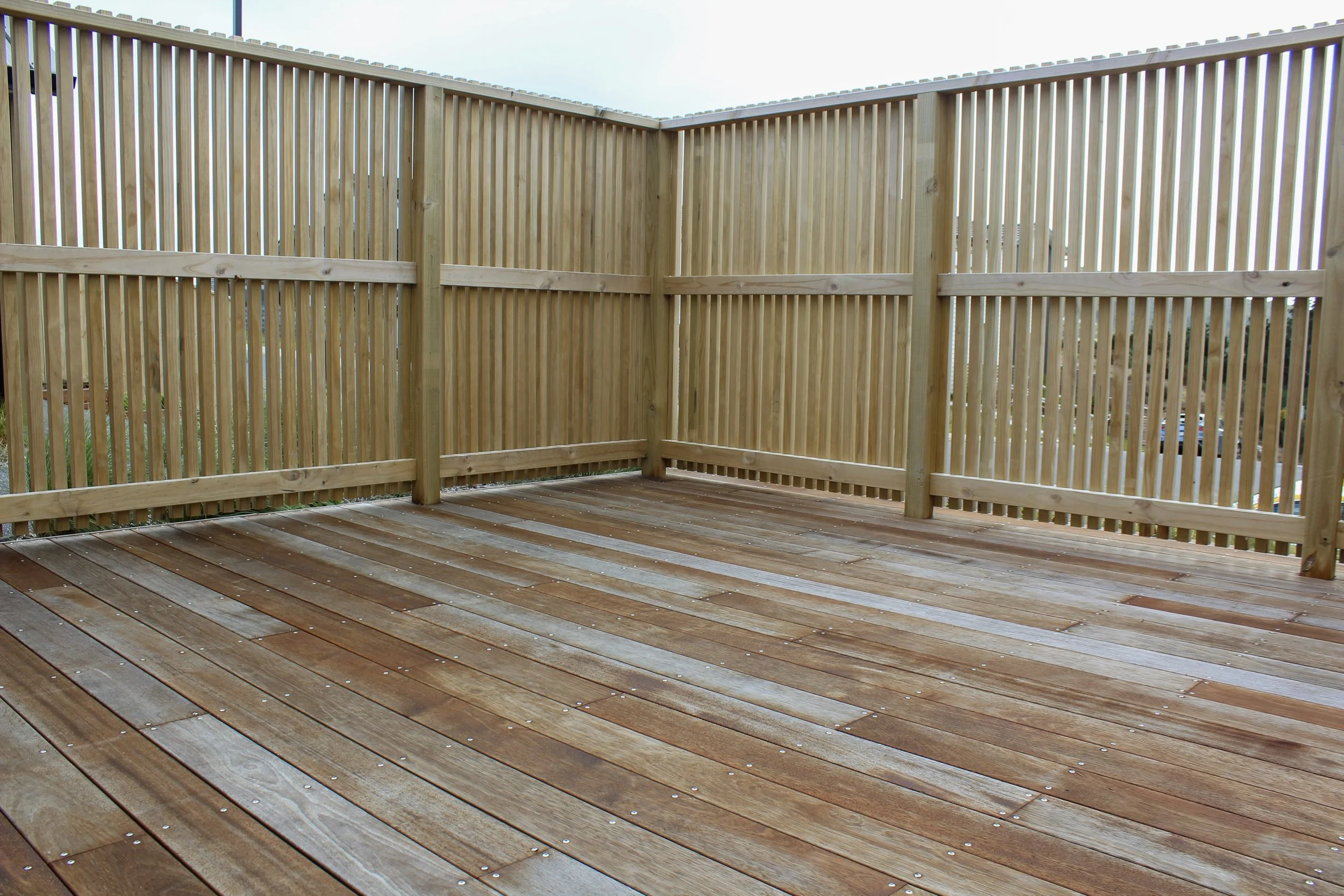
Horizontal lines were used to create a sense of a widened area, helping to maximise the amount of space allocated to this project.
Boeing Way
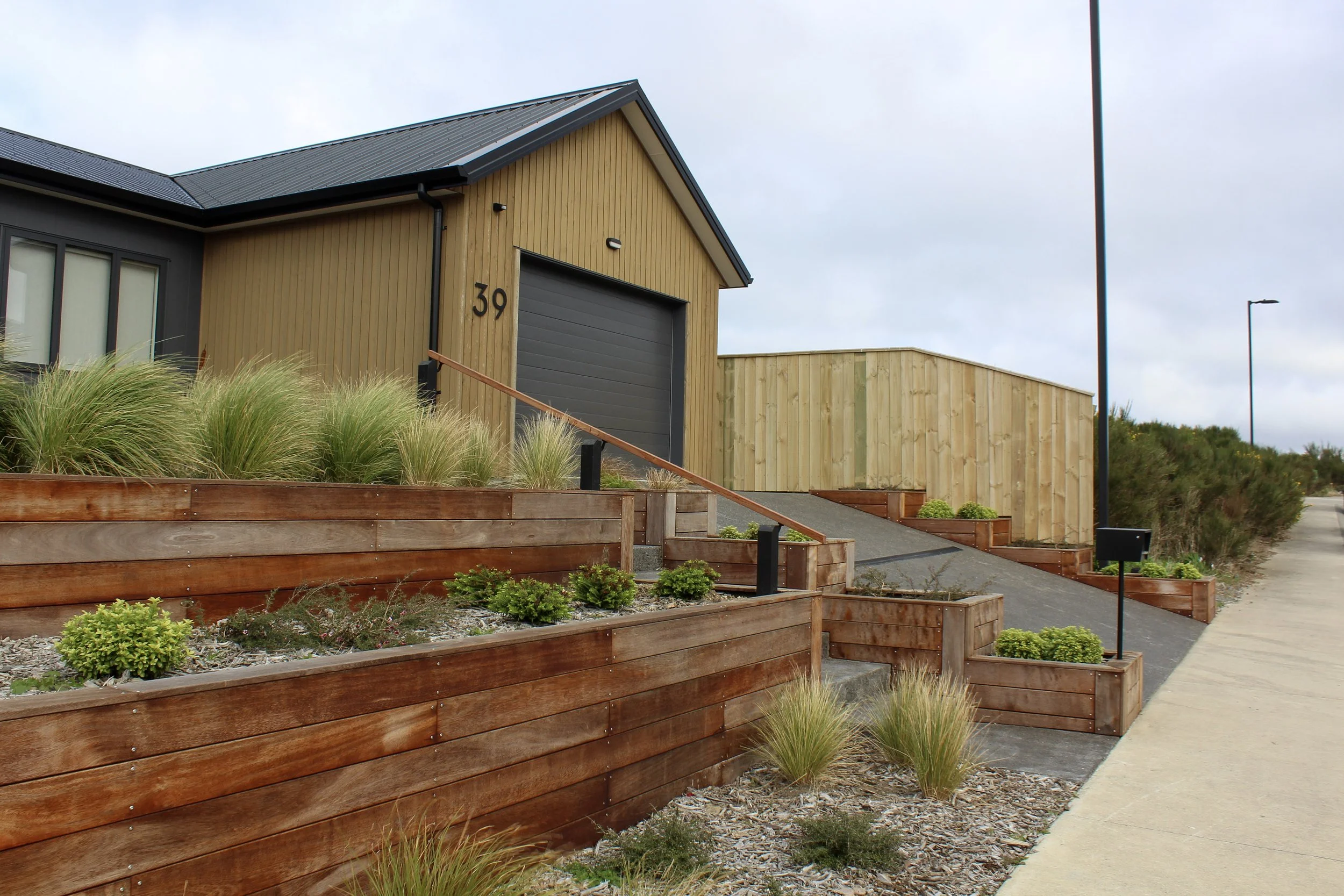
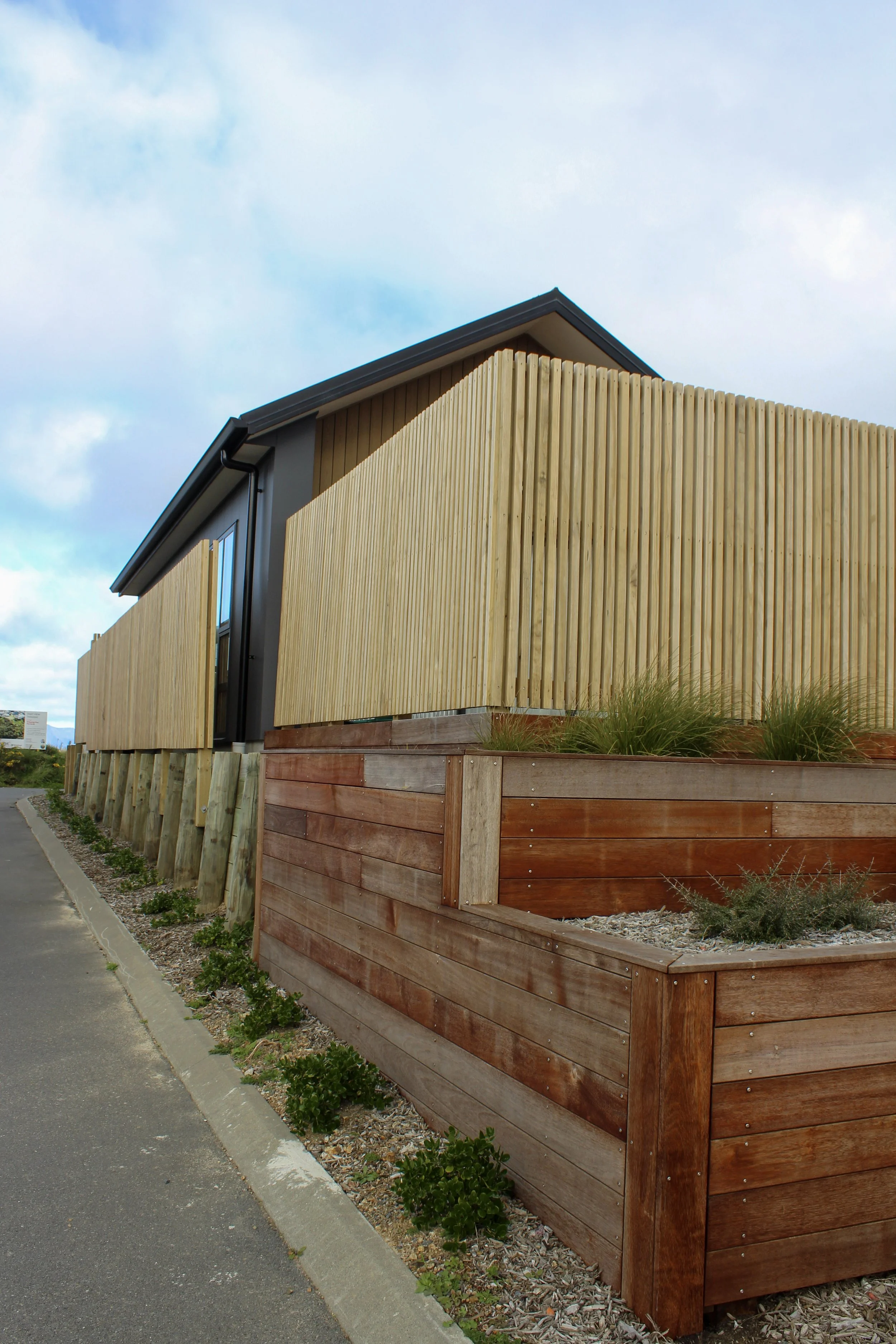
A newly built home offered a blank canvas to design a landscape without the need for demolition or remediation. This freedom allowed the outdoor spaces to be shaped precisely to the client’s vision, while also meeting the area’s stricter council requirements, which were intended to guide development.
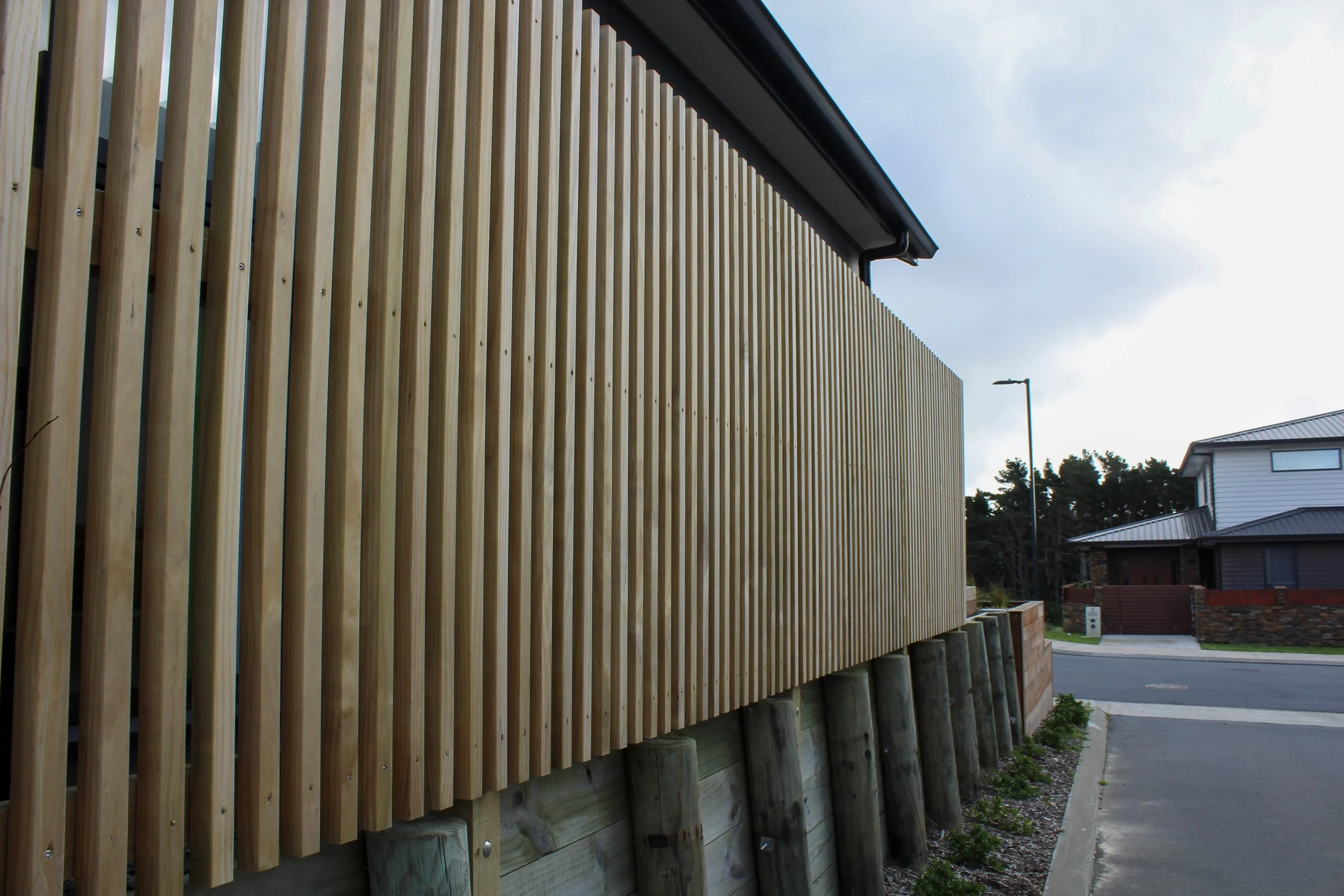
The final design created a striking entry to the home, that ties seamlessly into the home’s materiality, with timber elements that will naturally silver over time. Planting was carefully selected to withstand the suburb’s salt-laden winds, while reflecting the clients’ preferred palette. The design resulted in a landscape that feels both resilient, and deeply personal.
Year | 2023-2025
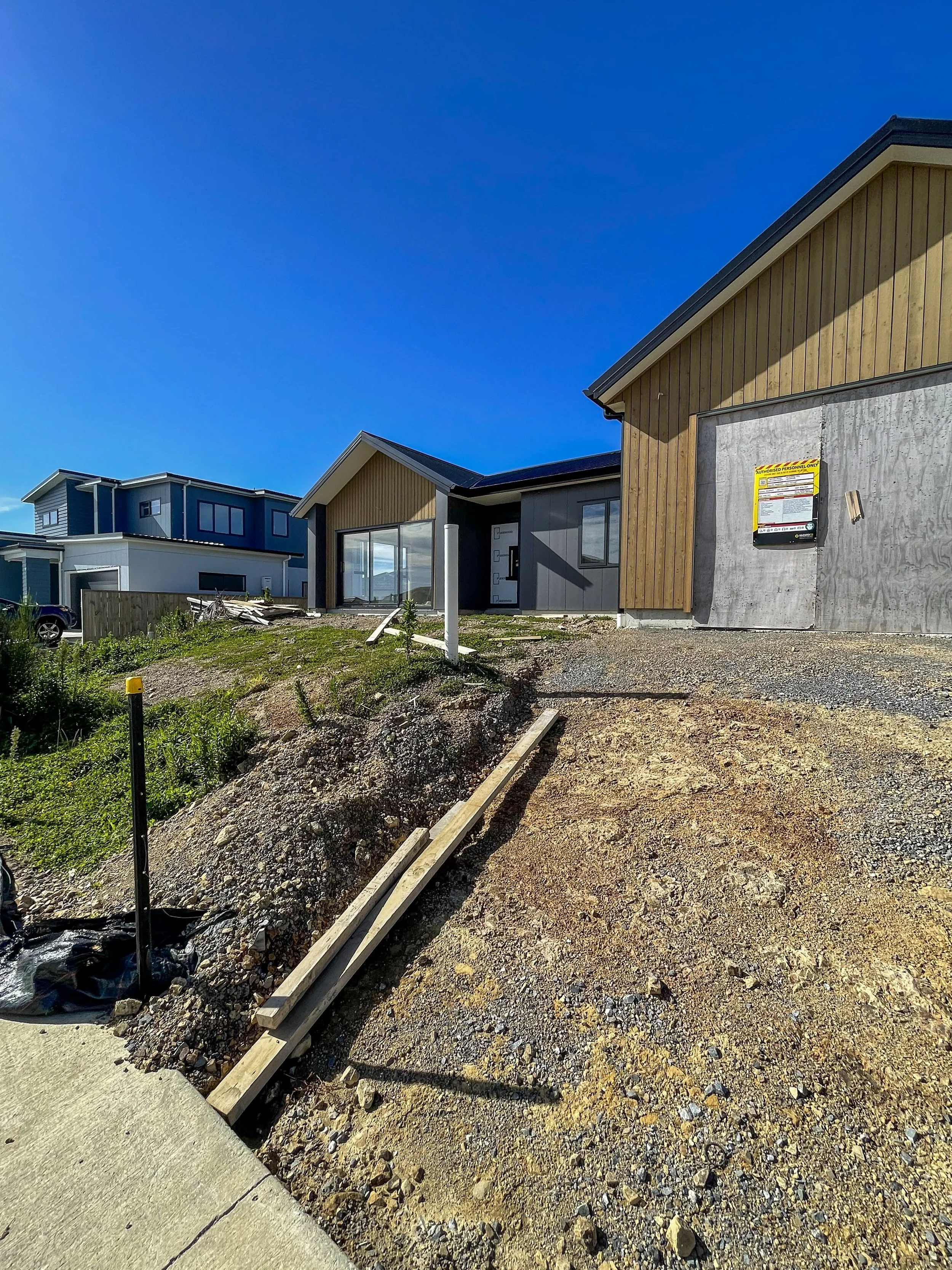
The construction was left like this for the landscaping to take over from.
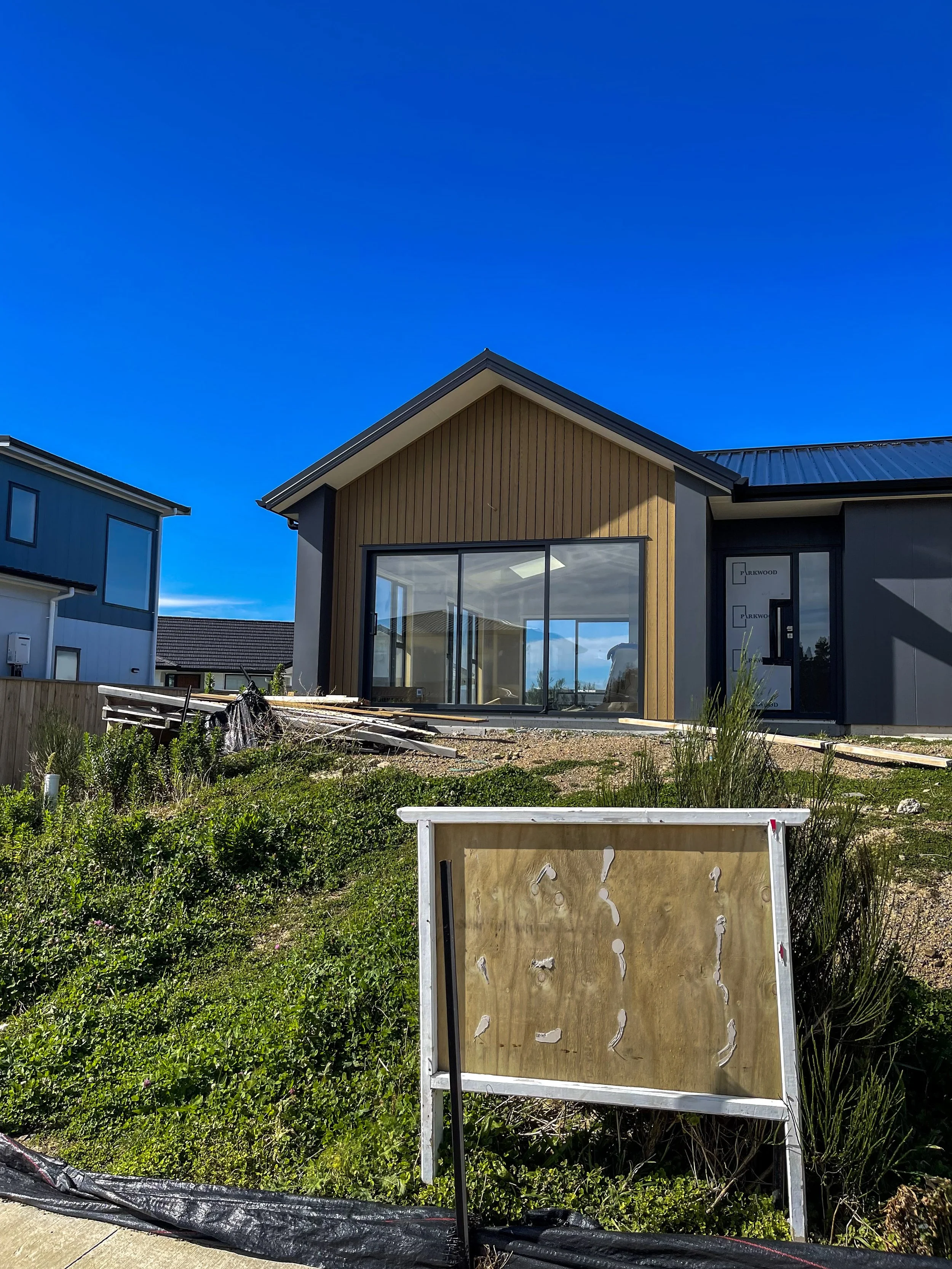
The frontyard provided no street appeal in its current state, providing a blank slate to work off of.
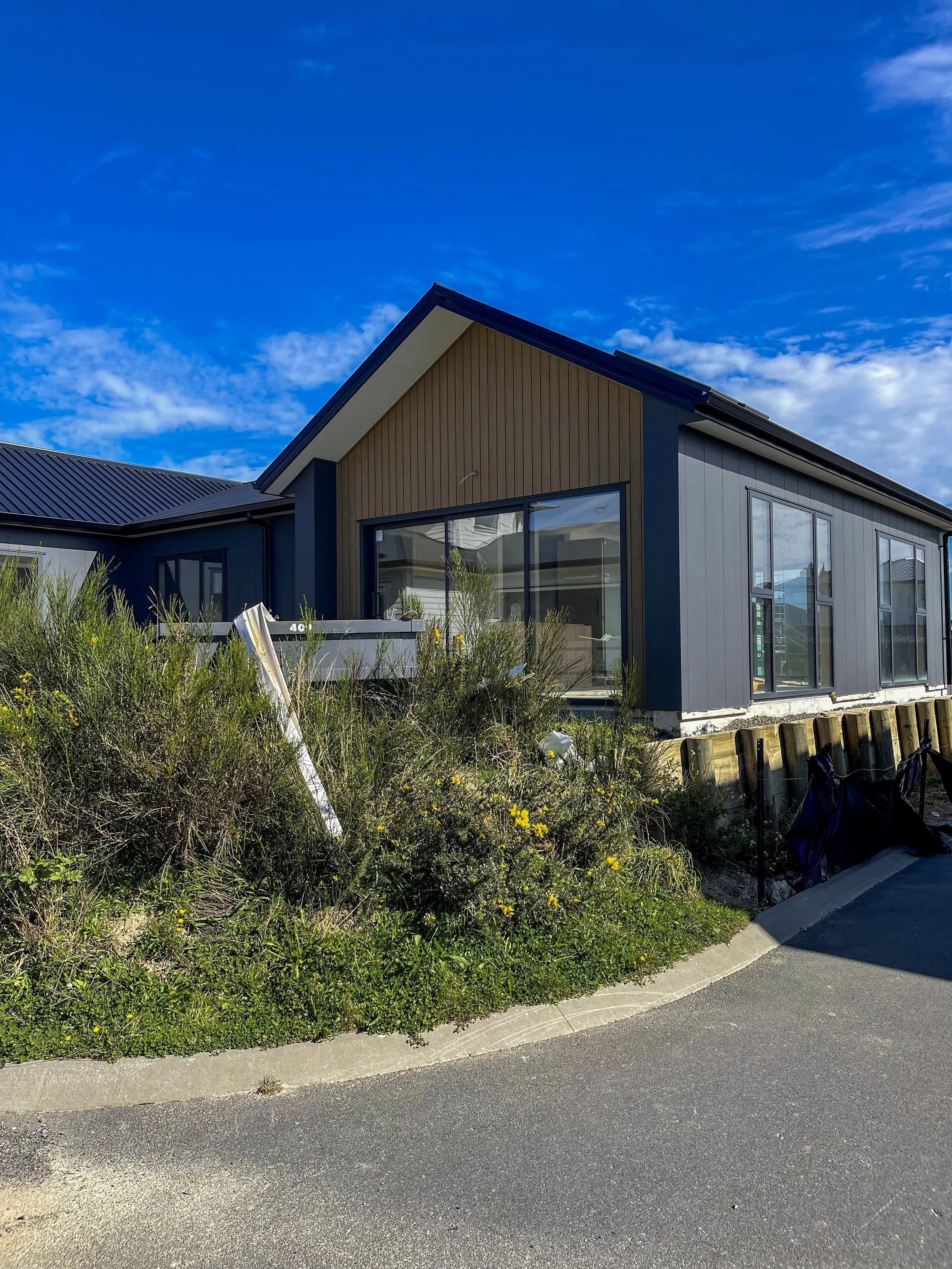
Certain aspects such as the retaining wall were not continued through, making the works seem disconjointed.
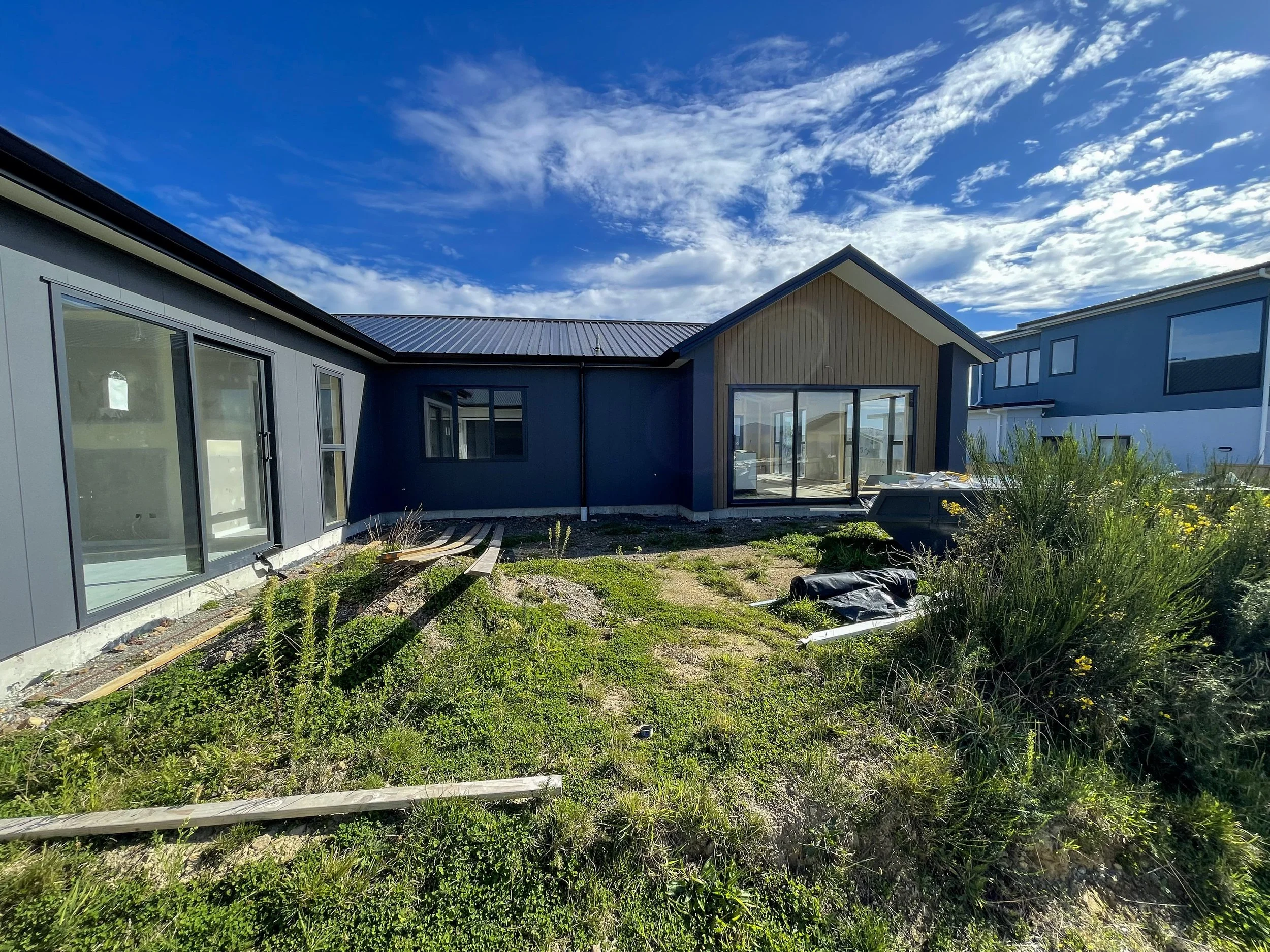
The backyard provided no shelter or privacy from the neighbouring properties.
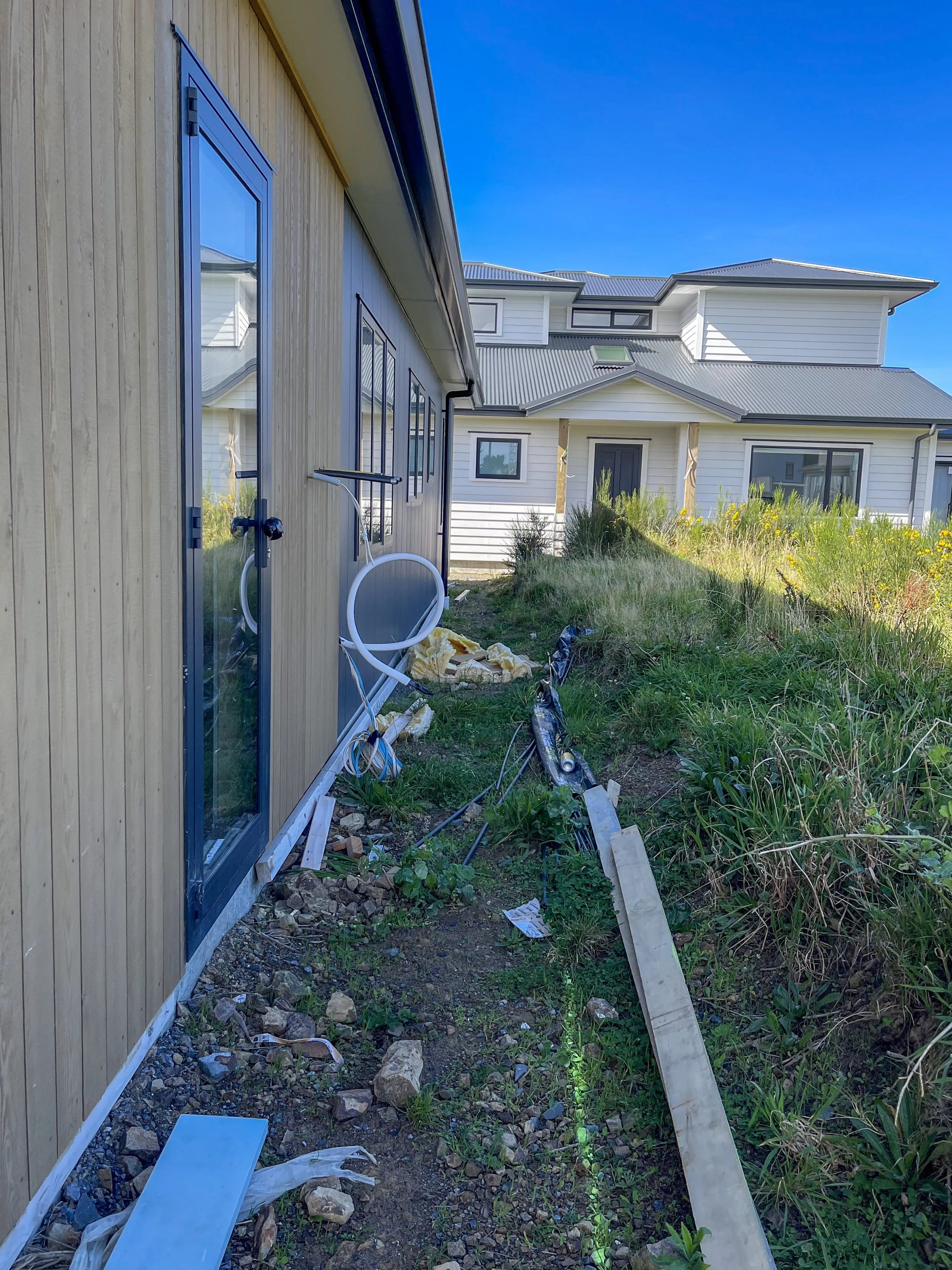
Key fencing was left off to be taken up later on.
Simla Crescent
Aging site structures had caused the driveway to deteriorate over time, significantly reducing available parking space. Fencing along the entry further diminished the appearance of the home, lowering street appeal and leaving the approach looking untidy.
The renewed entry now provides a clear, solid, and functional approach to the home, with updated materials and detailing that align with the aesthetic of the surrounding context. The final result is both a practical improvement and a refreshed look to the space.
Year | 2024-2025
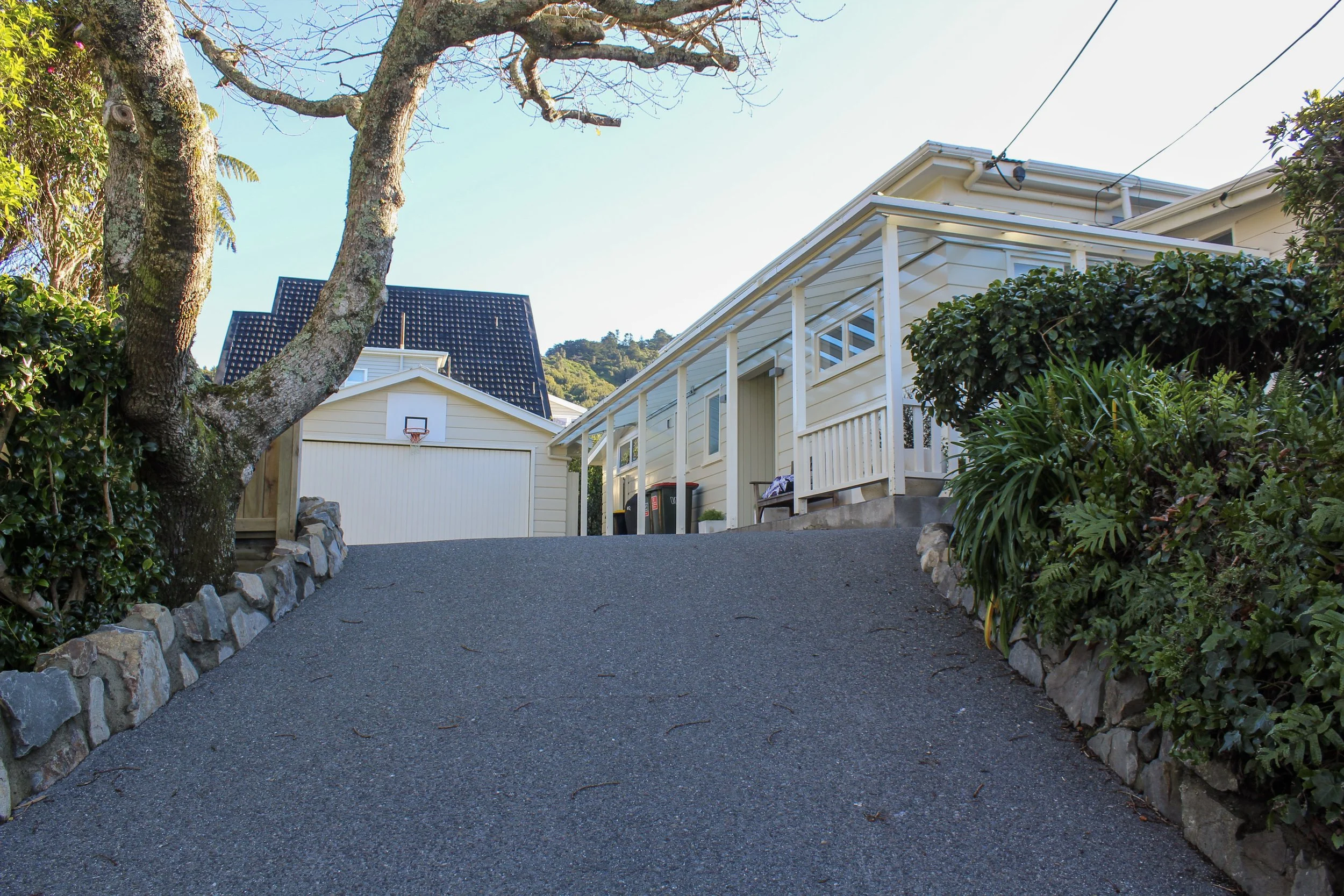
A new driveway provides a strong consistent look to the entry to the property, highlighting the house.

The balustrade provides a strong framing to the existing vegetation found on site between the clients property and the next.
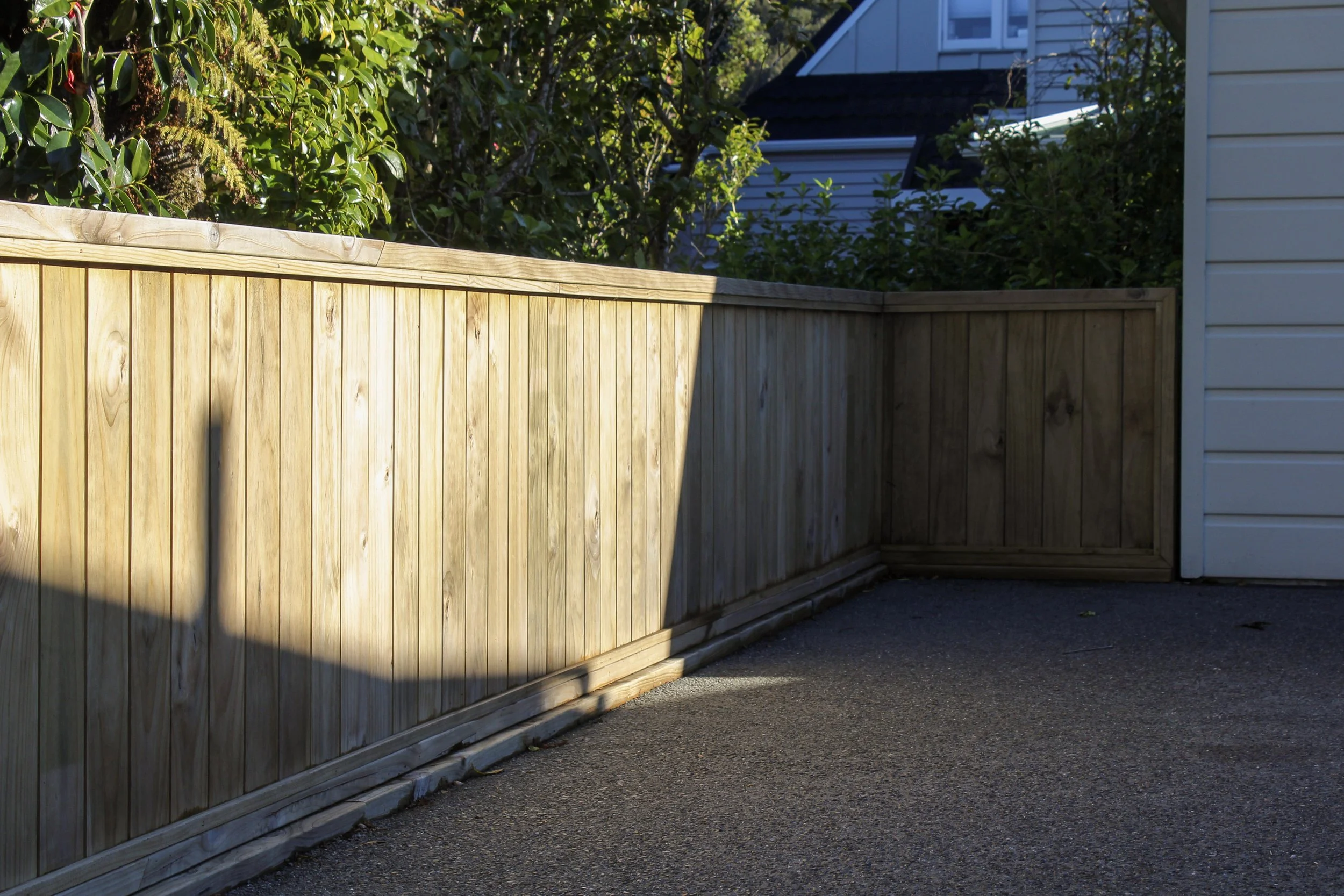
A clean fence style to build on the weatherboard material of the structures.
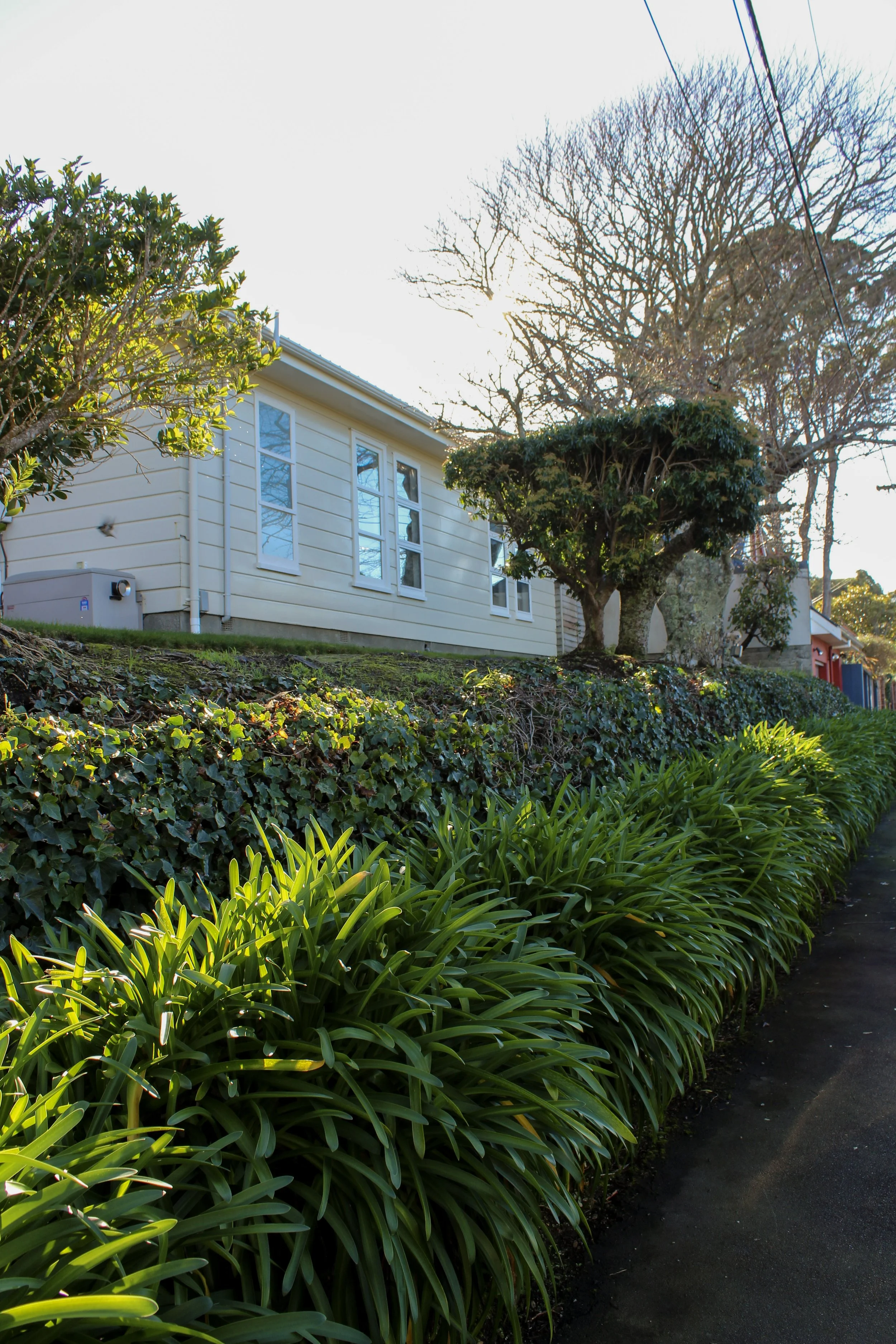
Removal of the aged fencing and ivy helps to show the house to the road, building its presence.
Sefton Street
The removal of an existing garage dramatically opened up the site, creating an opportunity to reimagine the front entry. The client’s vision was to establish a sunny courtyard at the heart of this space, while still providing strong access points to the levels of the property, but also integrating a car deck to stay within budget.
Several design iterations were developed to explore the relationship between the car deck and the steps leading to the front door, ensuring the courtyard area was maximised for everyday use. The final layout worked seamlessly with the constraints of the existing retaining walls, which remained in place, resulting in a welcoming and highly functional entry.
Year | 2024-2025
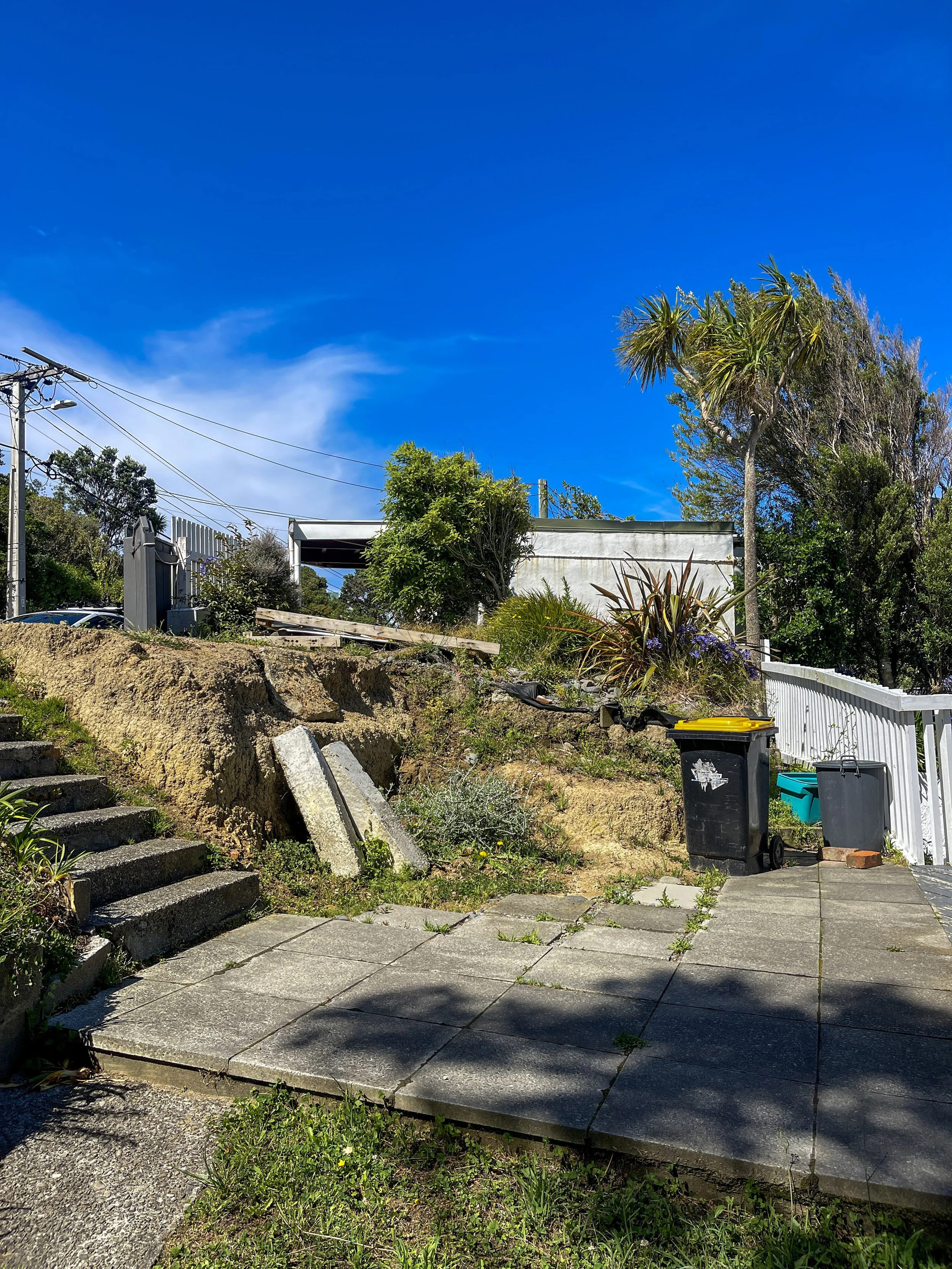
The existing garage was freshly removed, opening the space up for interpretation.
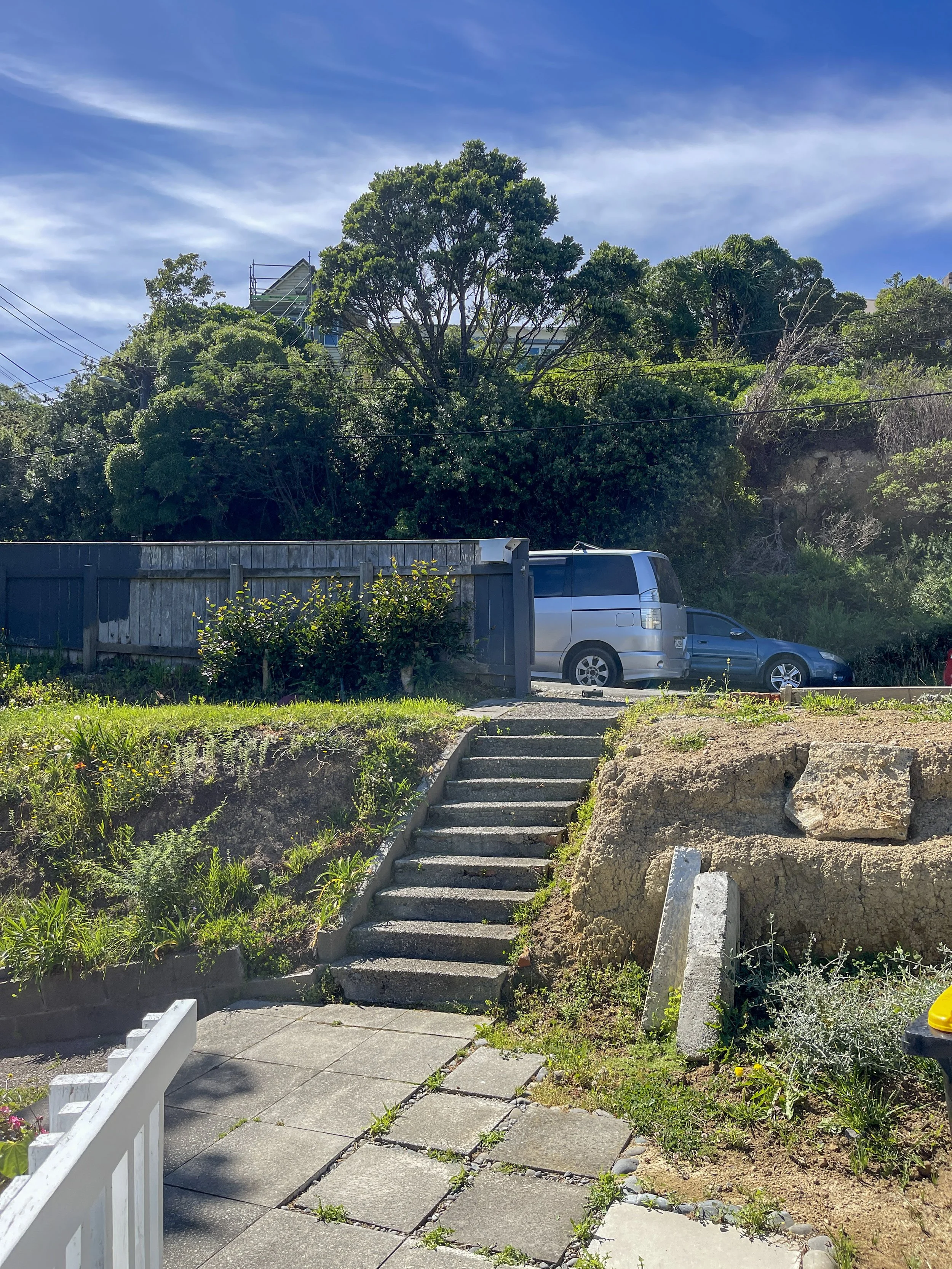
Access down from the footpath.
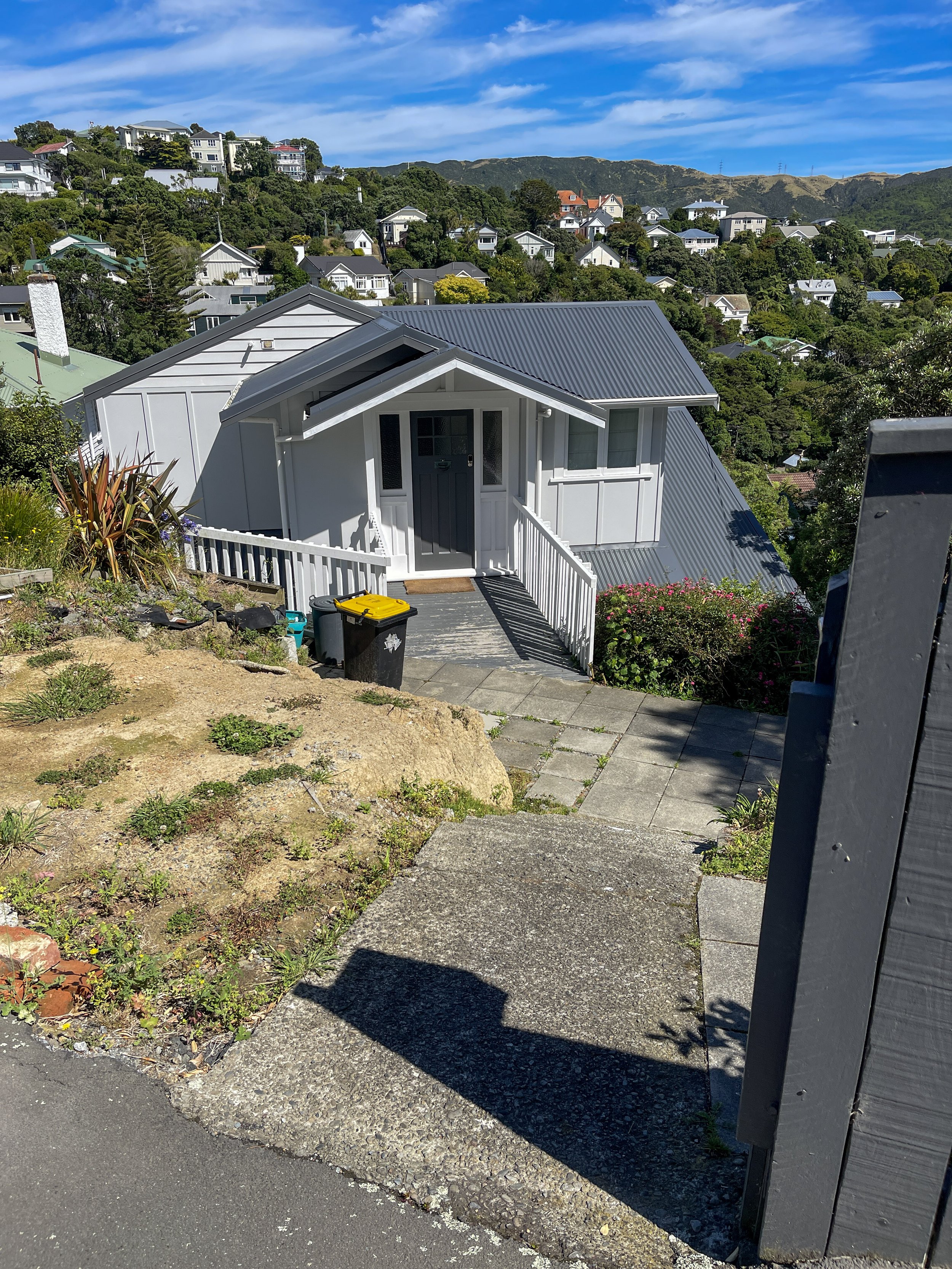
View down from the footpath to the home.
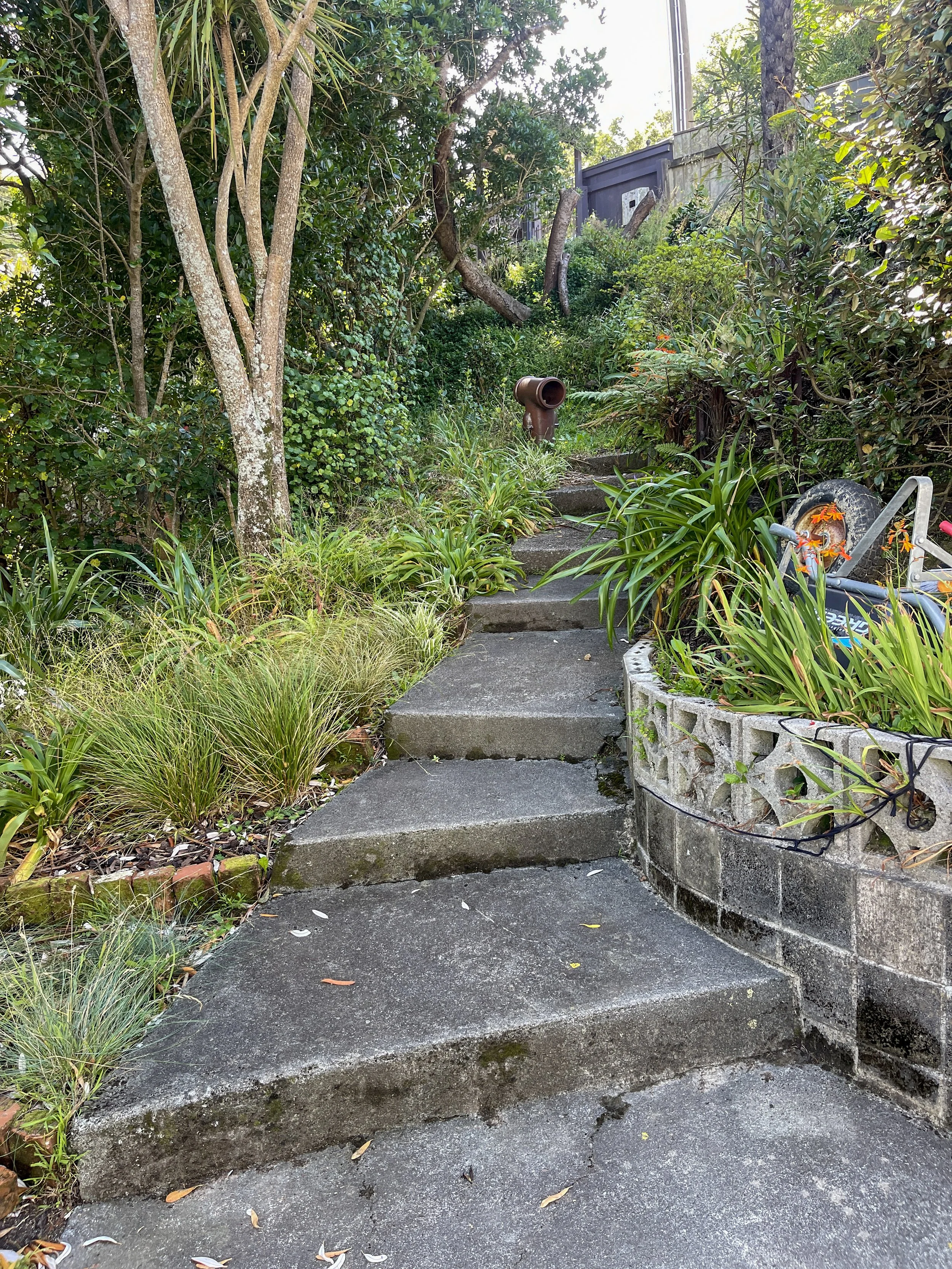
The existing access down to the bottom of the property.
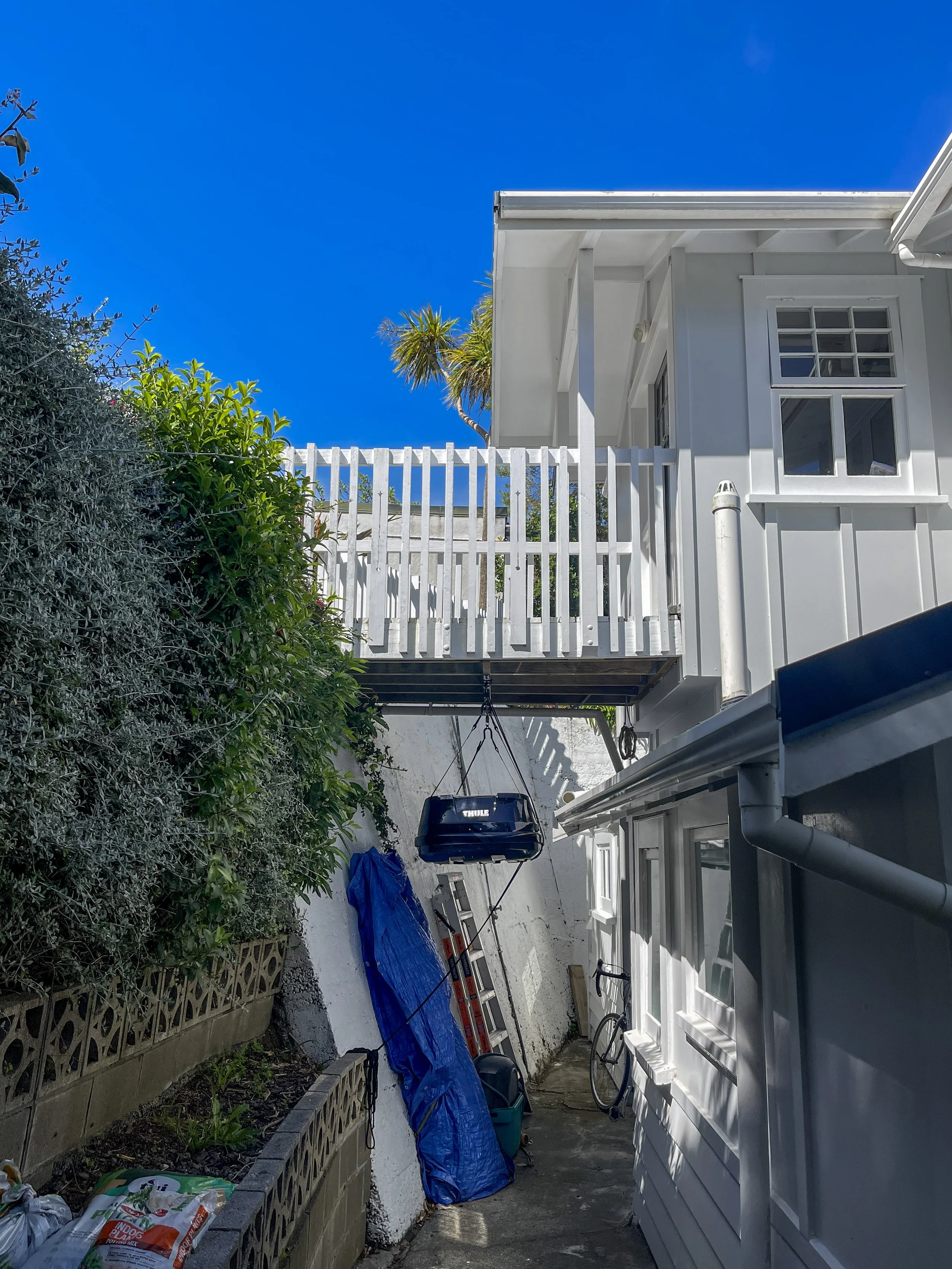
Bottom level view up to the primary access to the home, which was to be retained.
Multi-use of the space was vital for the clients, maximising the sunlight exposure that this entry faced. Communicating the aesthetic of the space was required to get the sense of area the client could work with.