Playground Design
Creating safe, engaging spaces for children was the focus of these highlighted playground designs.
Working within local council requirements and New Zealand playground safety standards, these projects were developed in collaboration with playground groups, installation professionals, and sub-contractors. The result is a collection of complex and creative designs that place children’s enjoyment at the centre.
Johnsonville
Year | 2025
The site required an update rather than a full redesign, with the primary goal of bringing existing elements up to current New Zealand playground safety standards. This created a complex design challenge: removing certain features while still maintaining the existing vegetation where possible, and retaining a playful and accessible environment for a wide range of ages, particularly children from 0-5 years.
The design outcome was a comprehensive masterplan that balanced safety with creativity. Designed with flexibility in mind, it allows specific areas to be developed in stages, adapting to the budget and evolving needs of the playground’s management team.
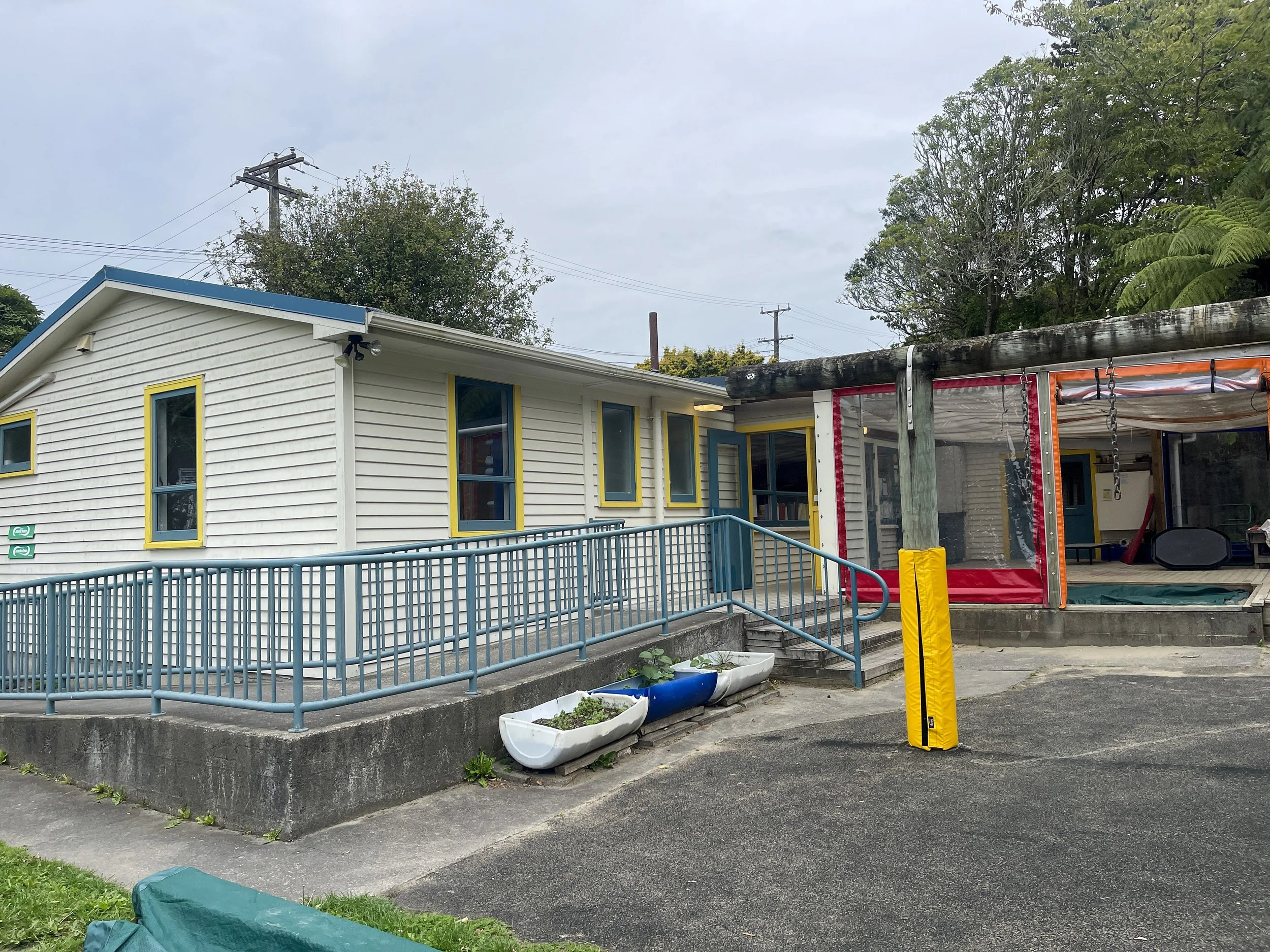
Aged softfall rubber clearly showed the required new design for this space.
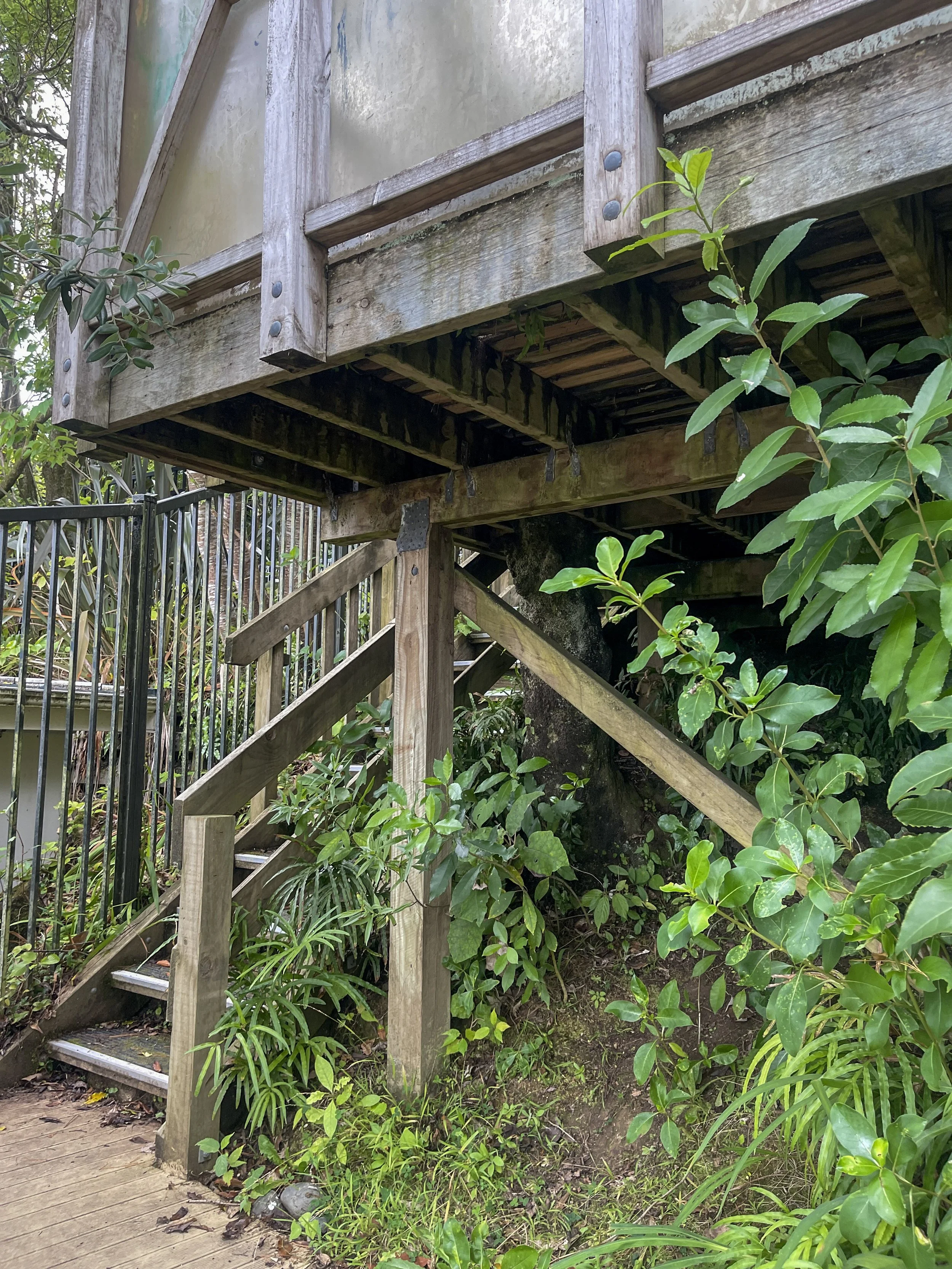
Outdated structures on the site showed that it wasn't suitable to the building code of today.
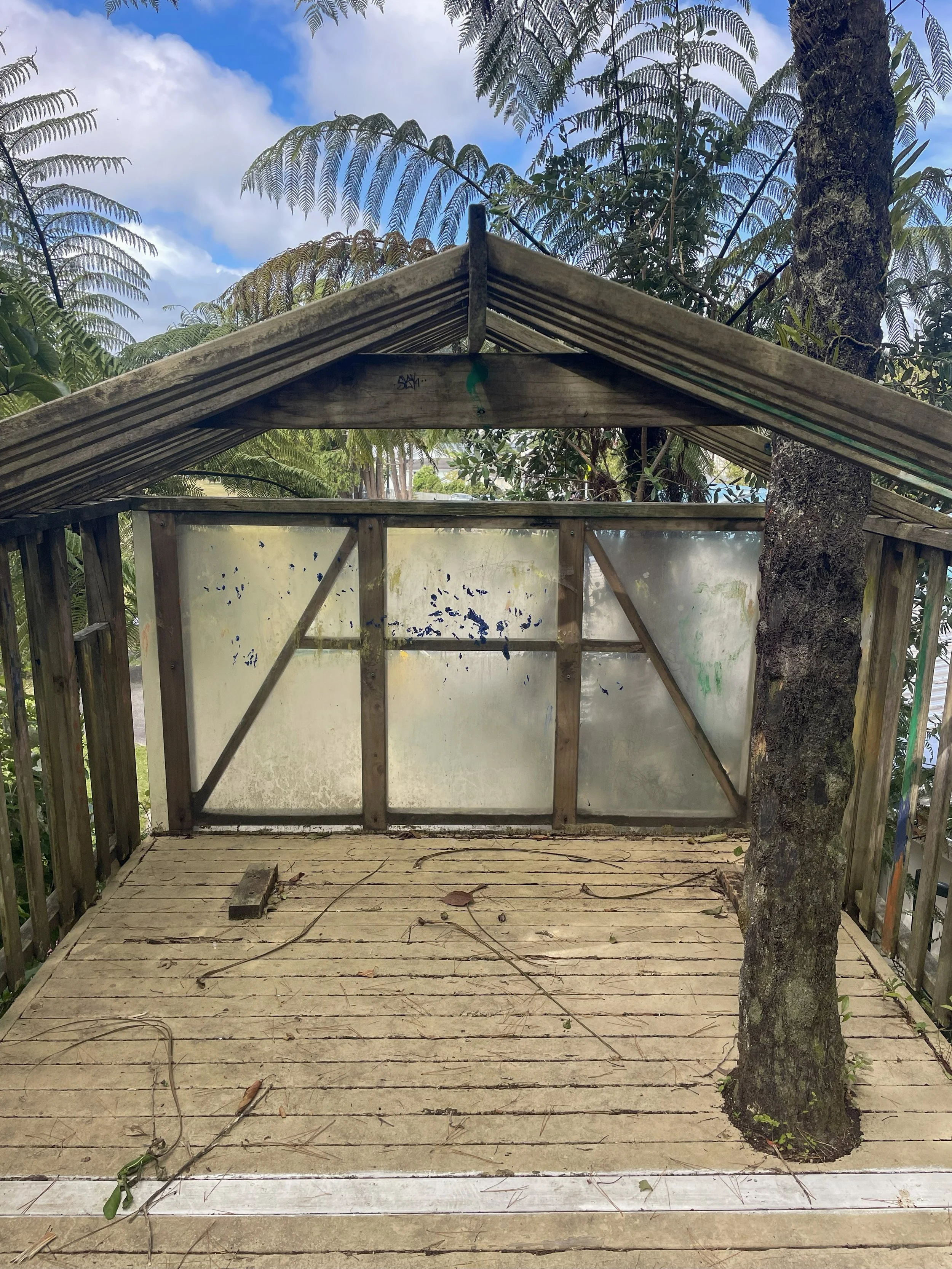
Worn down materials, ready to break, were rampant around the site.
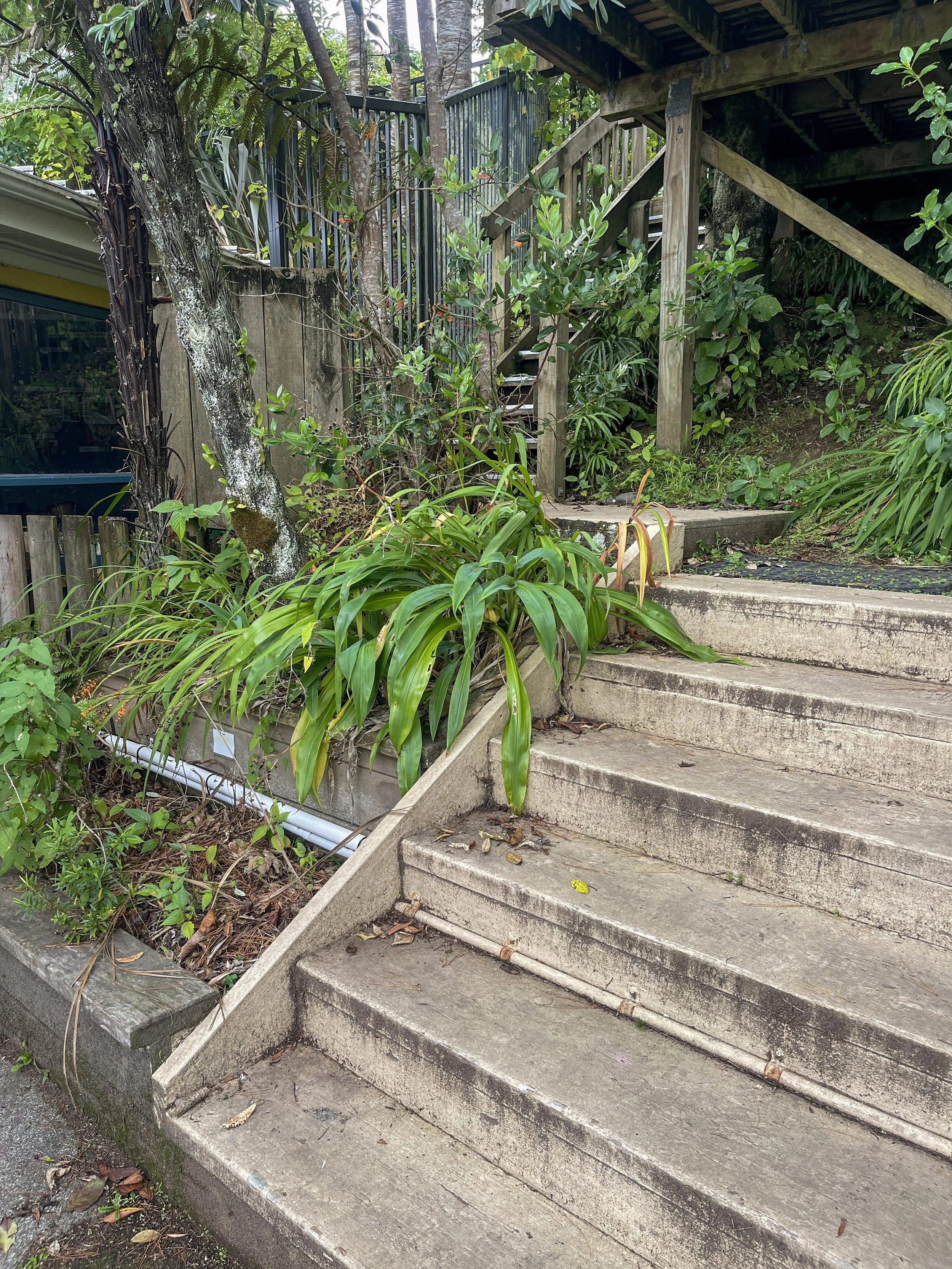
Falling hazards were clear throughout the site.
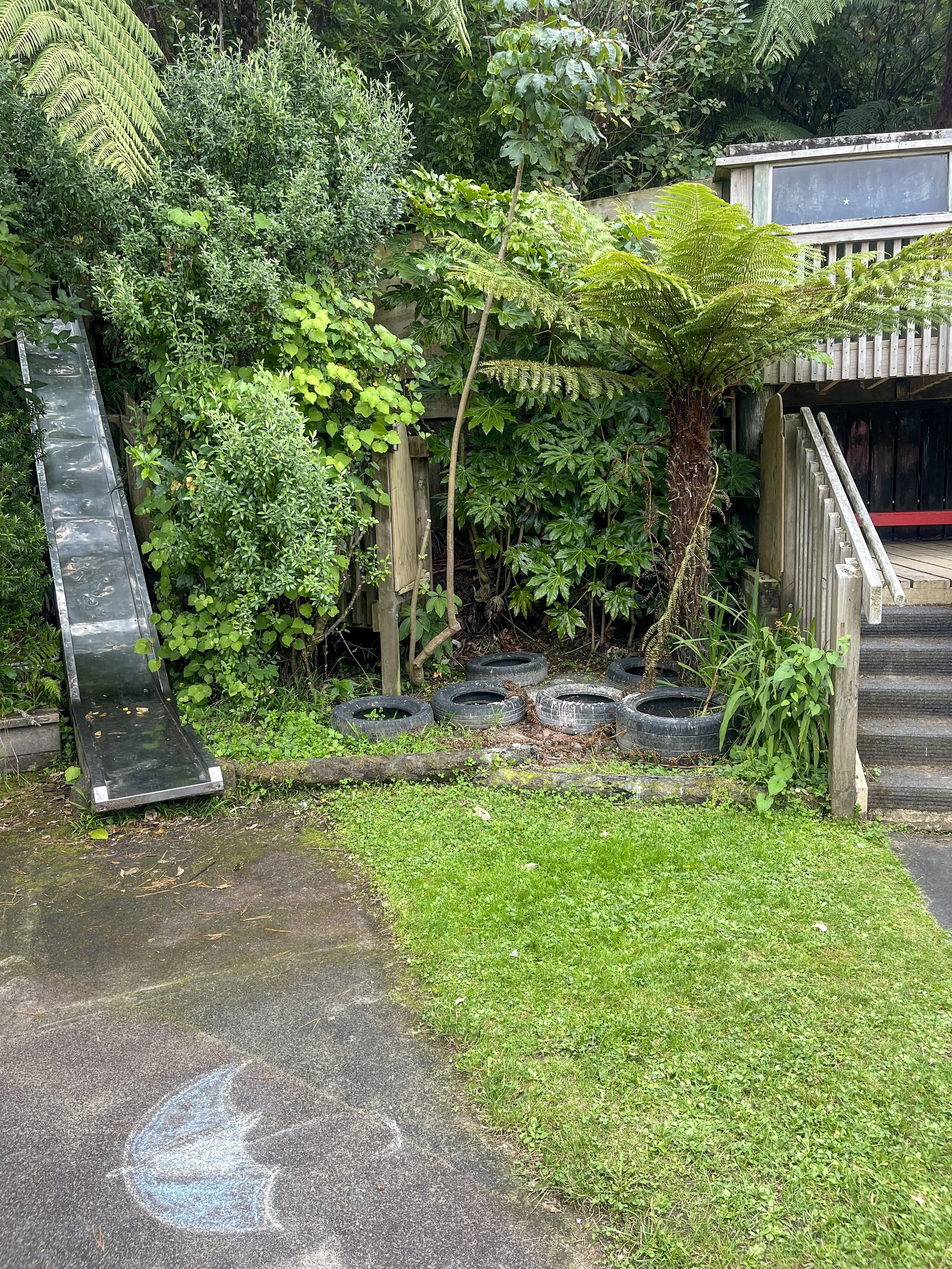
Band-aid fixes for playgrounds were not suitable to the New Zealand standards.
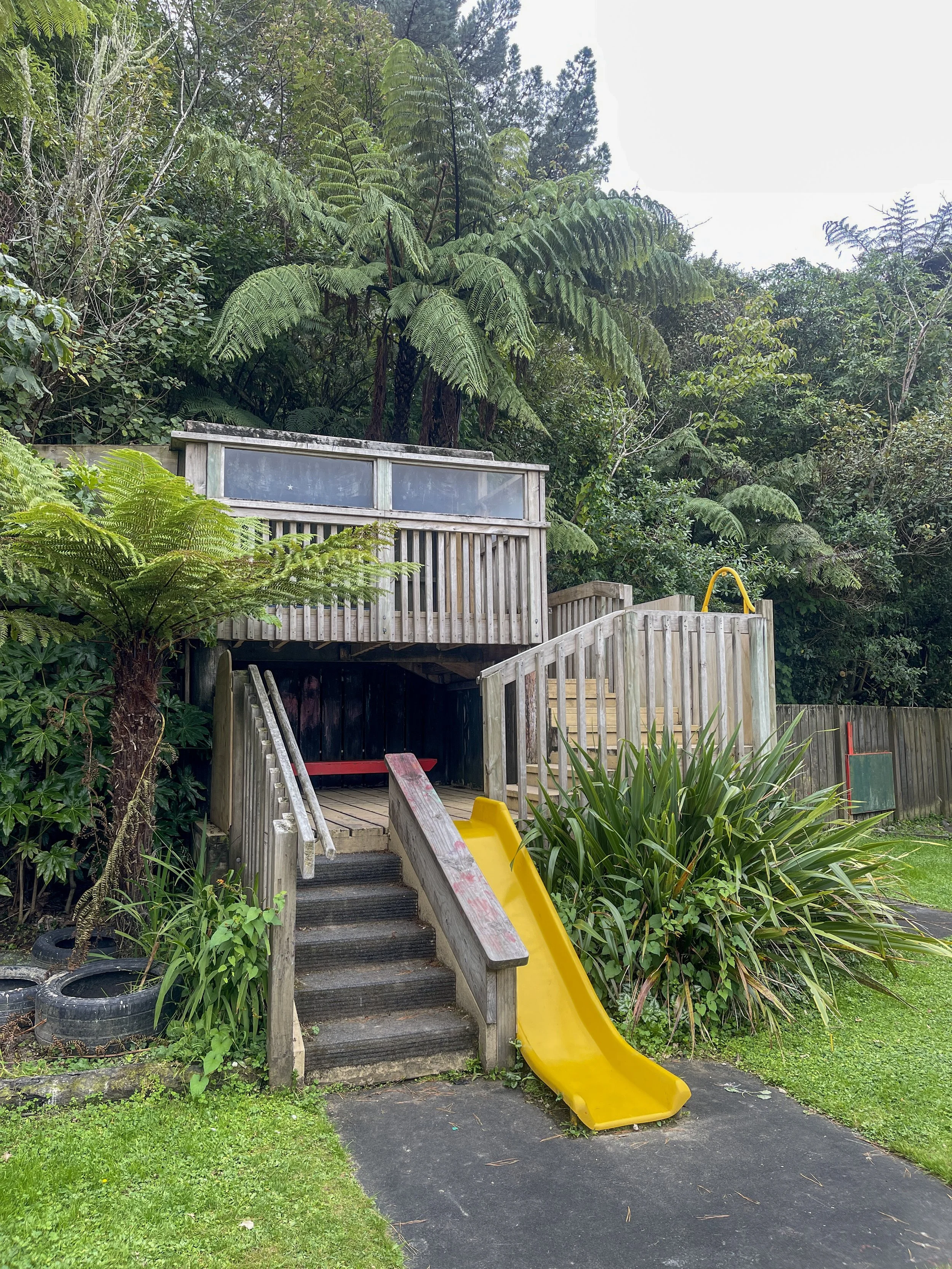
Certain elements had to be removed to make the spaces safer.
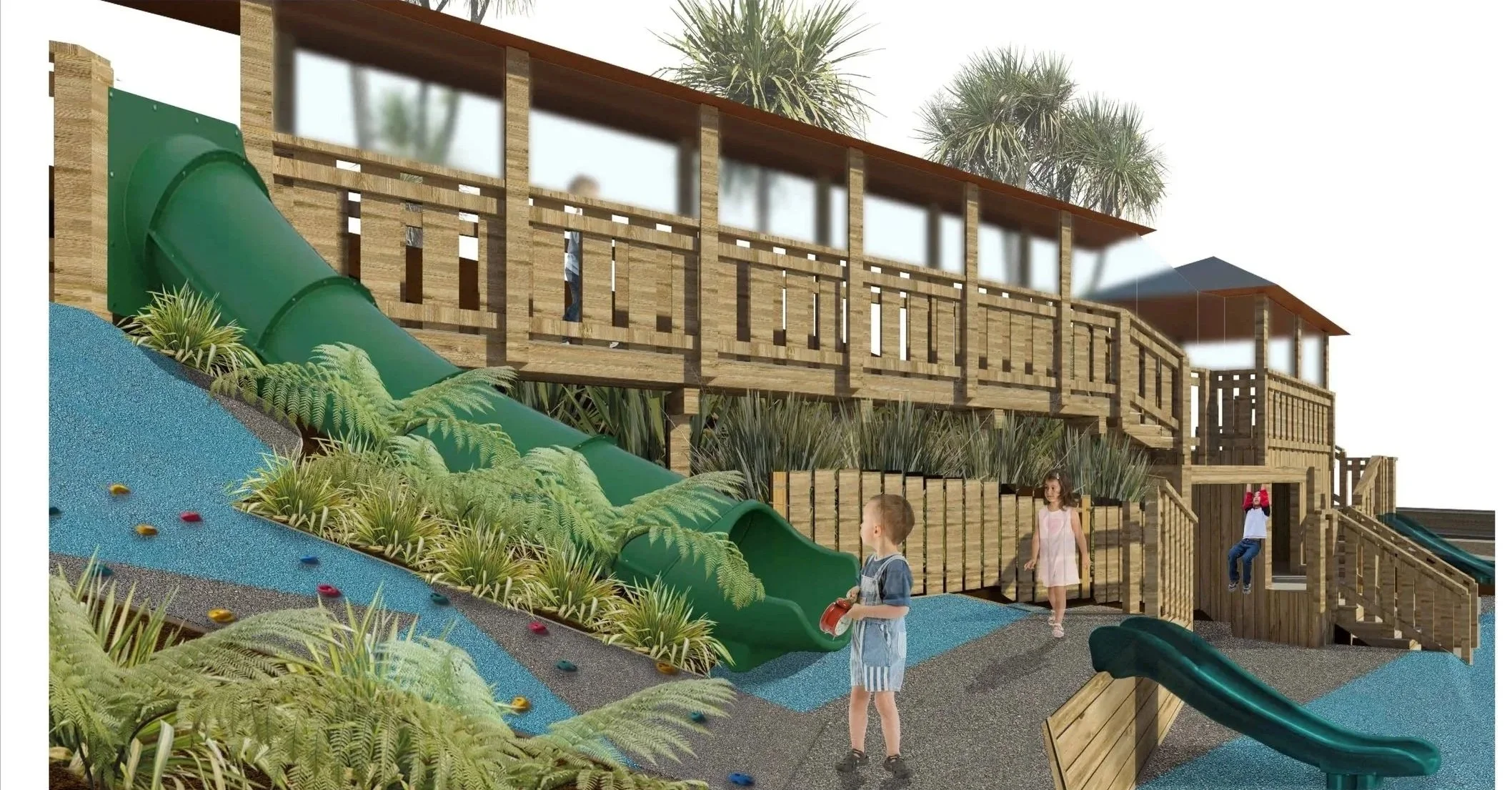
A focus of the design was the differing layers of play within the area. The upper levels being accessible to the older ages, making the play in those areas more exciting and inviting, while the lower levels are safer. All areas are open, ready for caregiver input and vision from far away.
Chatham Islands
Year | 2023-2025
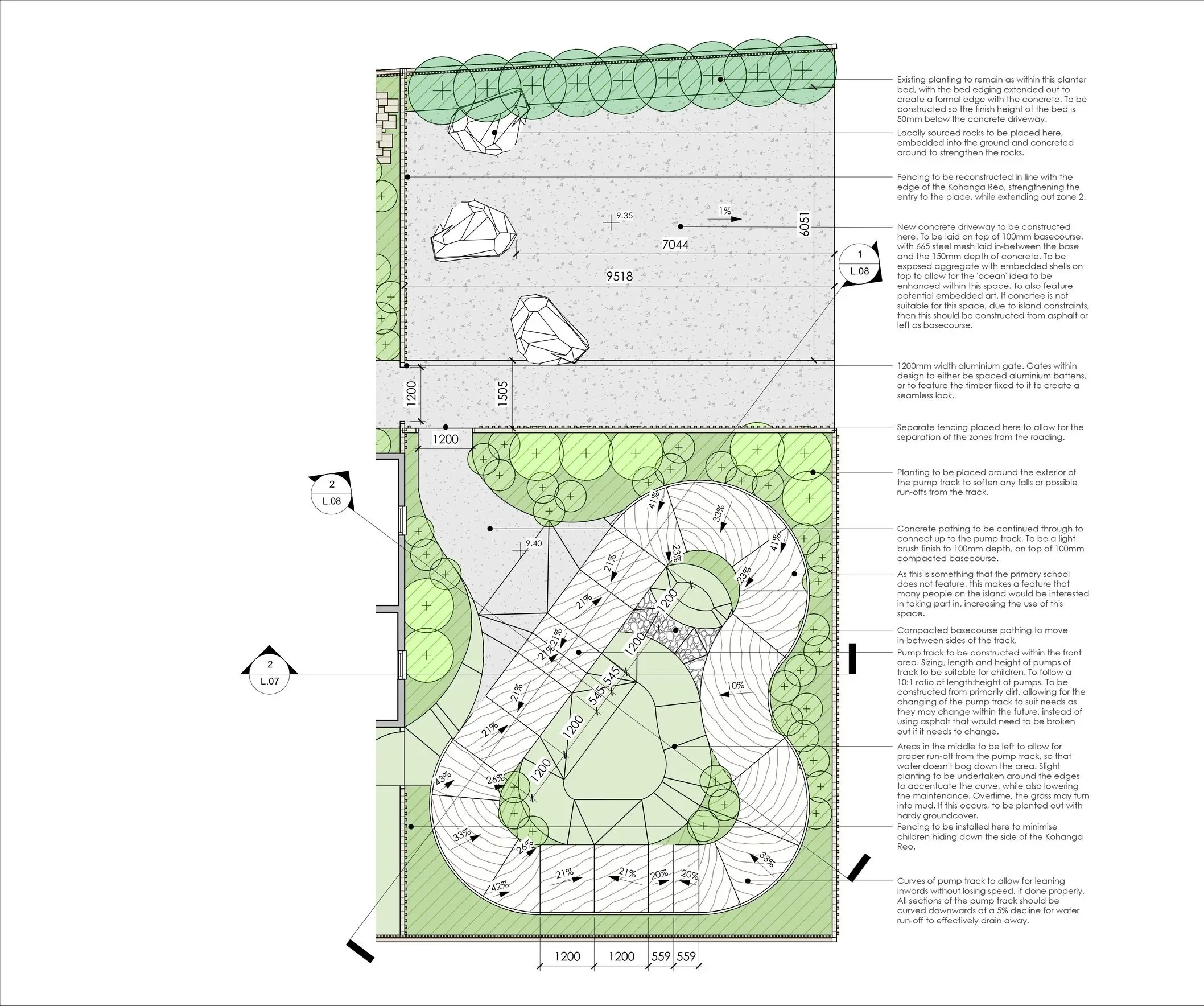
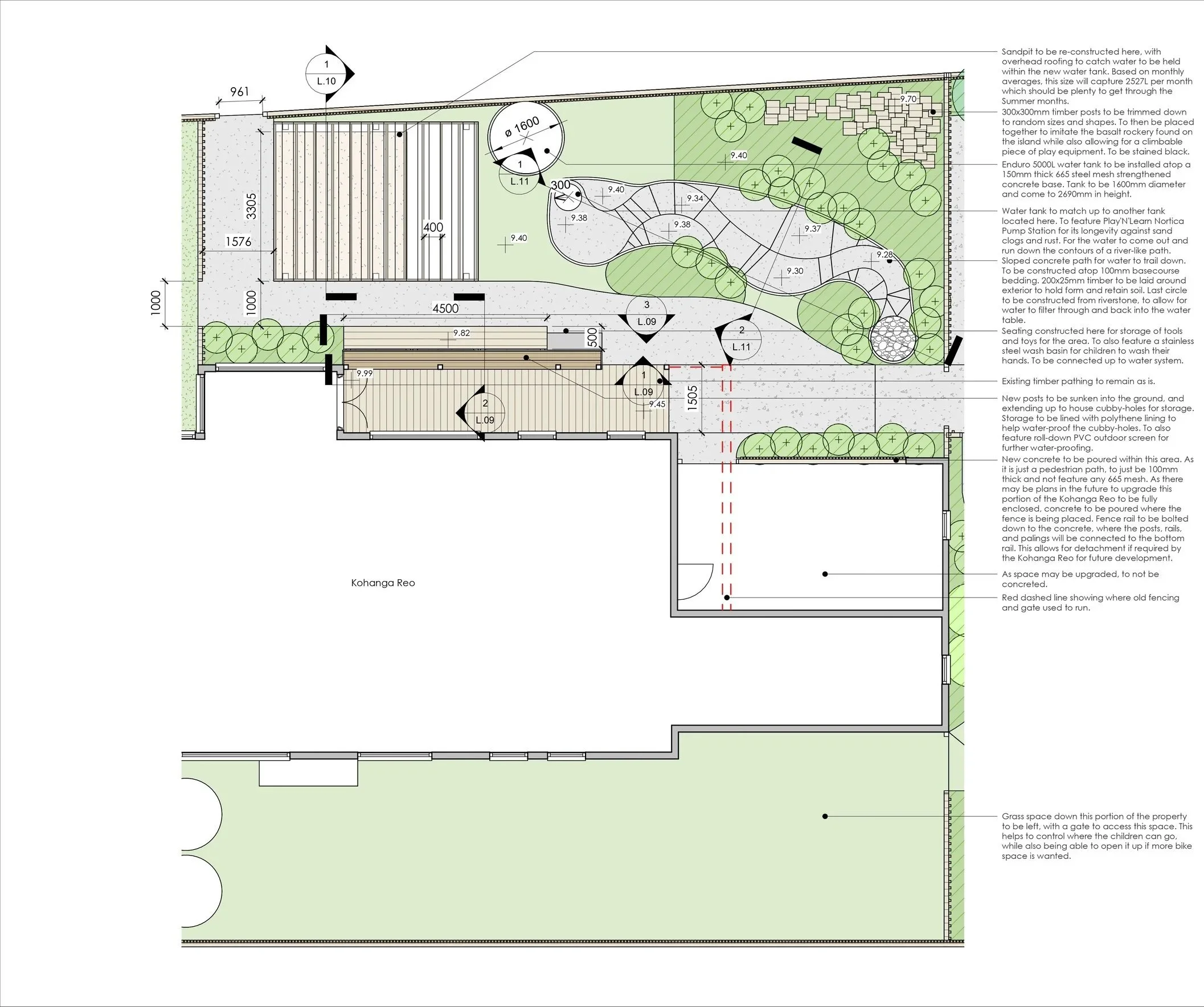
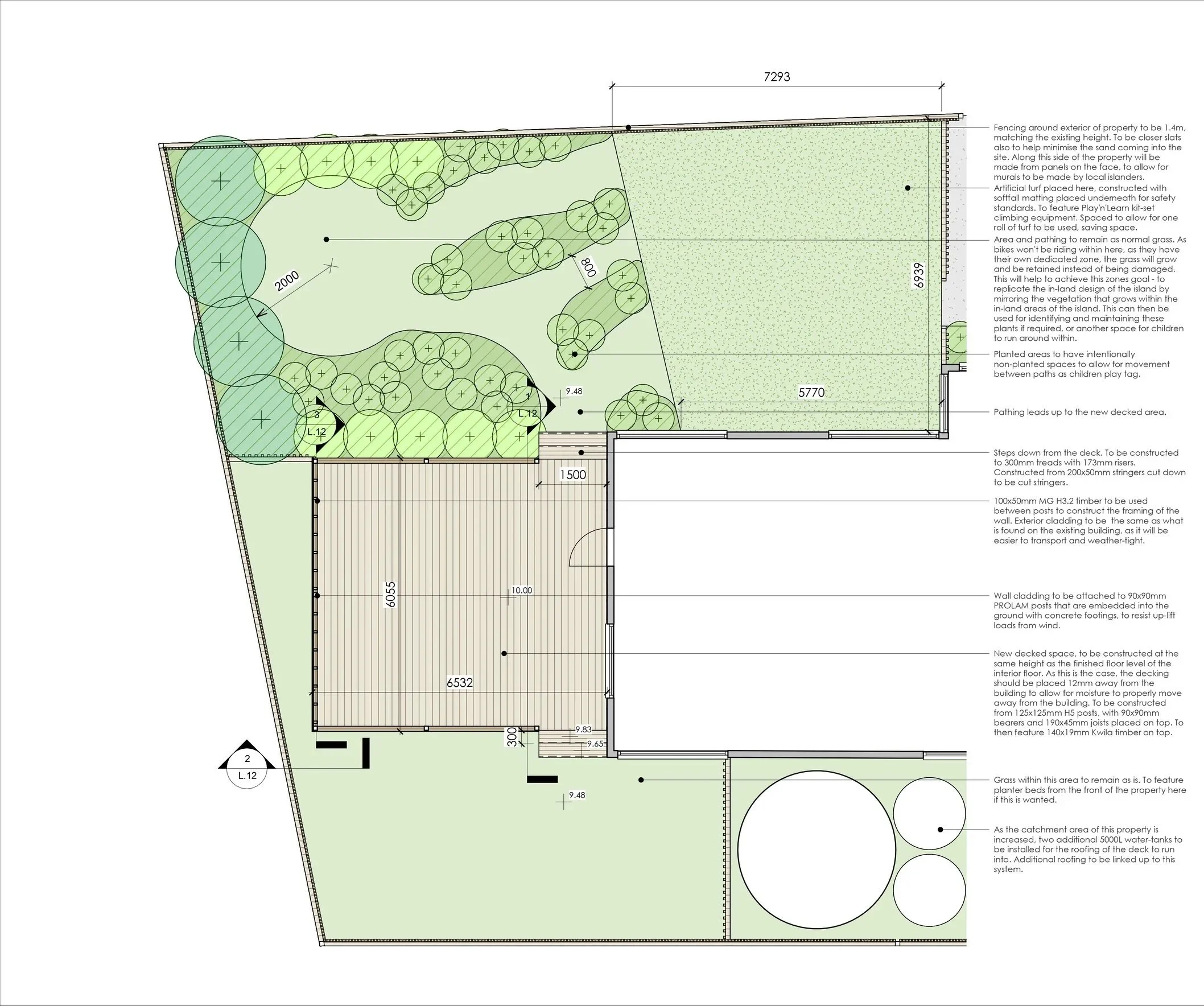
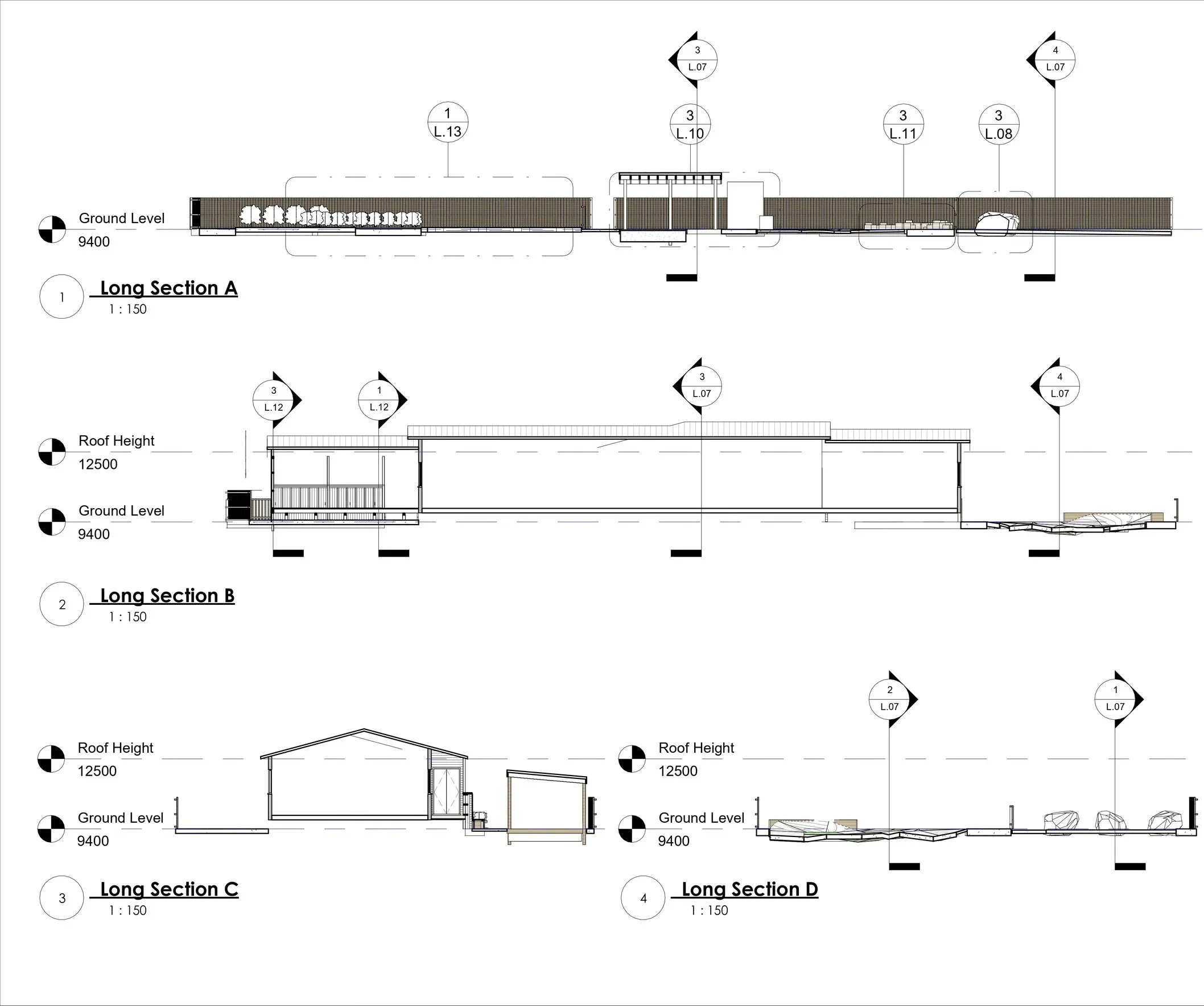
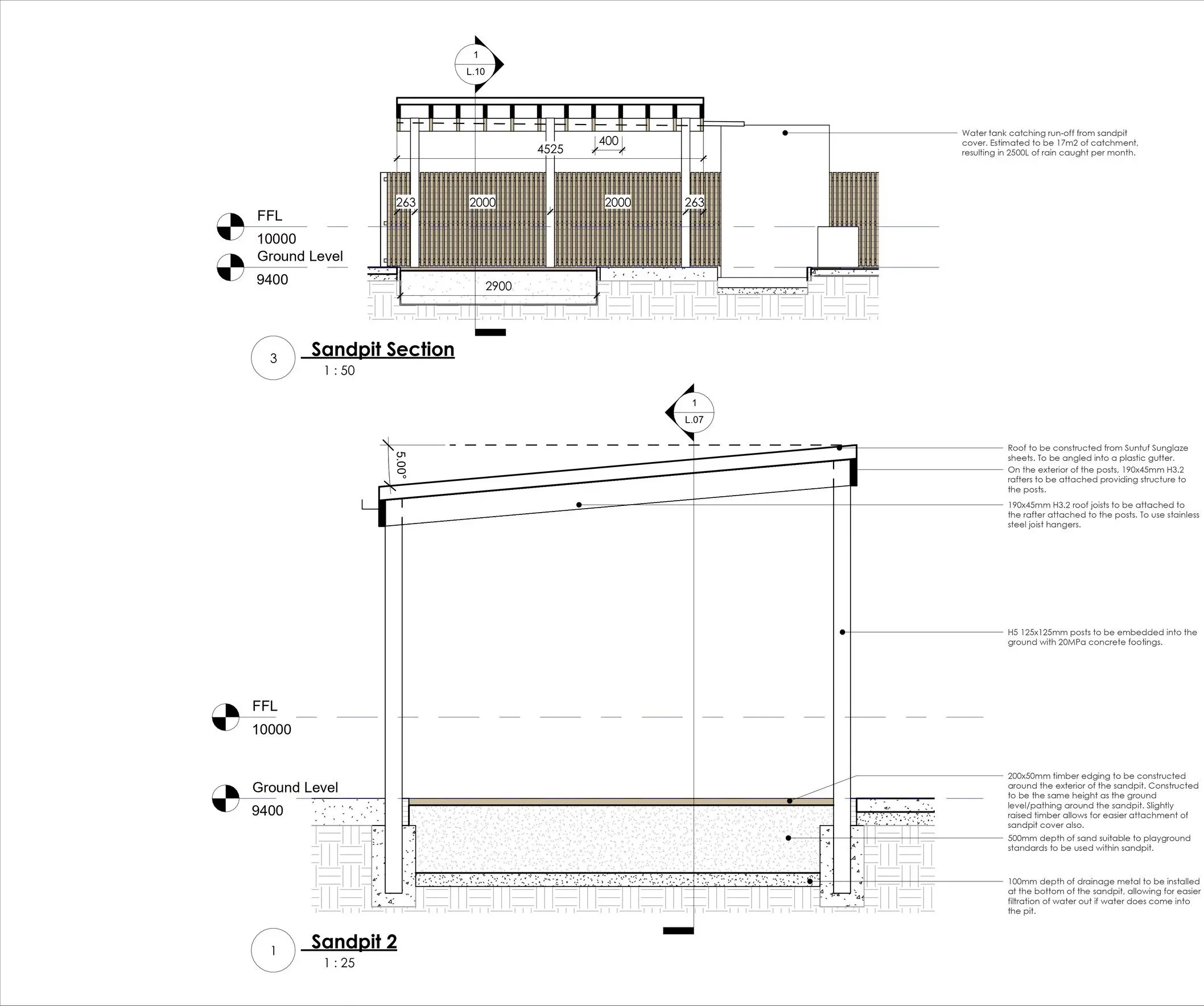
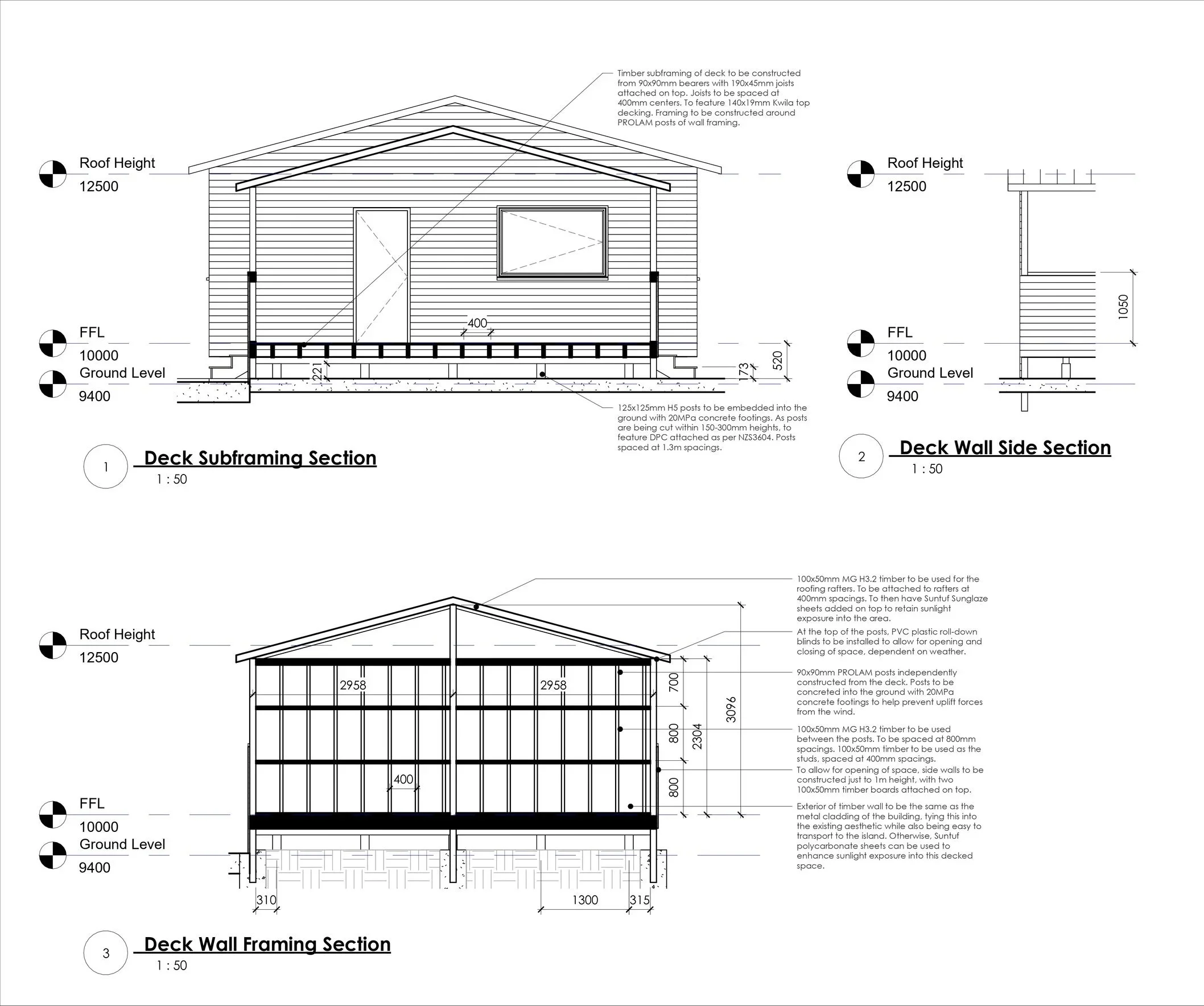
Located 800km off the South Island of New Zealand and with a population of just 660, the Chatham Islands presented a remote and challenging context for this playground re-design. The community required a refreshed playground to meet the updated New Zealand safety standards and to support both the growing population and the evolving needs of the preschool’s teachers.
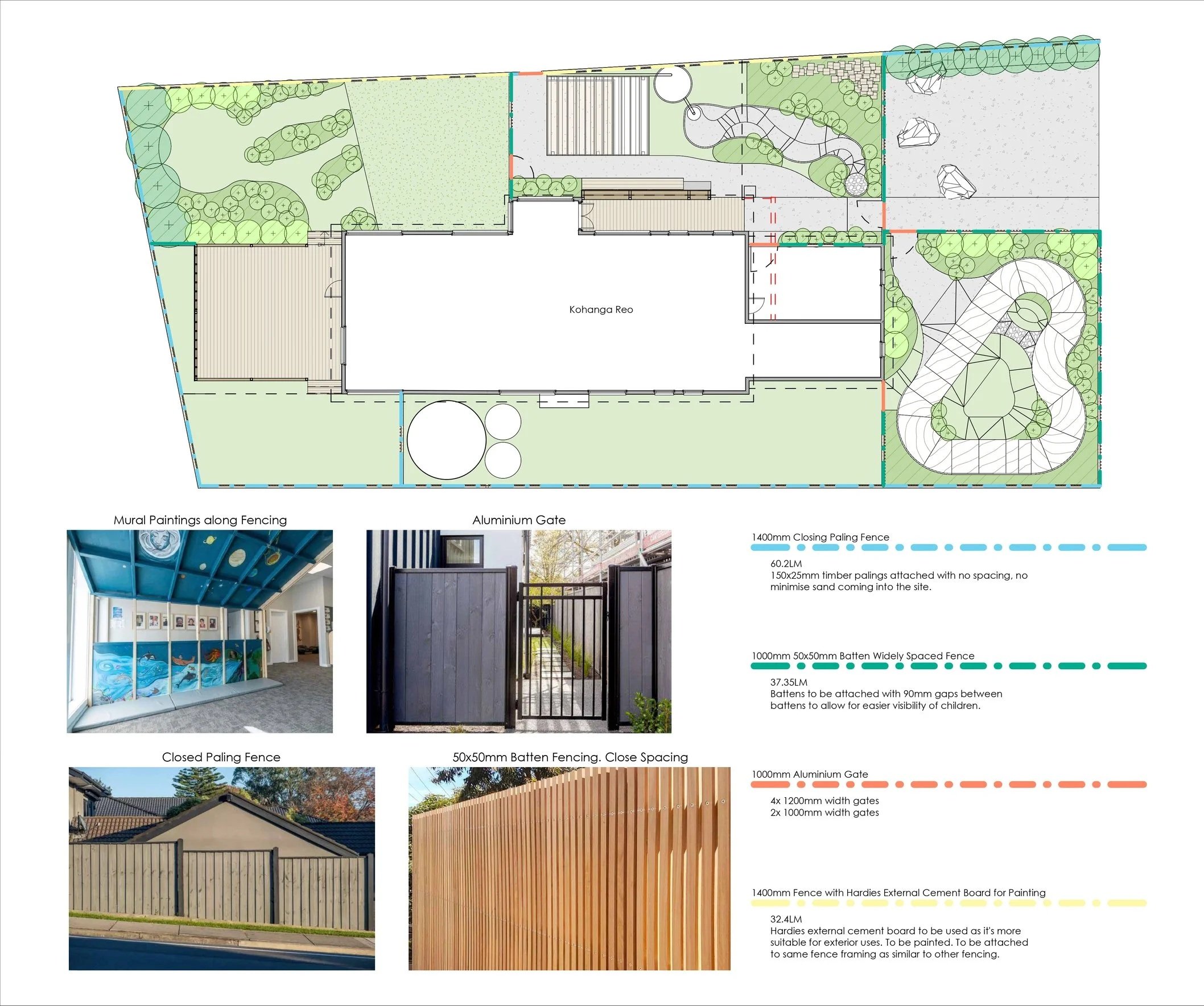
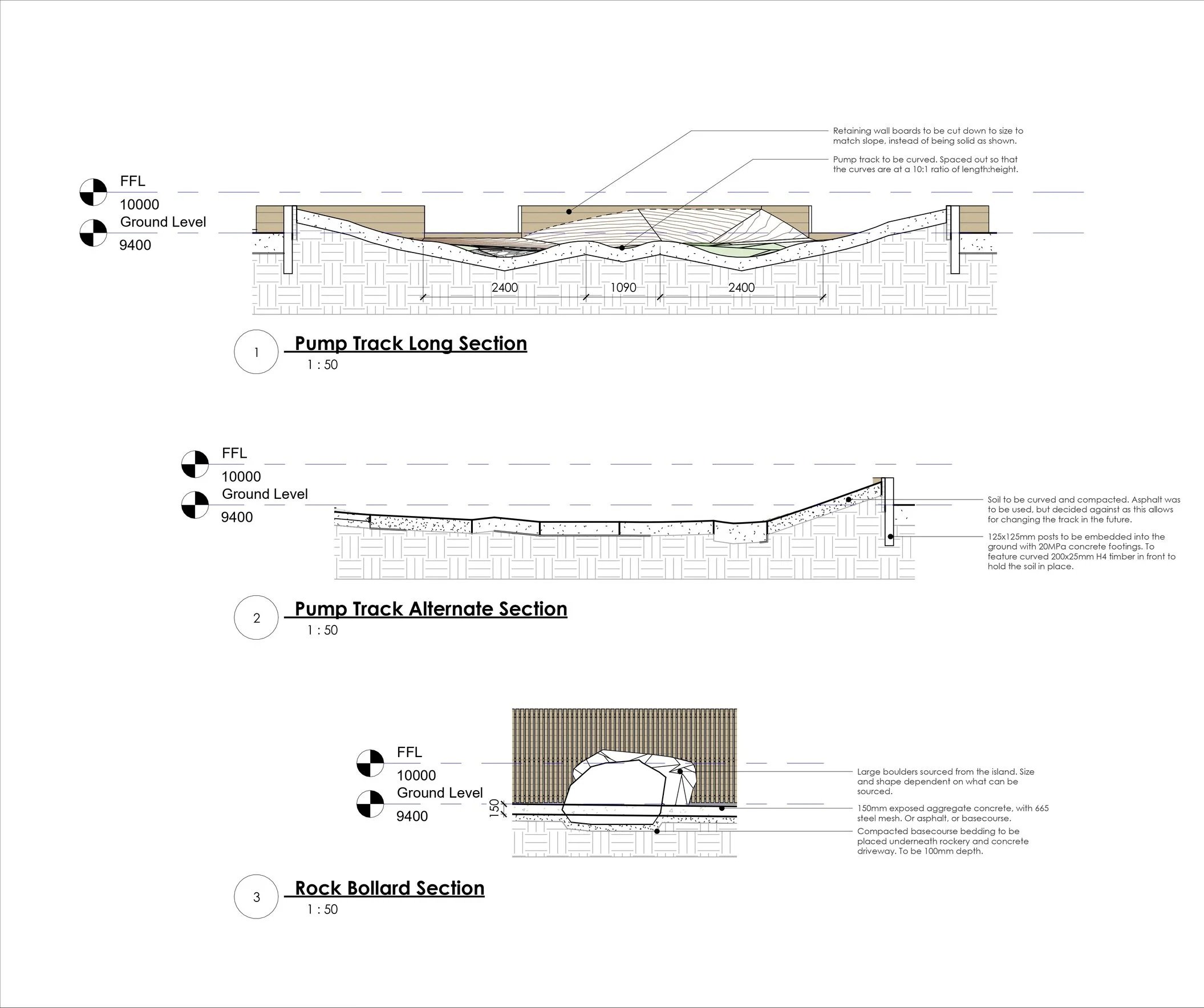
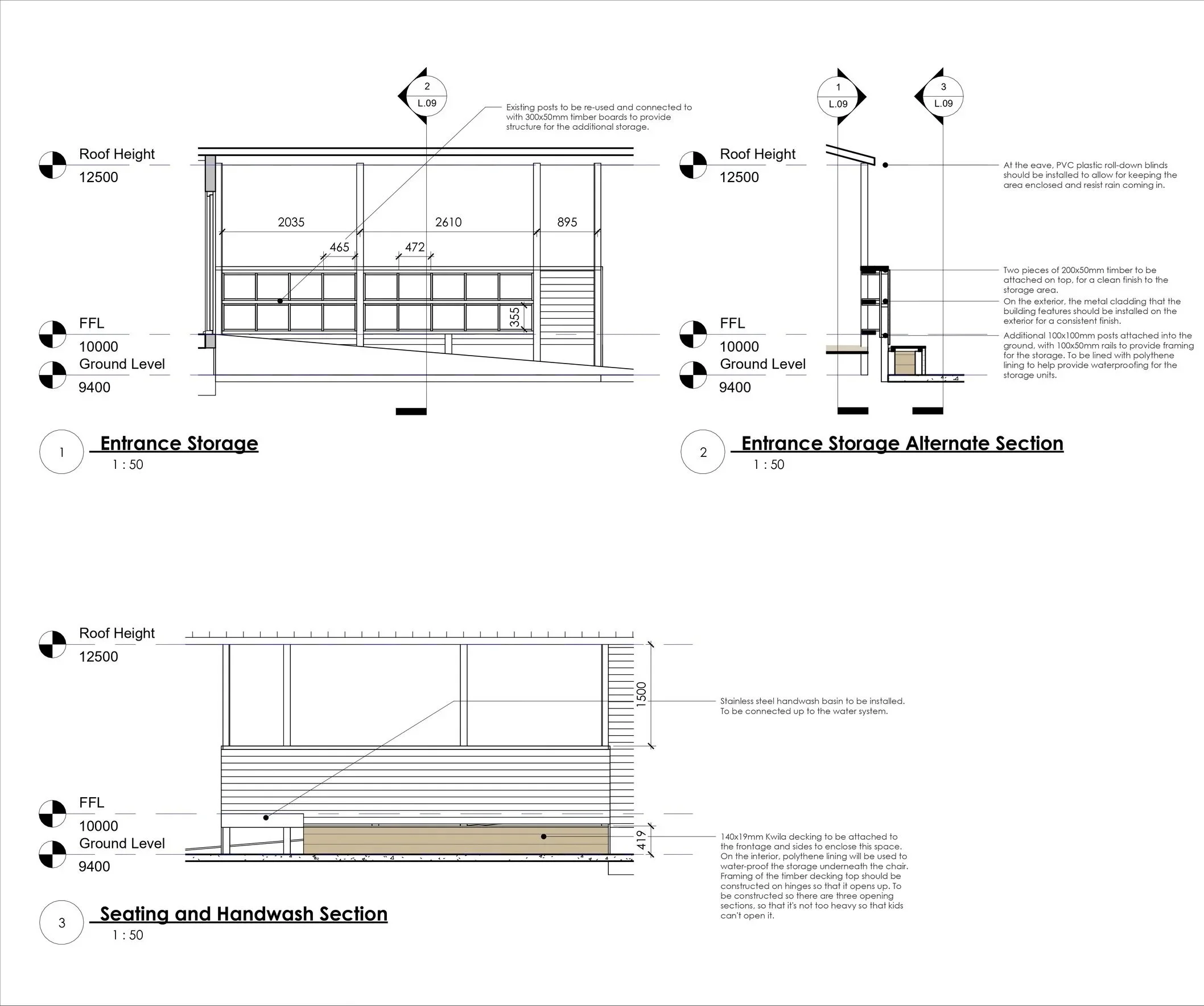
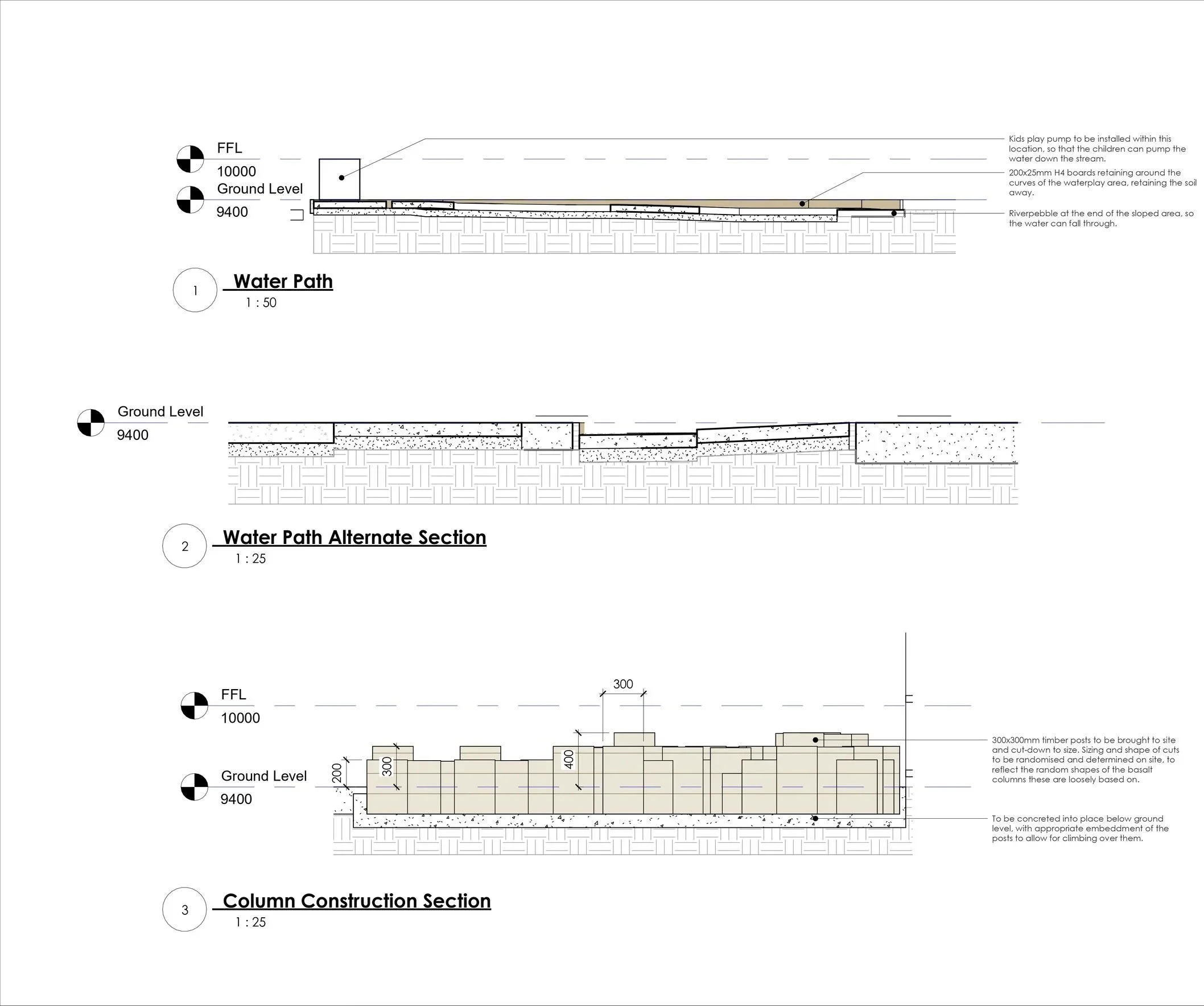
An on-site investigation following the initial design phase proved invaluable, ensuring the final plan responded directly to the coastal environment and its demands. This final design incorporated input from teachers and children alike through specific requests for a new bike track, waterplay area, and sandpit, while also accounting for fluctuating attendance throughout the week through the zones being shut off to allow for easier management of smaller or bigger groups.
The result is a resilient, engaging playground that reflects the spirit of its community and setting through materiality and input, while keeping it open for interpretation and further islander involvement.
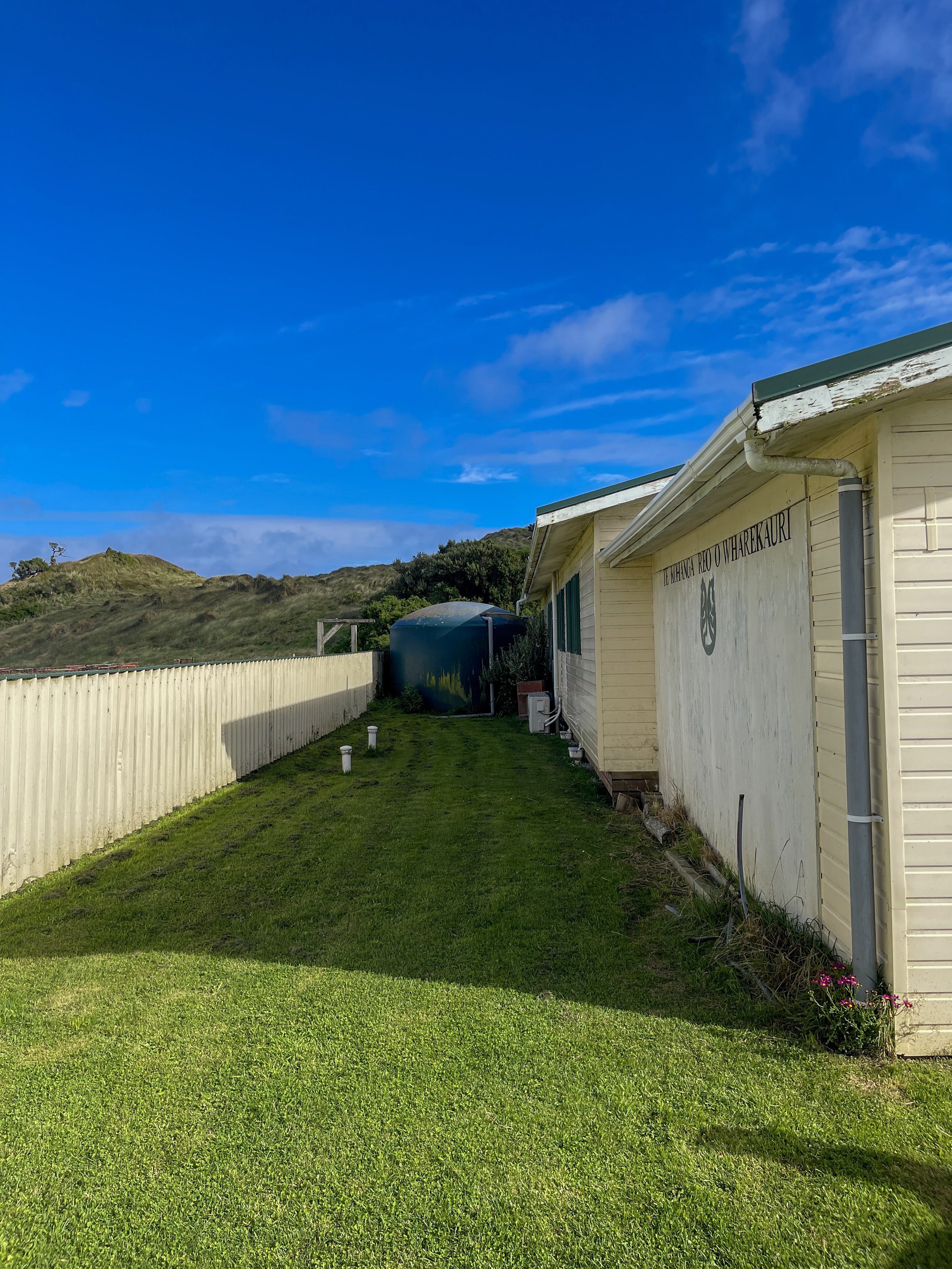
The site featured so much additional space that could be maximised.
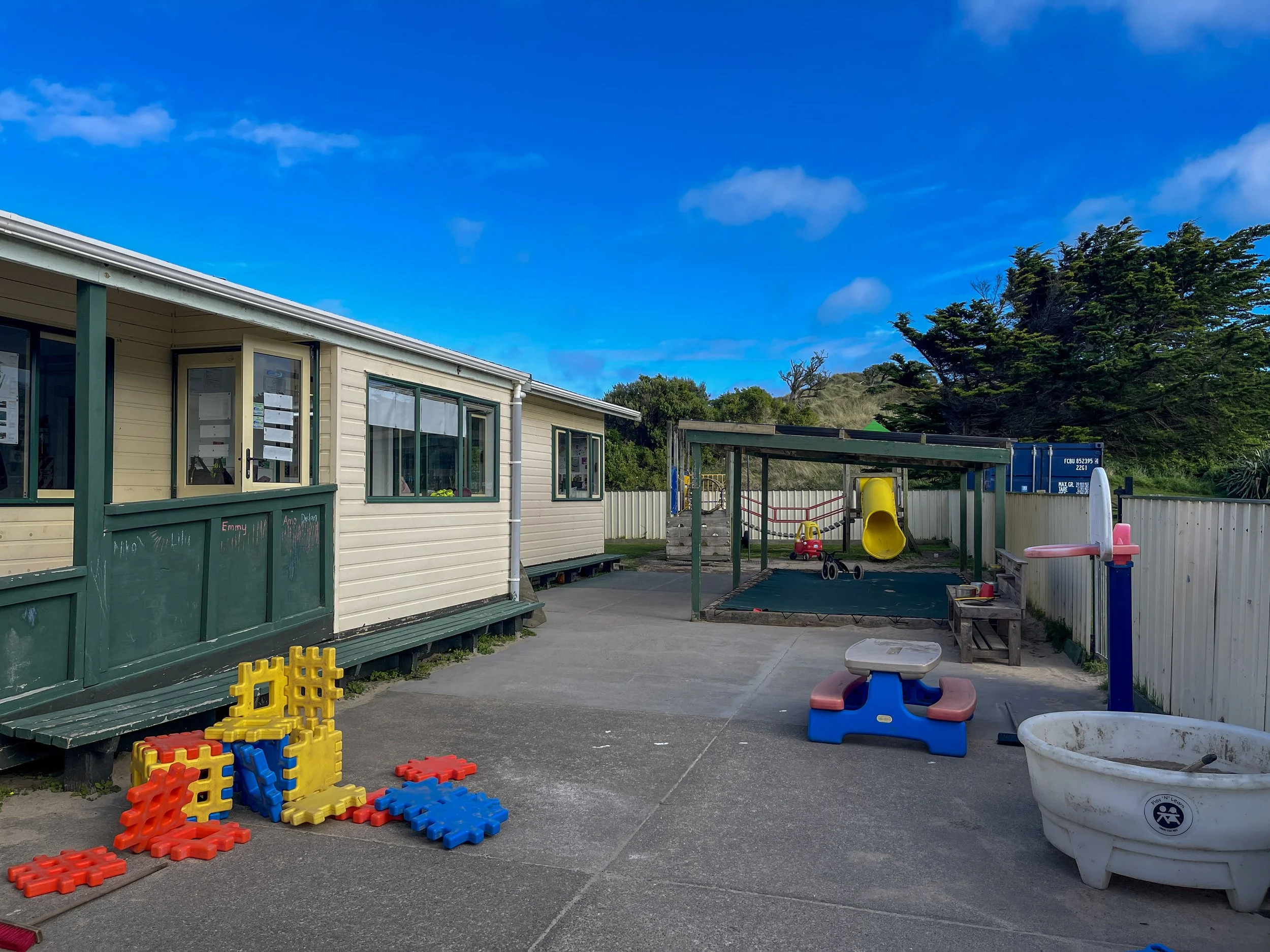
The existing materiality of the space wasn't suited for the conditions of the area.
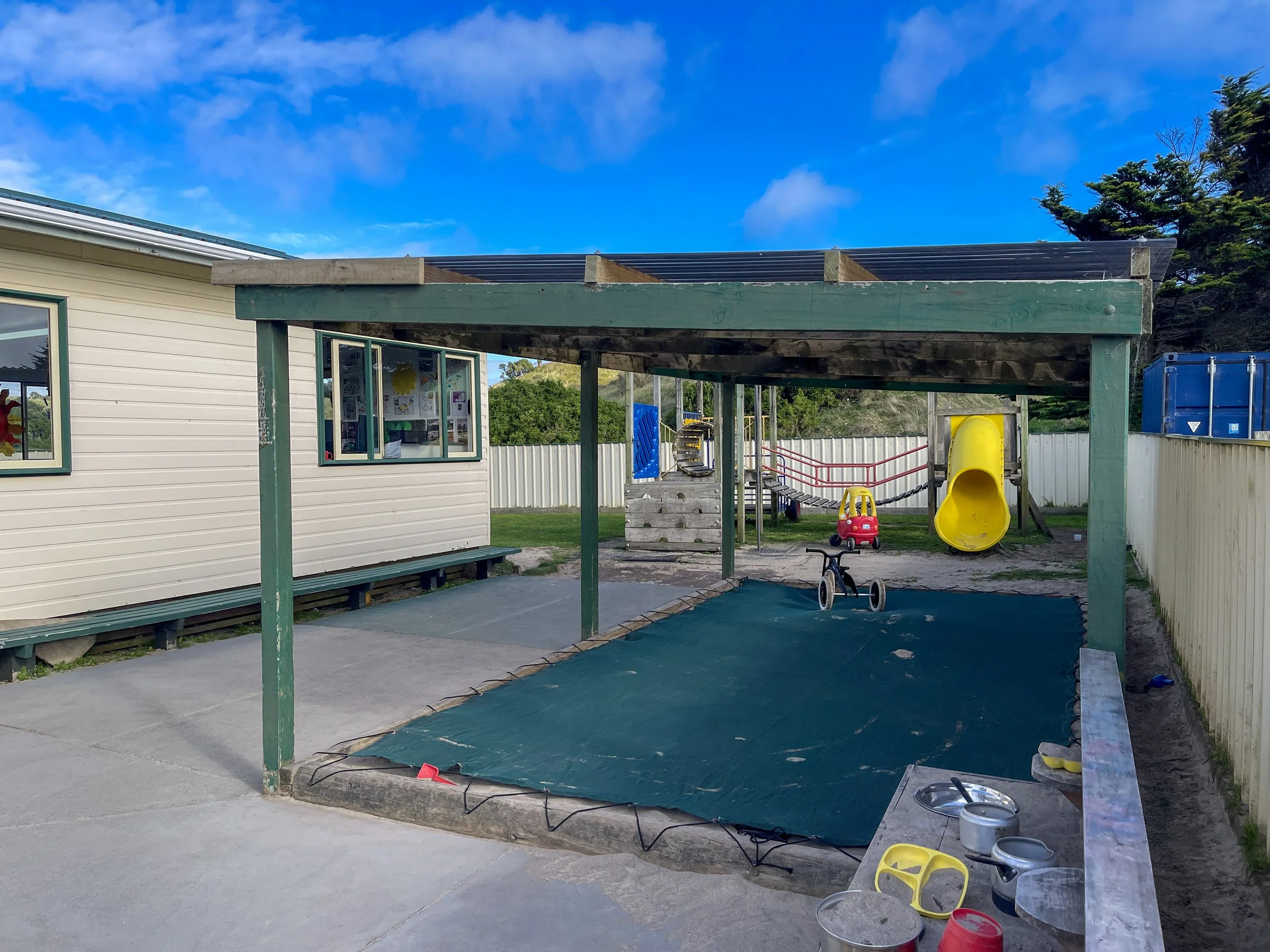
Existing materials were worn down, ready for replacement.
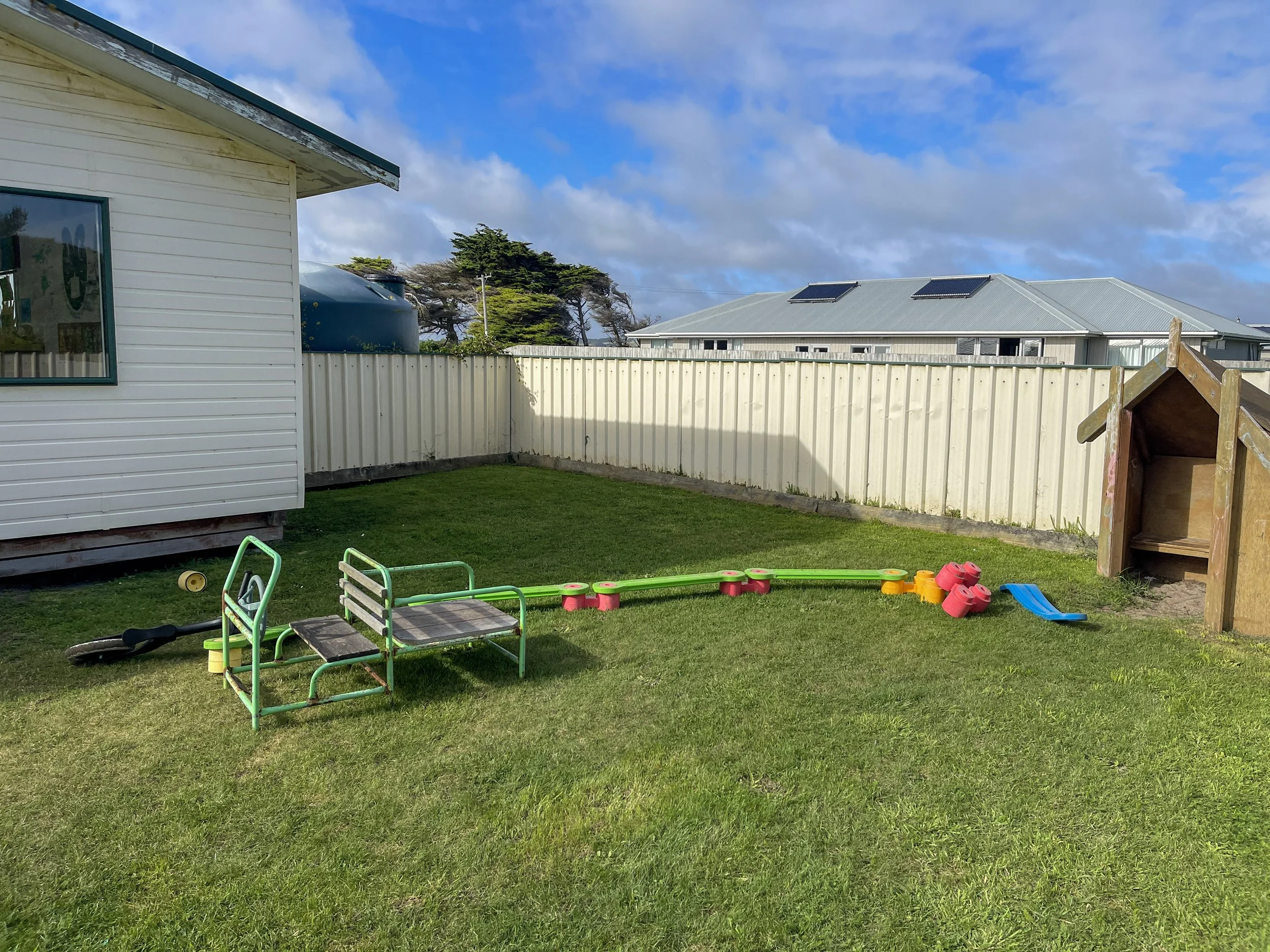
The areas had no overall cohesion.
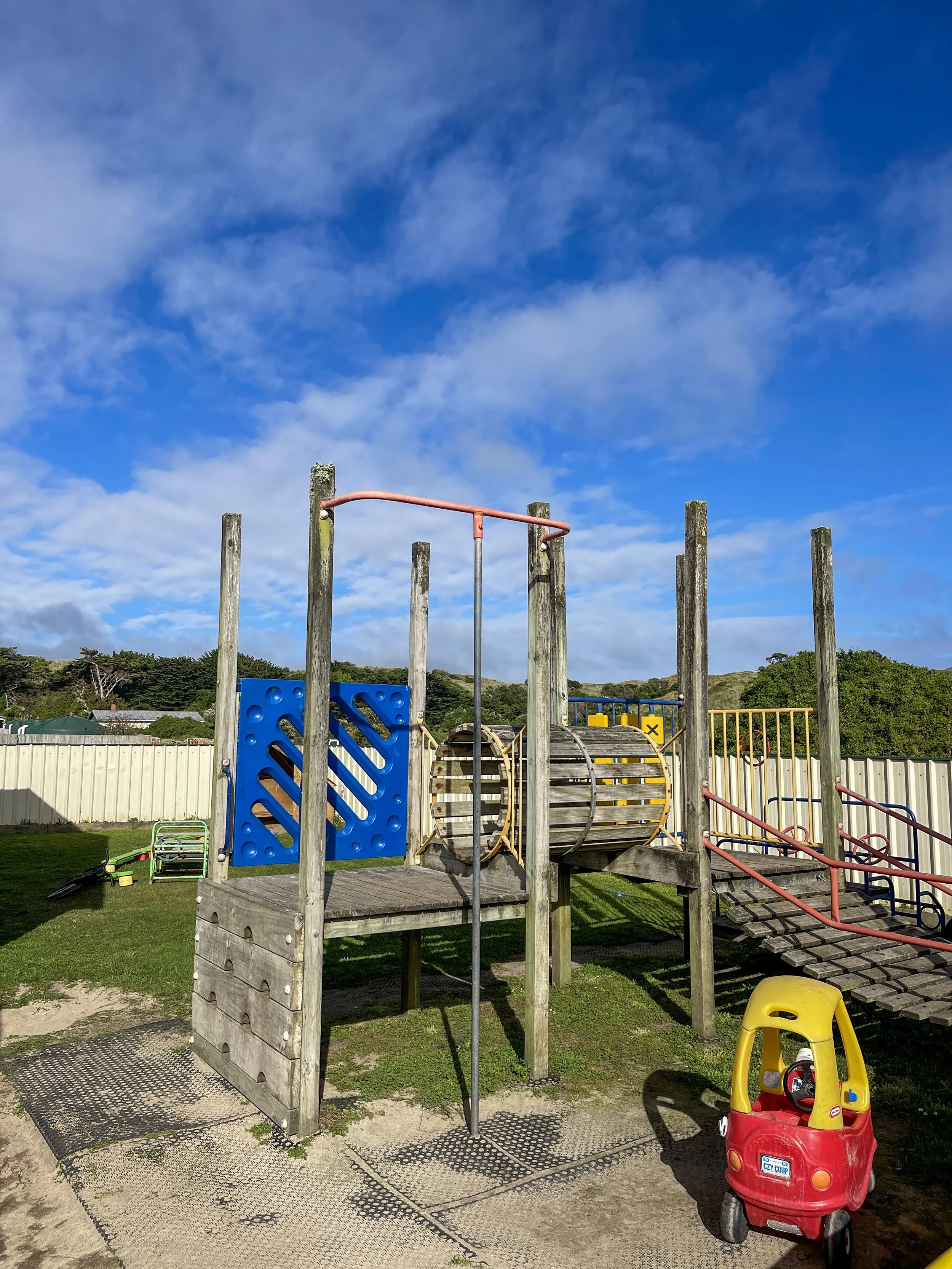
Playground equipment were not up to current New Zealand safety standards.
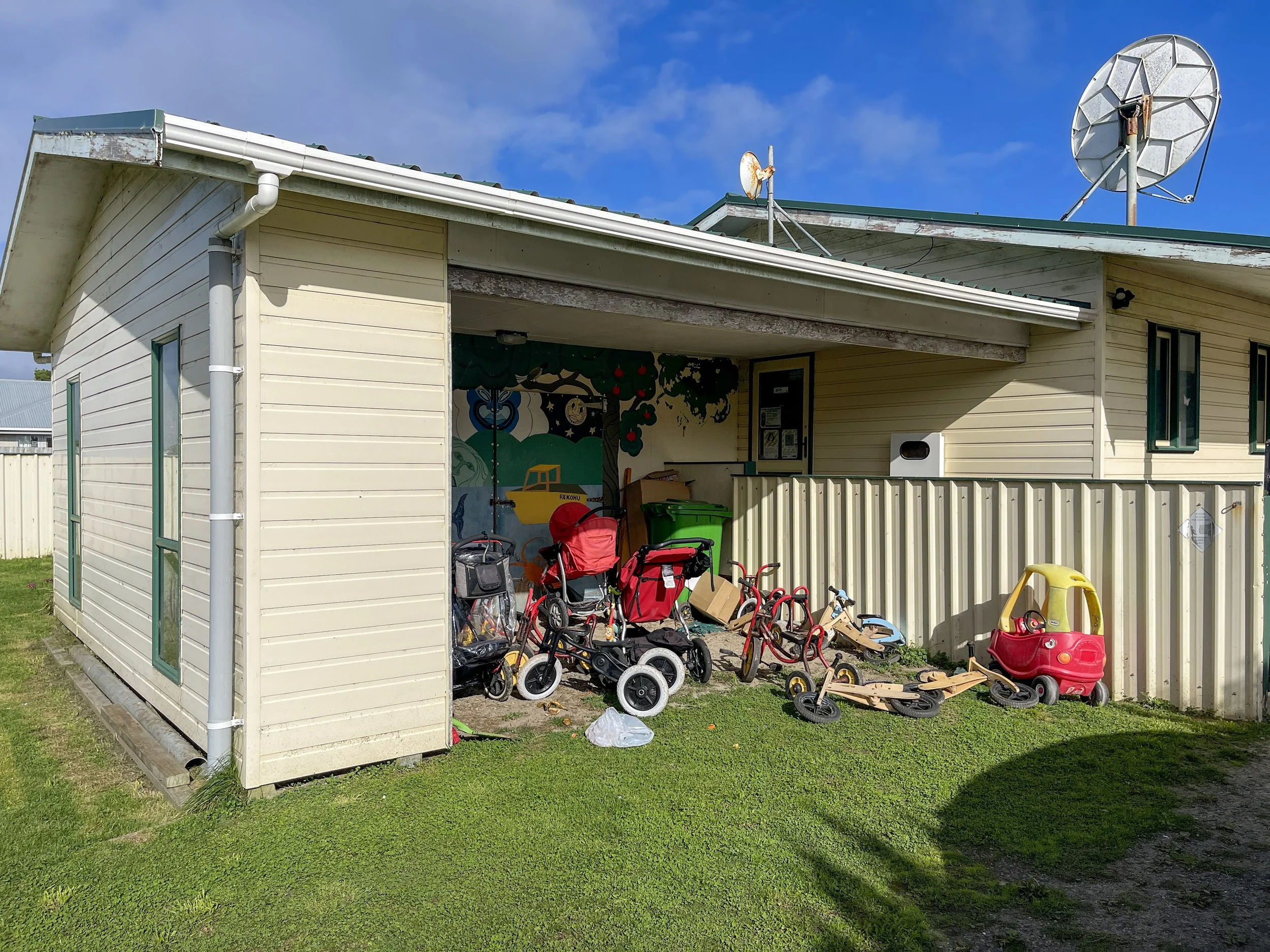
Excess equipment was put wherever it worked.
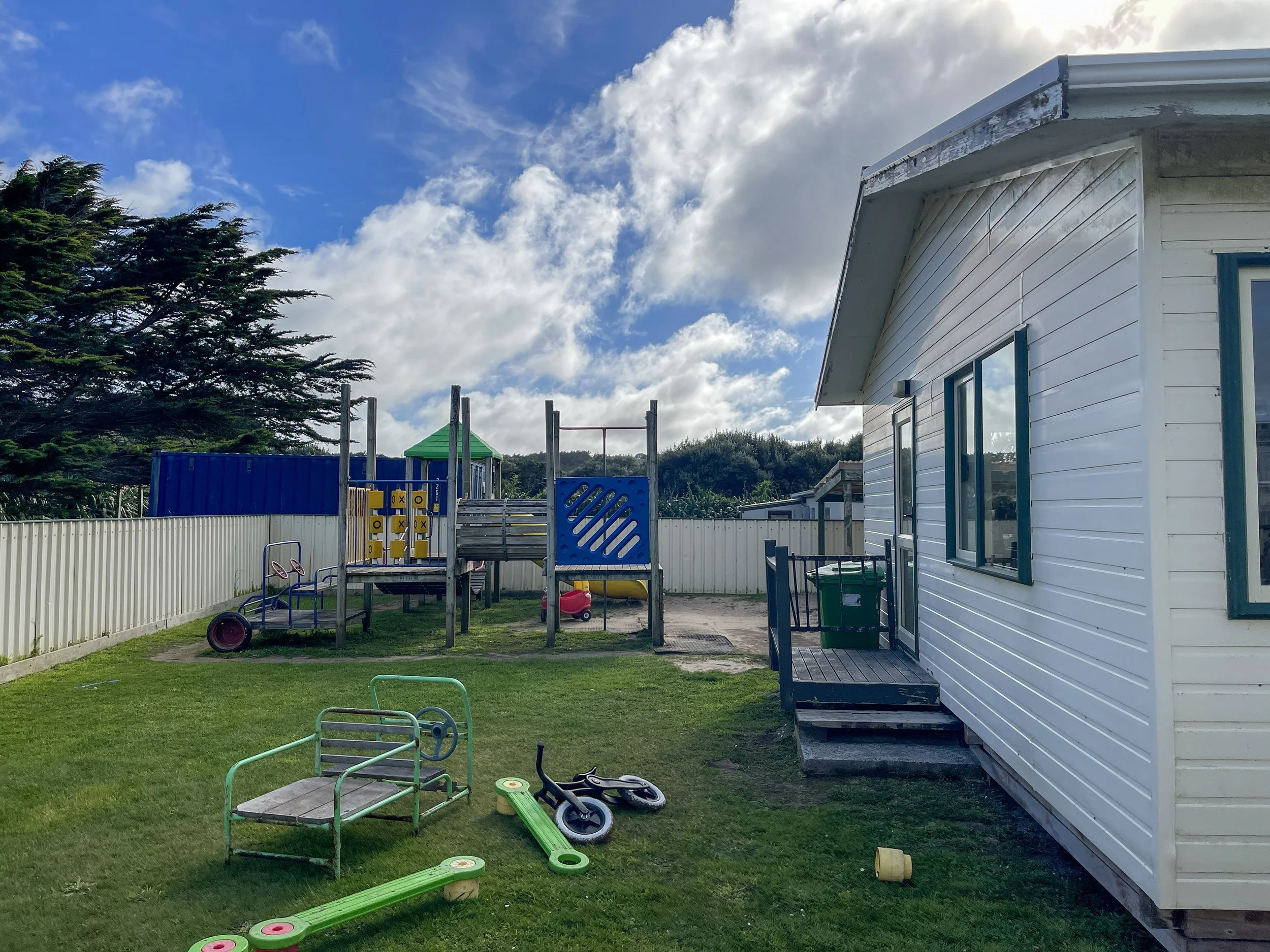
Access to these spaces didn't make sense, making it a very inaccessible space.
Eltham
Year | 2024-2025
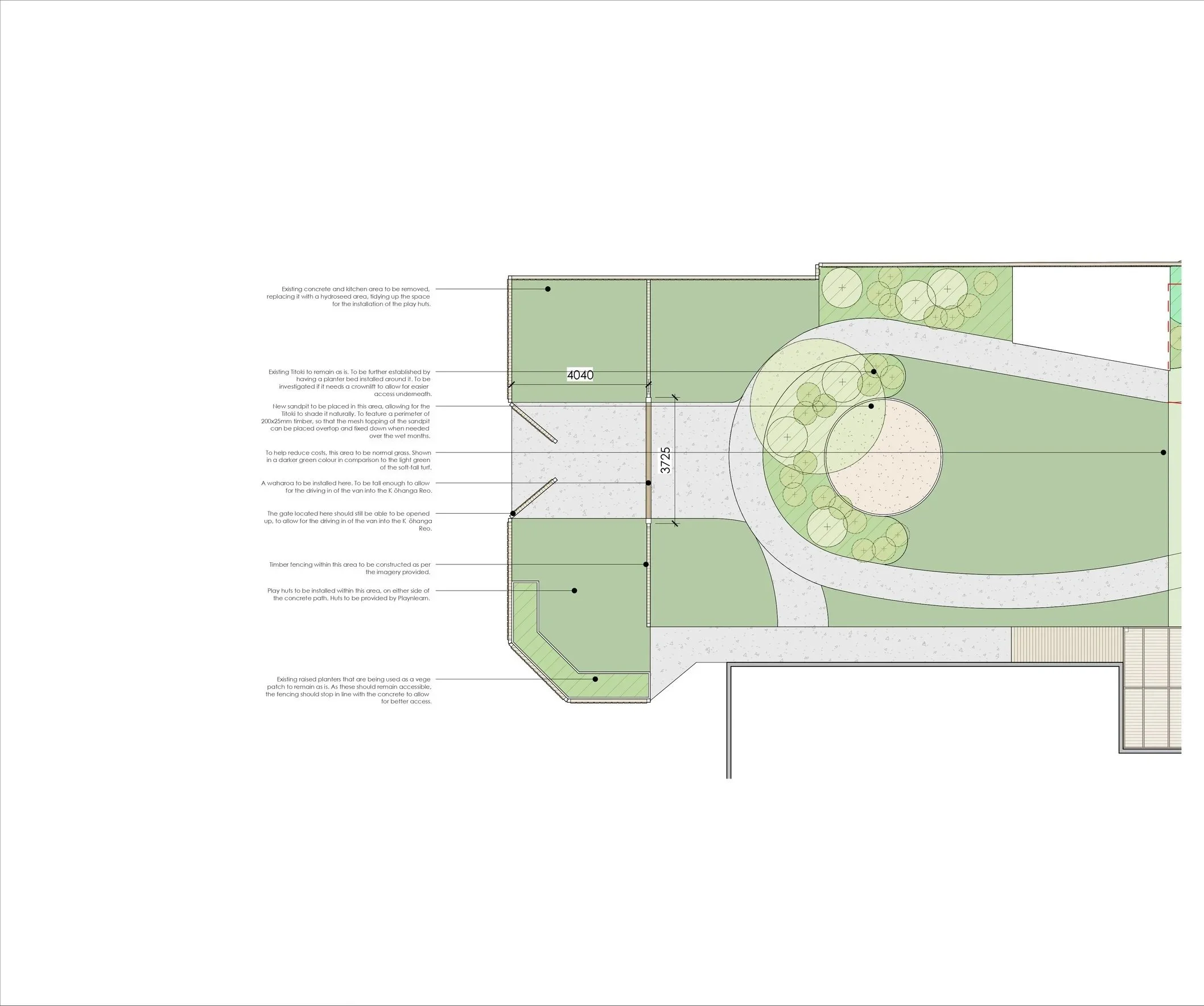
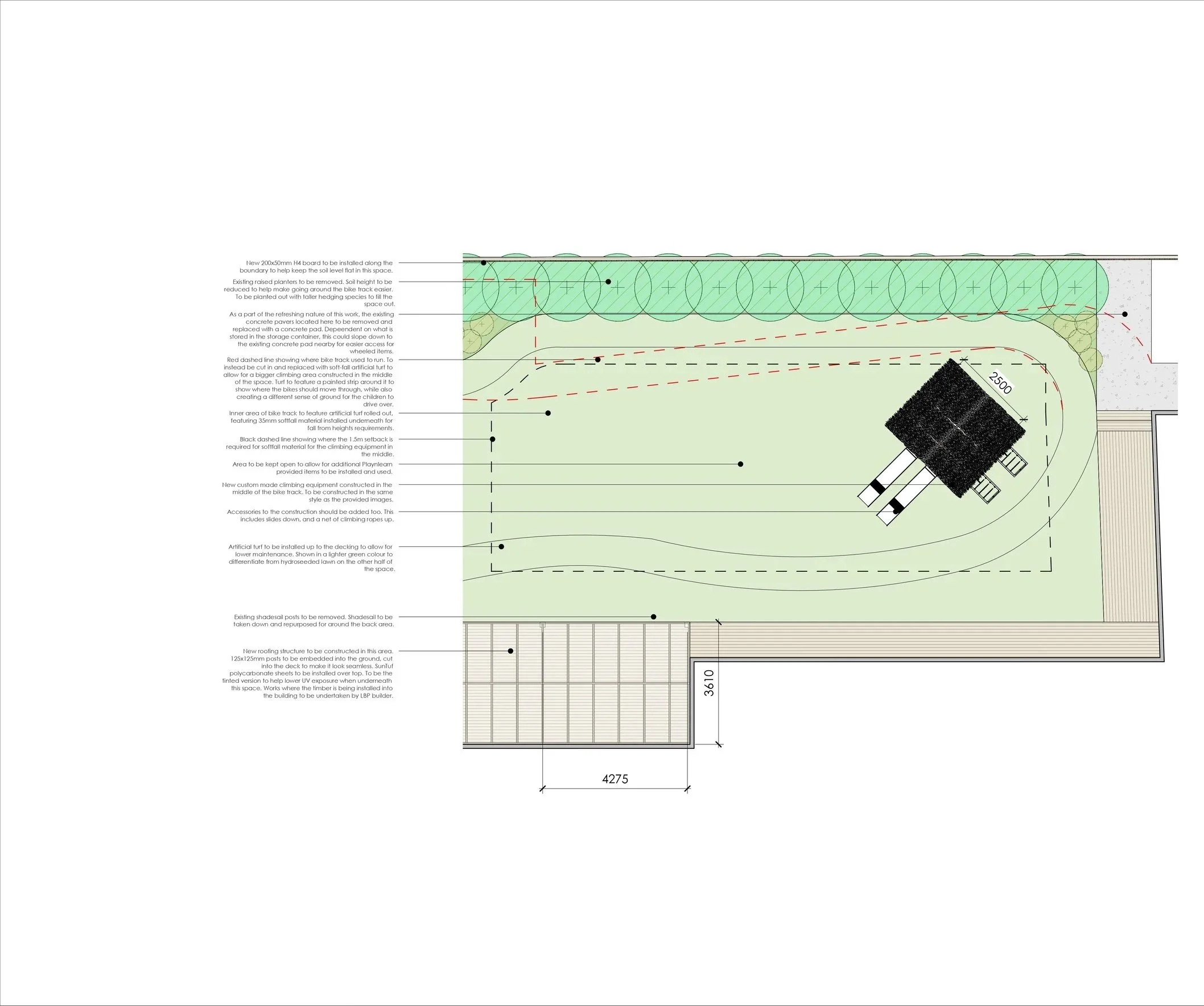
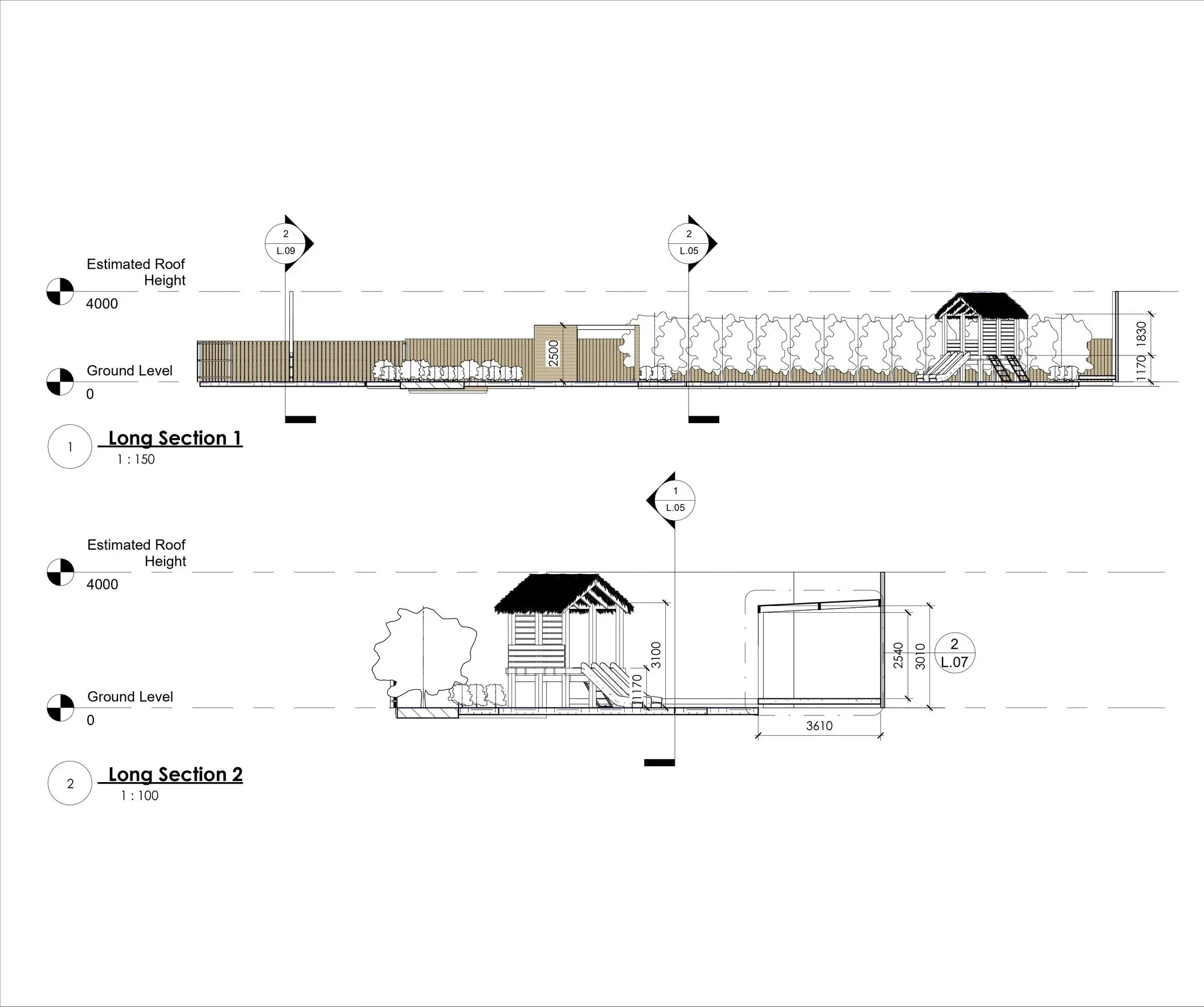
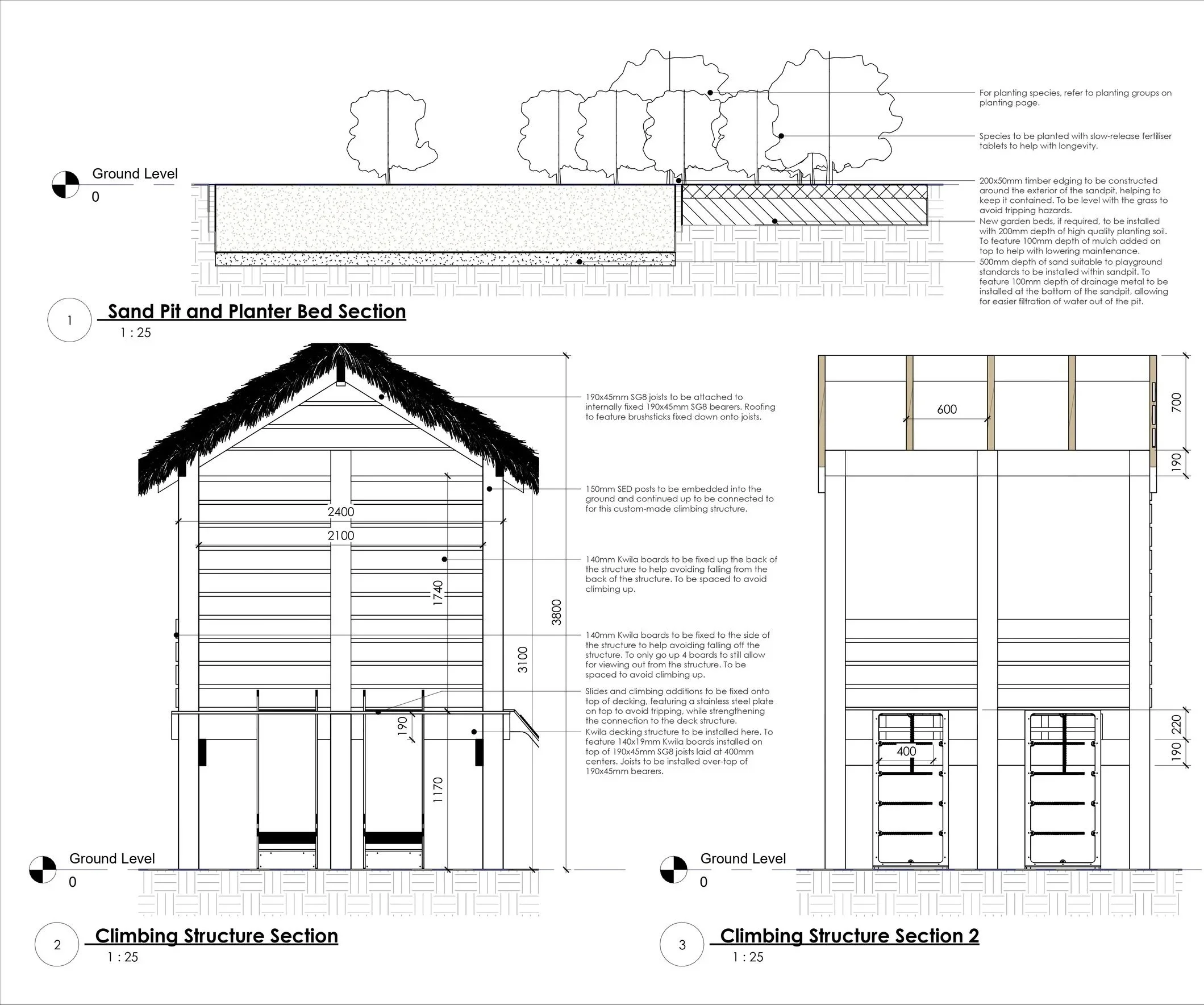
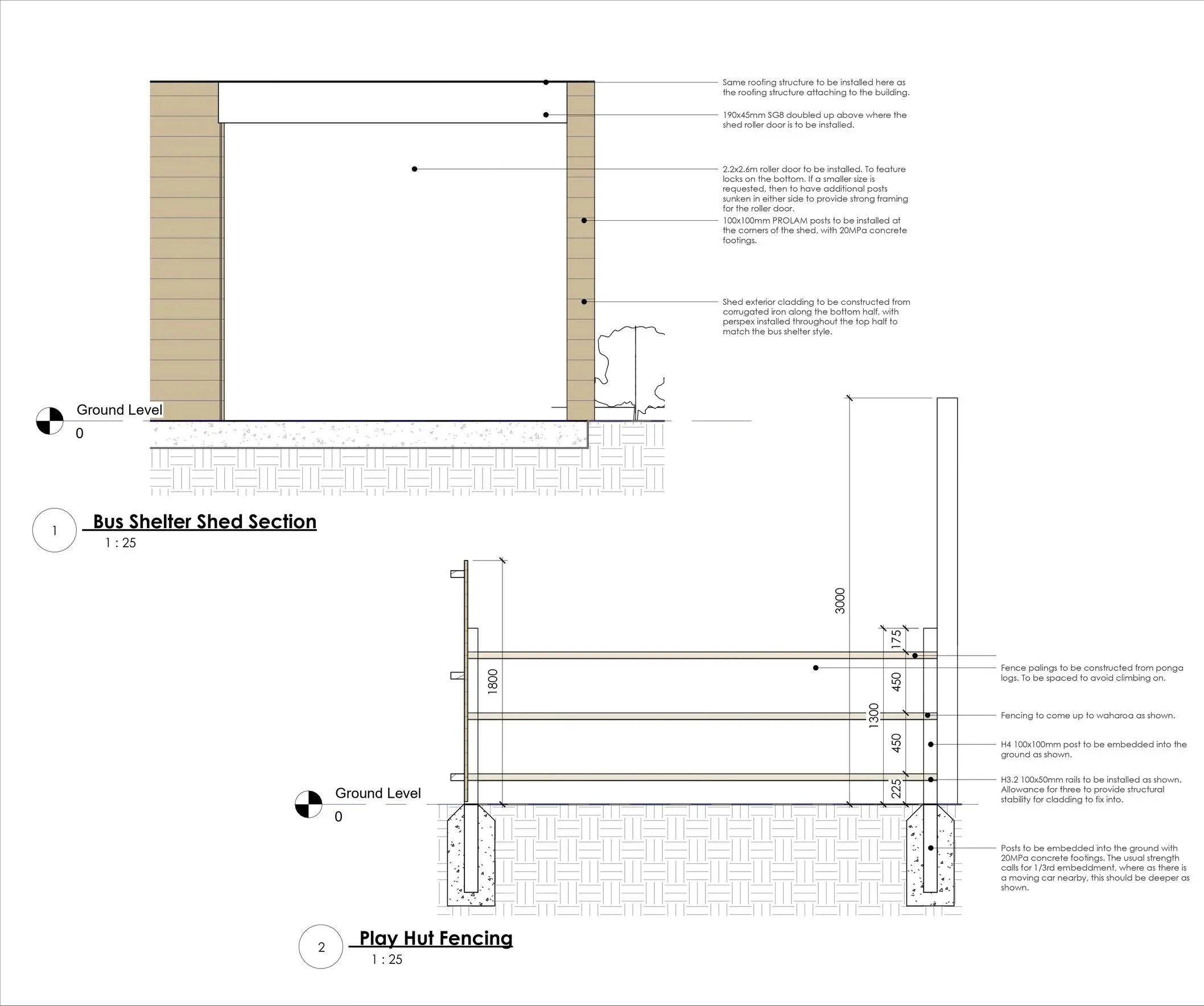
This project focused on updating a dated playground to meet current New Zealand safety standards, while also incorporating several new features identified by the client. These included upgraded soft-fall surfacing, a climbing structure, retention of the bike track, and a redesigned sandpit and storage area.
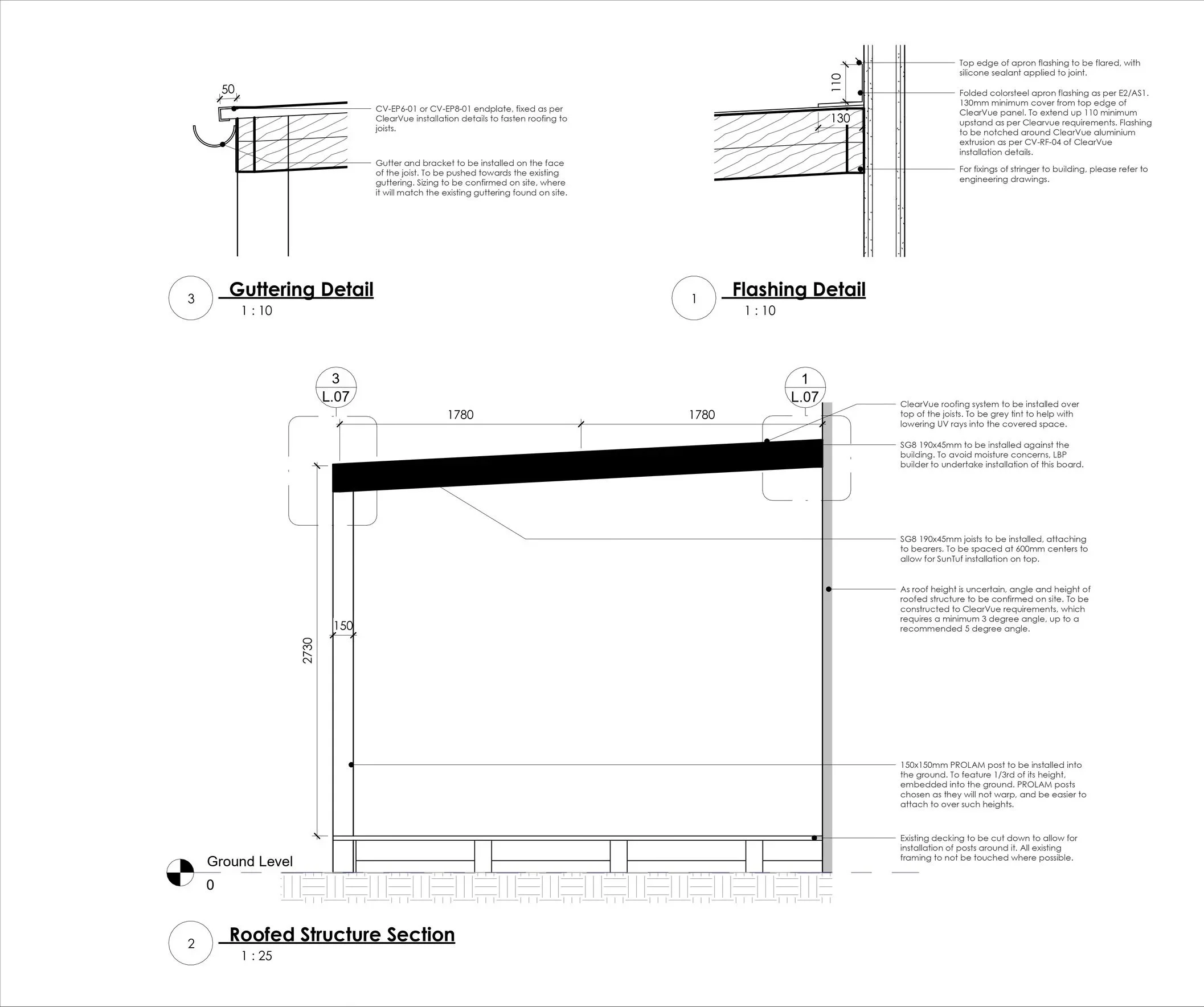
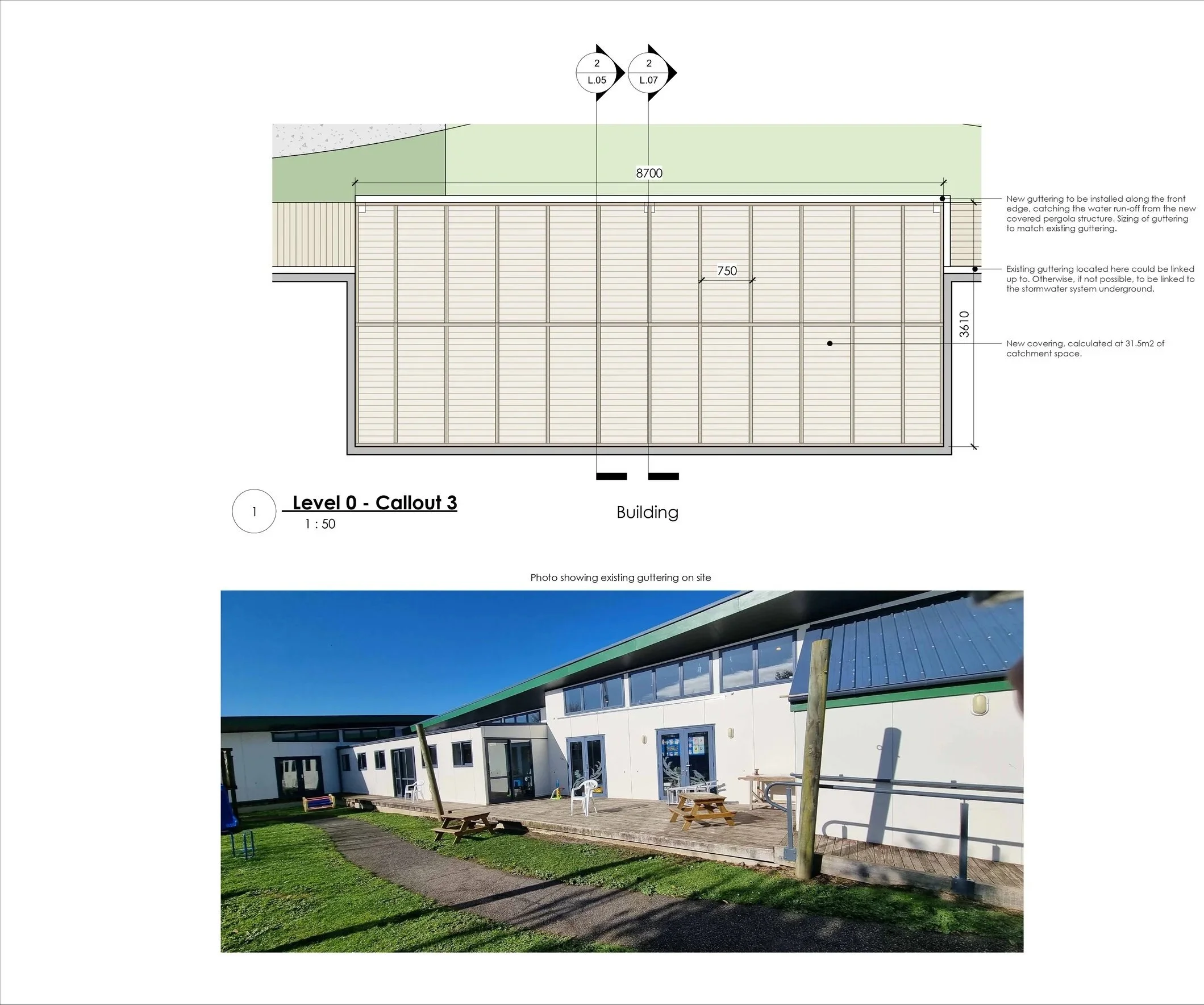
A sheltered pergola connected to the main building, requiring engineer input, was also introduced to encourage outdoor play during the wetter months.
The final design successfully brought together all of these elements, creating a cohesive and practical layout that balanced safety, functionality, and play.
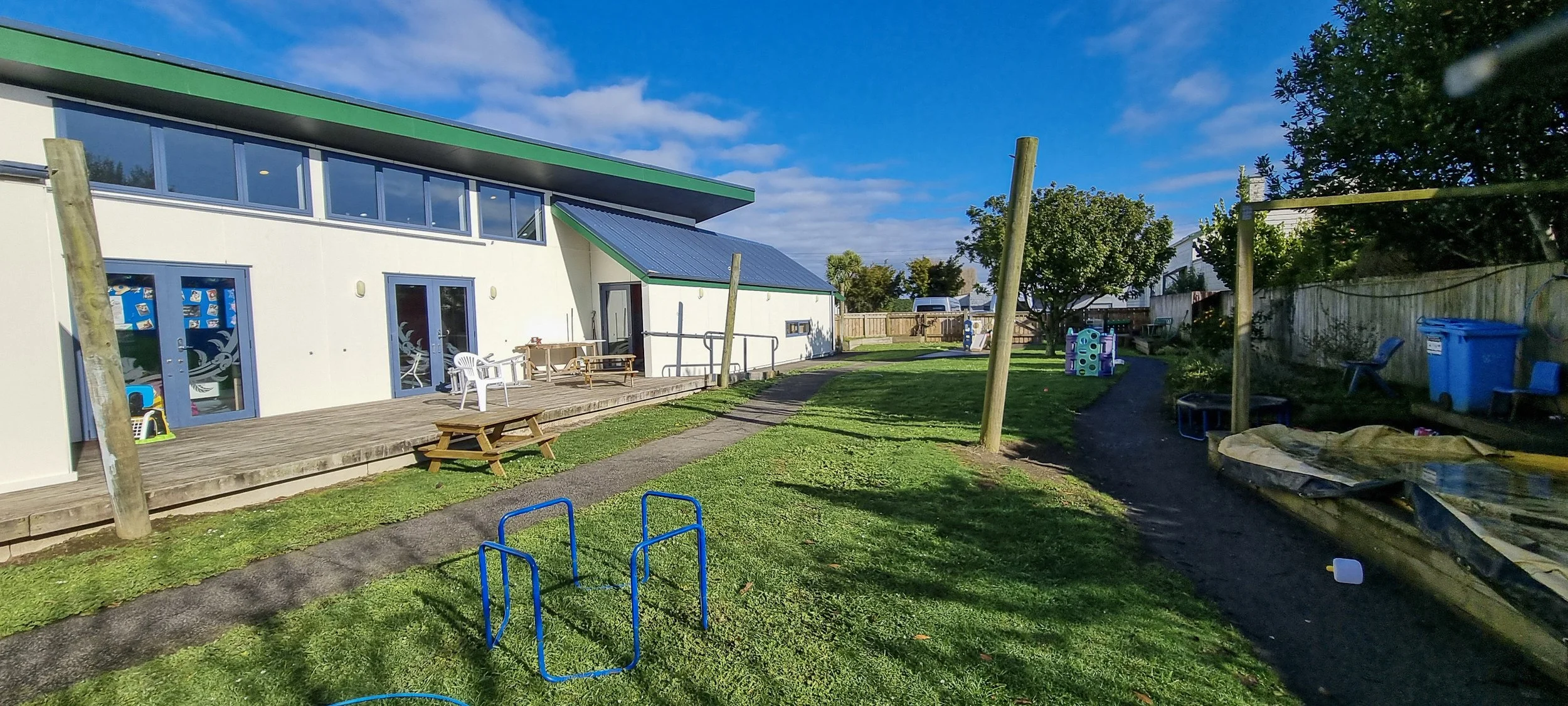
The area was not up to current New Zealand standards, but still featured a strong foundation to work with.
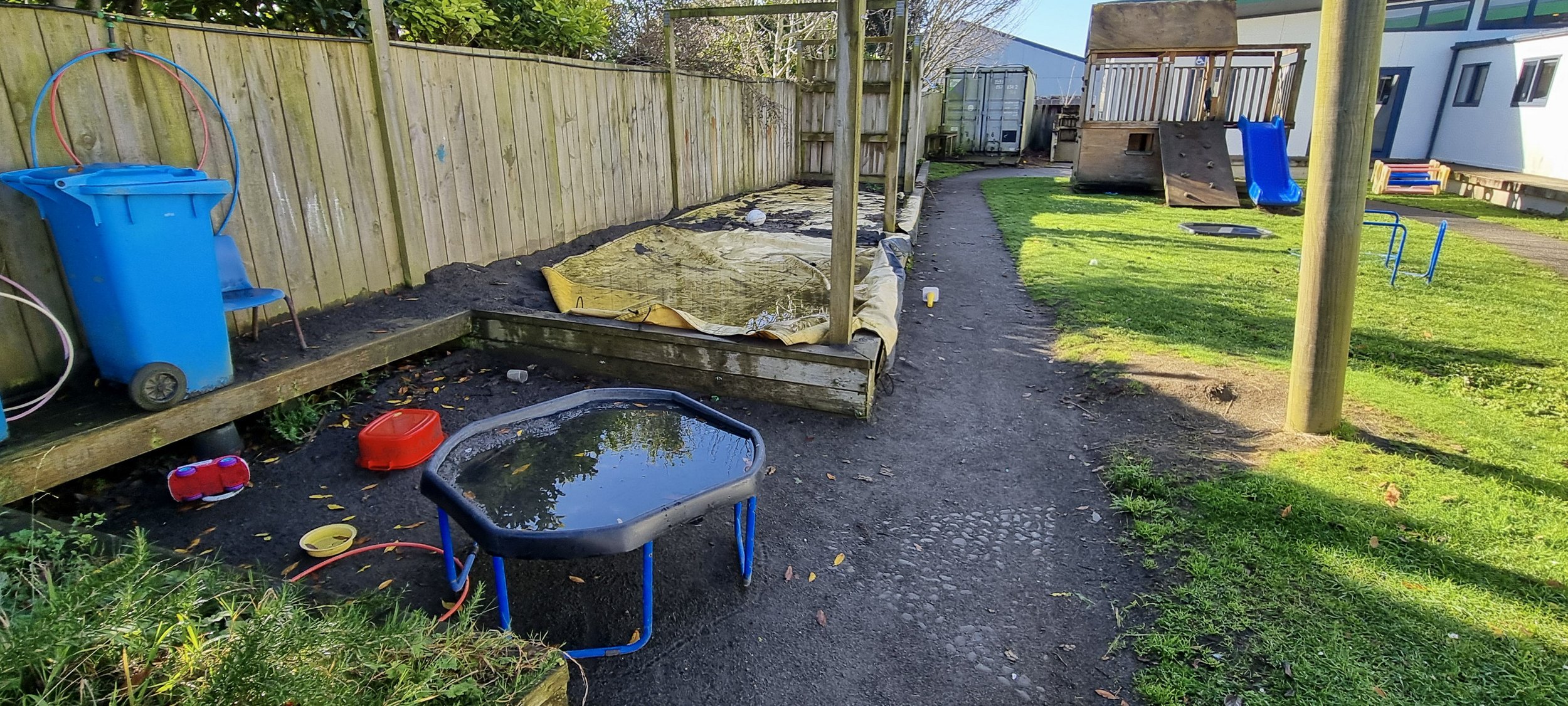
Existing play areas were used however possible, which was a positive that was clear from the initial site visit.
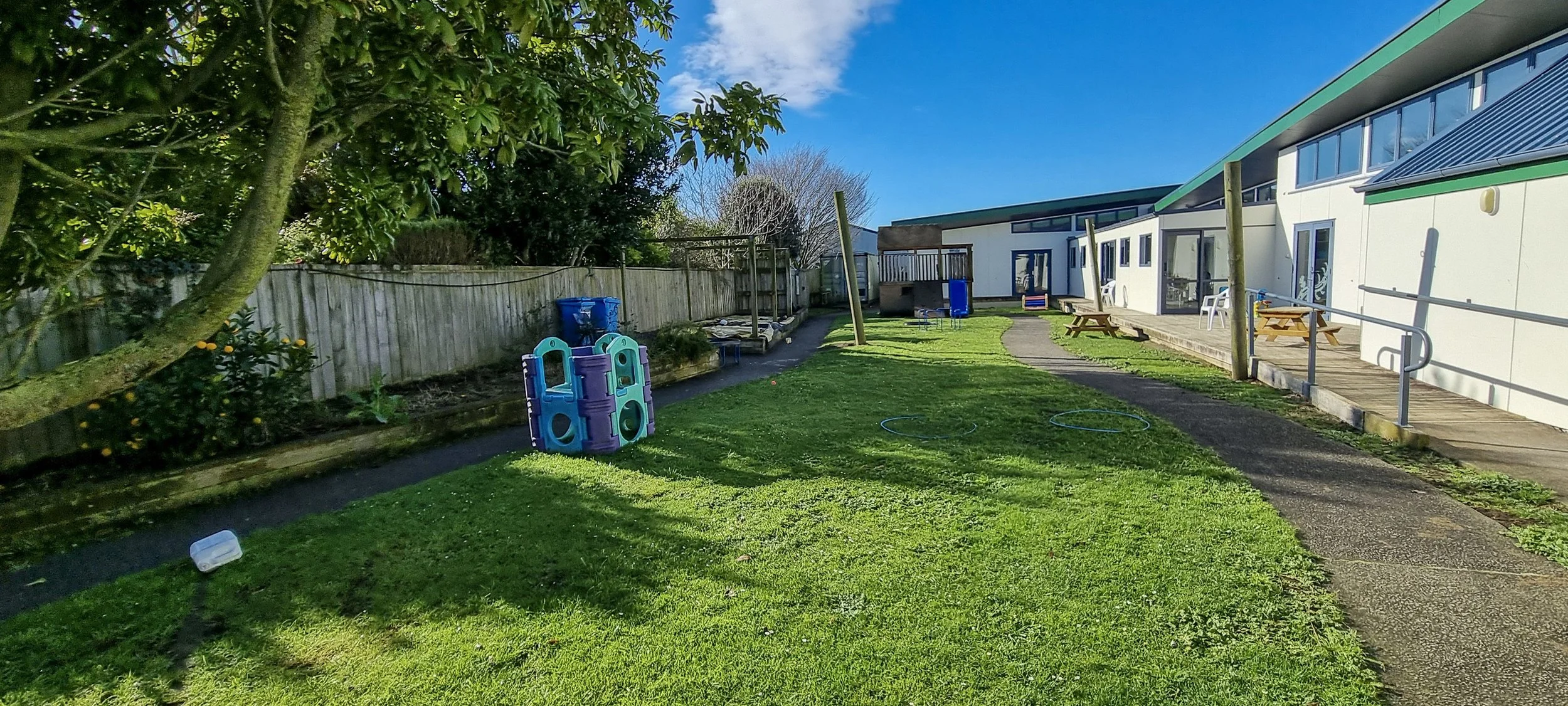
The area was long, but skinny in certain areas which restricted the design for fall concerns.
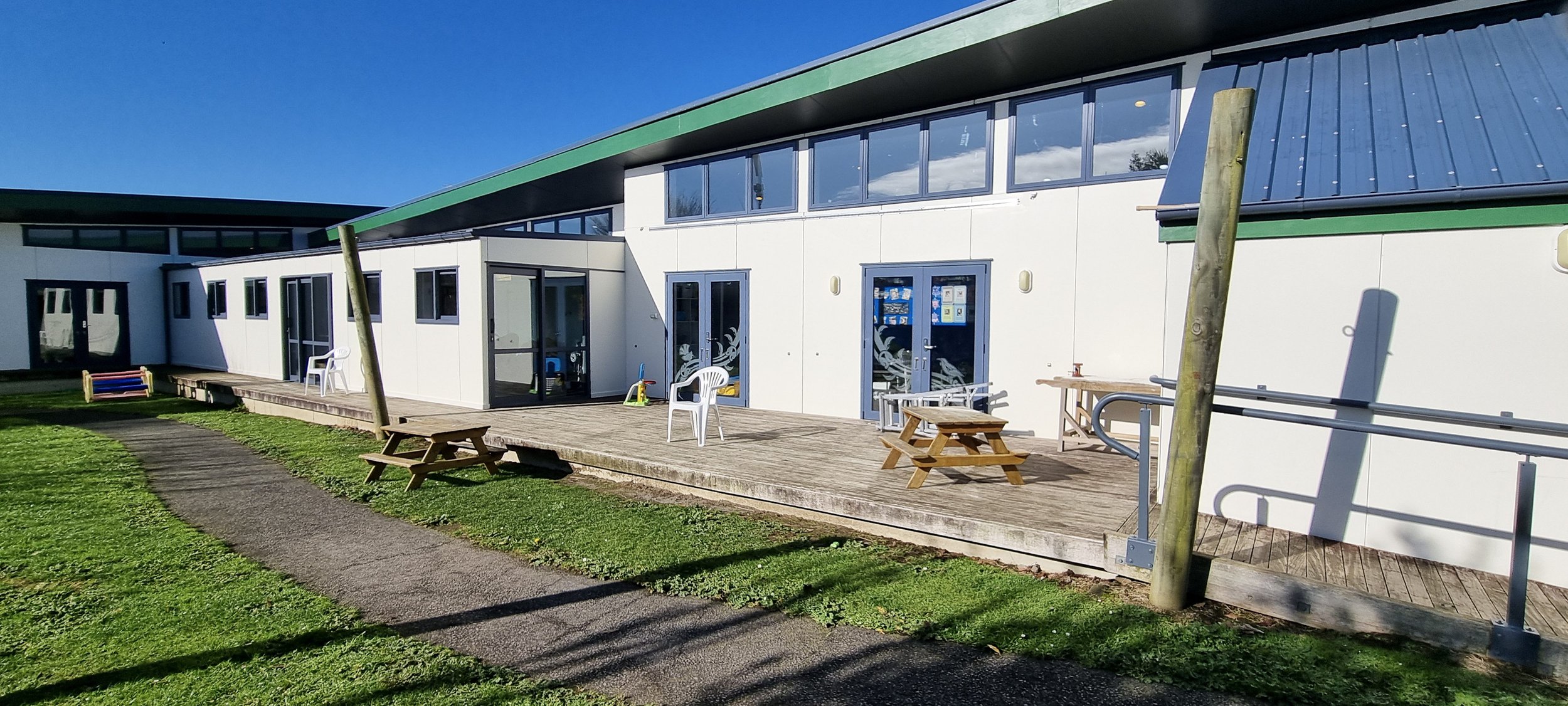
The existing decked space was open to all weather conditions. A priority was to change this.